From Sangria to Sidra: 10 Traditional Spanish Drinks, and How to Make Them


What’s the first thing that comes come to mind when you think of Spain? We’d guess that sandy beaches, sun-baked olive groves and orange trees lining the streets of Seville would be high on the list. But that is, in fact, only a portion of Spain – the south. Northern Spain is a world apart from this common picture of the country, instead boasting lush hills, coastal cliffs and ancient Celtic fortresses, with cities like Bilbao surrounded by green mountains.
Our knowledgeable Spain Travel Director Maddy talks us through what makes northern Spain so special, painting a vivid picture of this unsung region of one of the Europe’s most popular travel destinations. Originally from Austria, Maddy has been a Travel Director since 2019, and currently lives in Barcelona when she’s not splitting her time traveling between the Iberian Peninsula and Central European countries.
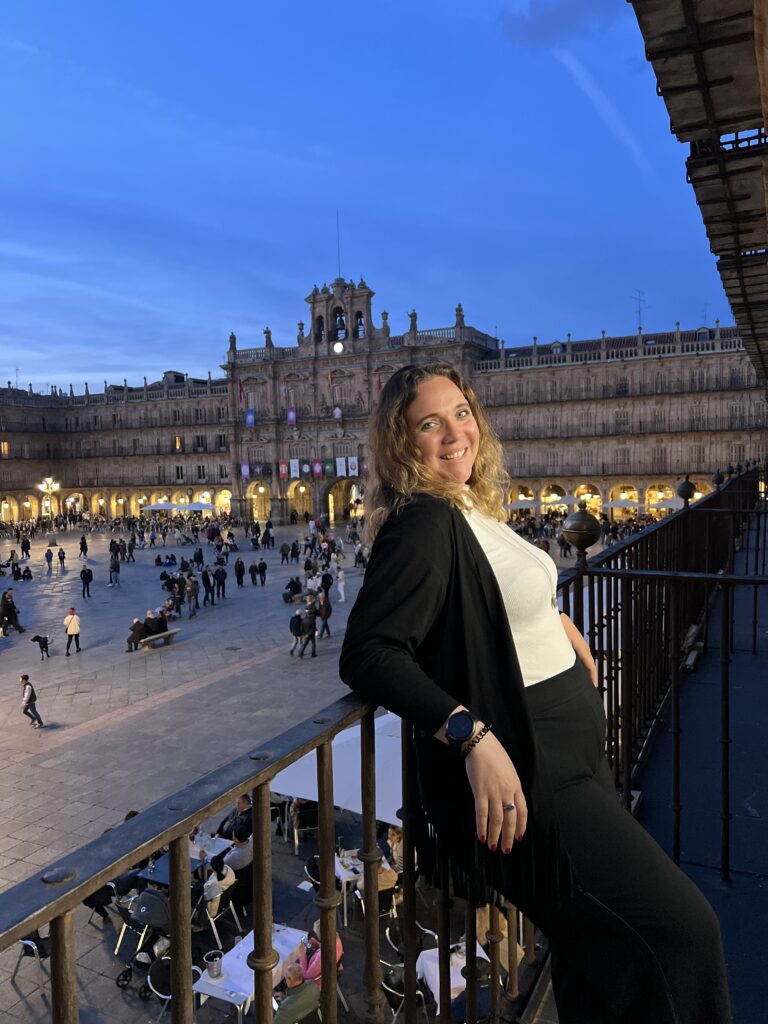
Meet Maddy, our Spain Travel Director
“Northern Spain is one of the parts of Spain that people don’t necessarily think about,” she explains. “Most people think about paella, tapas, bullfighting and Moorish palaces like the Alhambra, and none of these things exist in northern Spain. Bullfighting is probably the only one that you can find in northern Spain, but that came actually a little bit later.” (Bullfighting in Andalusia dates back as far as 711 AD, while northern festivals like Pamplona’s running of the bulls was made official in 1591.)
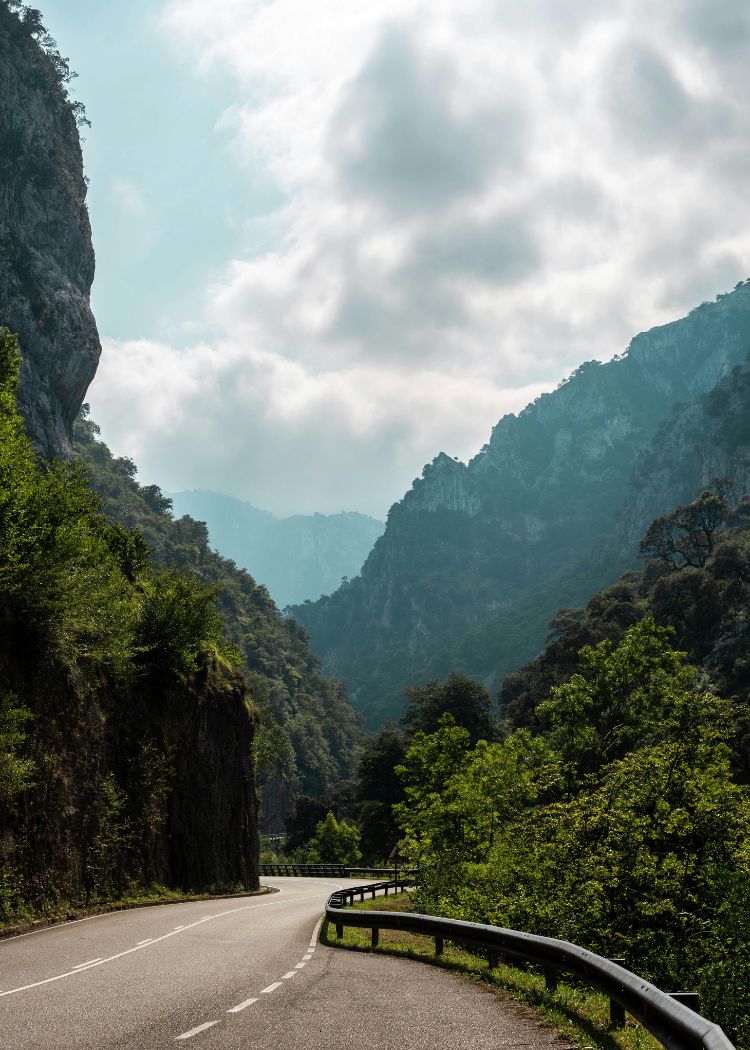

The Picos de Europa mountain range spans 67,000 hectares across Northern Spain, home to Iberian wolves and the Cantabrian brown bear.
“The first thing that stands out in northern Spain is the landscape. I always call it the Green Spain, because the rest of Spain is relatively dry. There are beaches up there as well, but they also have really lush hills and mountains because of the weather. Northern Spain sees a lot more rain and it’s often relatively windy, and when the rest of Spain gets really hot the north stays cooler.
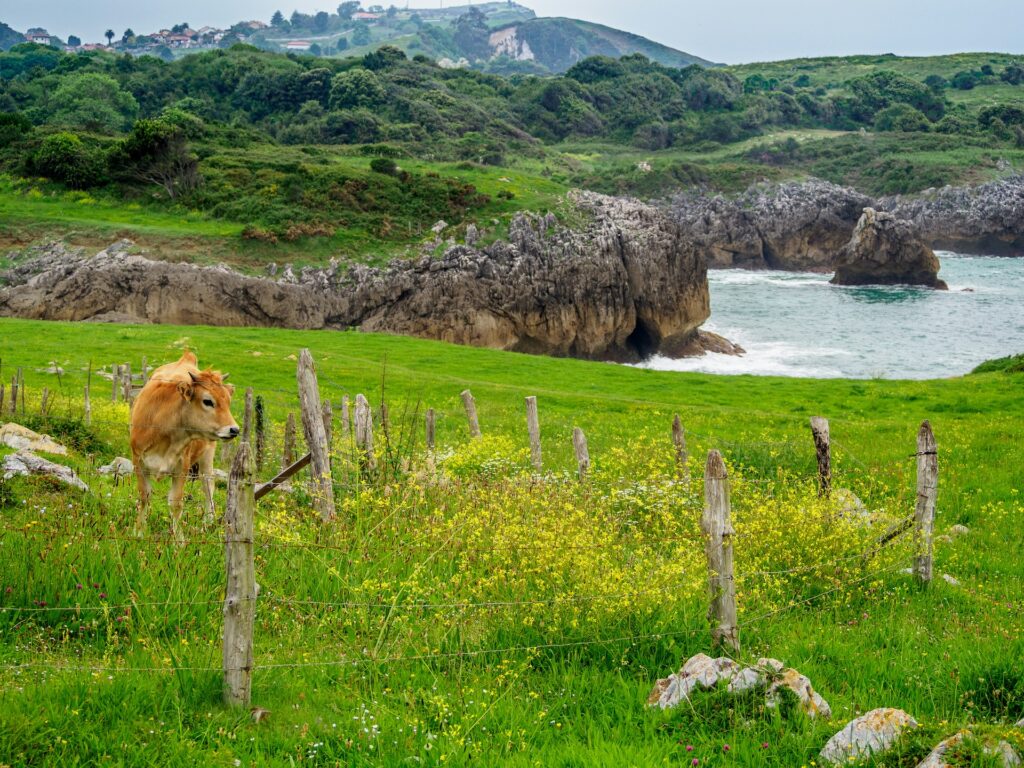
Asturias, the ‘Green Spain’
There are somewhere between 2,000 to 2,500 wild Iberian wolves still living in that area – one of the largest populations in all of Europe, most of them found just north of the Douro River. Up until 2021 it was legal to hunt wolves in northern Spain, but after they outlawed it the wolves have been coming back more and more. Recently a wolf was spotted in northern Catalonia, where it had been 100 years since one was last seen.
I remember on one of my first trips we were driving from San Sebastián down to Pamplona, and this couple traveling with me said, ‘Maddy, this looks exactly like Ireland.’ I could see that! There are hills, it’s green, and there are sheep grazing everywhere. You wouldn’t know you were in Spain.
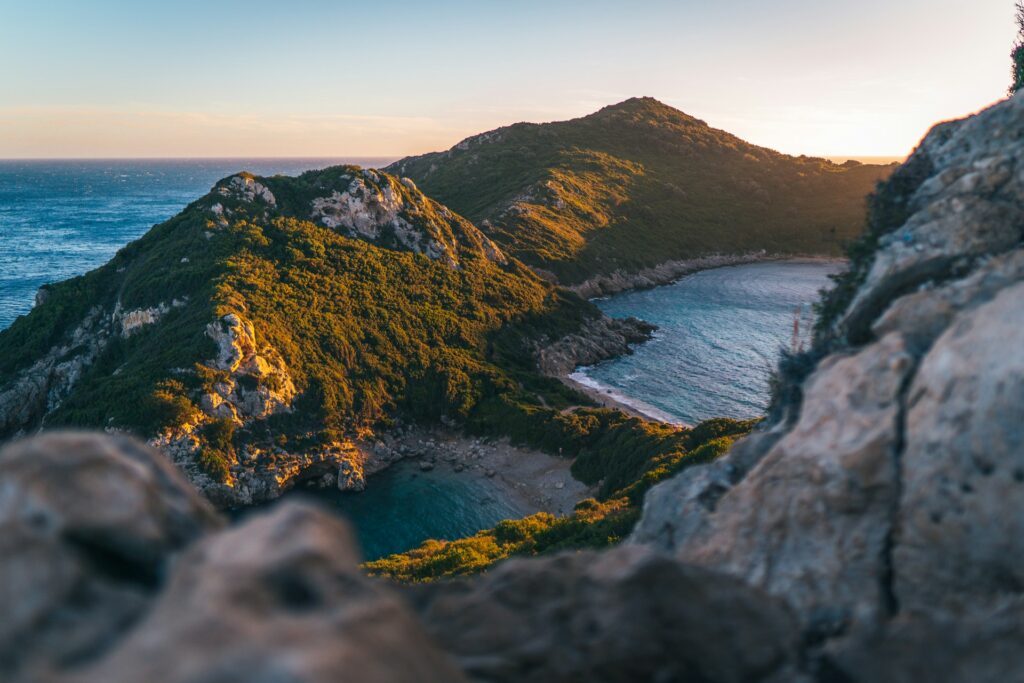
One of the things people always miss about northern Spain is how beautiful the coastline is. It’s very dramatic, with lots of cliffs and beautiful shorelines. When we’re in Santiago on tour we do an Optional Experience down to the Rías Baixas – small little bays that lead into the coastline of Galicia, almost like fjords with beautiful water. There’s a lot of natural beauty up in the north that people just haven’t heard about because it’s not as popular. But they arrive and they’re consistently surprised.”
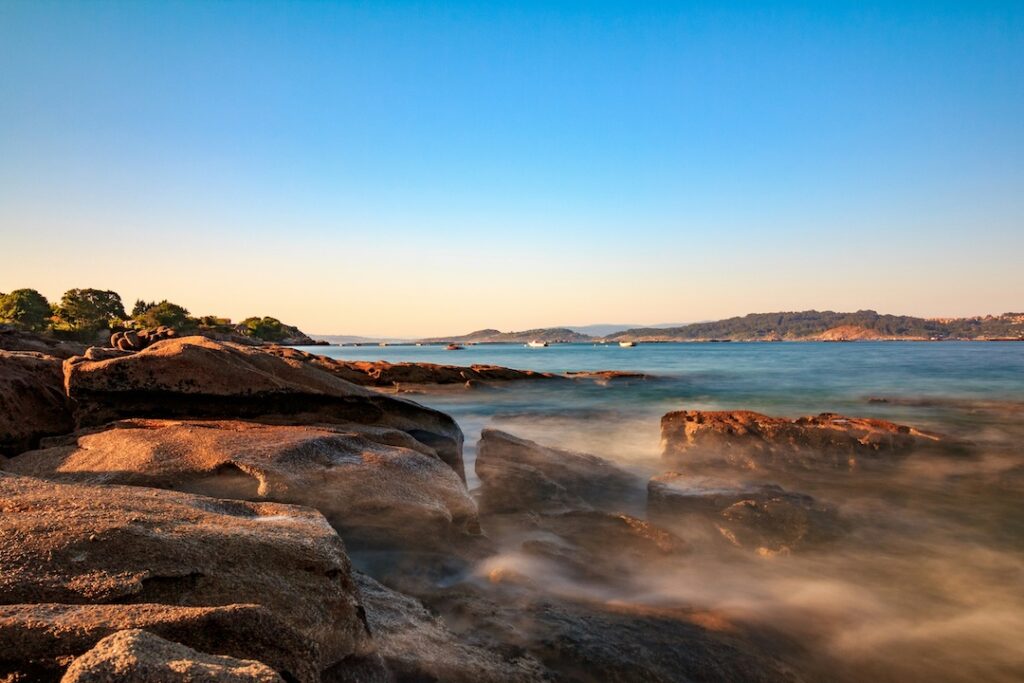
Ría de Aldán, part of Rías Baixas
Spain’s official language is Castilian Spanish, but in the north there are a couple of others. In the Basque Country there’s Basque, which goes back to pre–Roman times – it doesn’t really relate to any other language. There’s a lot of X’s and Z’s, so when you see it it’s already quite unusual. And then in Galicia you have Gallego, which is a little closer to Spanish – kind of like a mix between Spanish and Portuguese, because it’s just north of Portugal.”
“There are a lot of myths and legends up in the north that date back to pre-Roman times. Some of them are similar to traditions I know from Austria, because they goes back to Celtic tribes that came in from Central Europe.
Spanish Celts are actually called Iberian Celts, a little removed from the Celts that were in Central Europe, Germany, Austria, Switzerland. You can still find many ruins from that period – there are hundreds of little stone circles called castros, remains of Celtic villages where people lived. There are also bigger ones that are almost like cities. A couple of important ones you can visit are Coaña in Asturias, and Santa Tegra in Galicia.
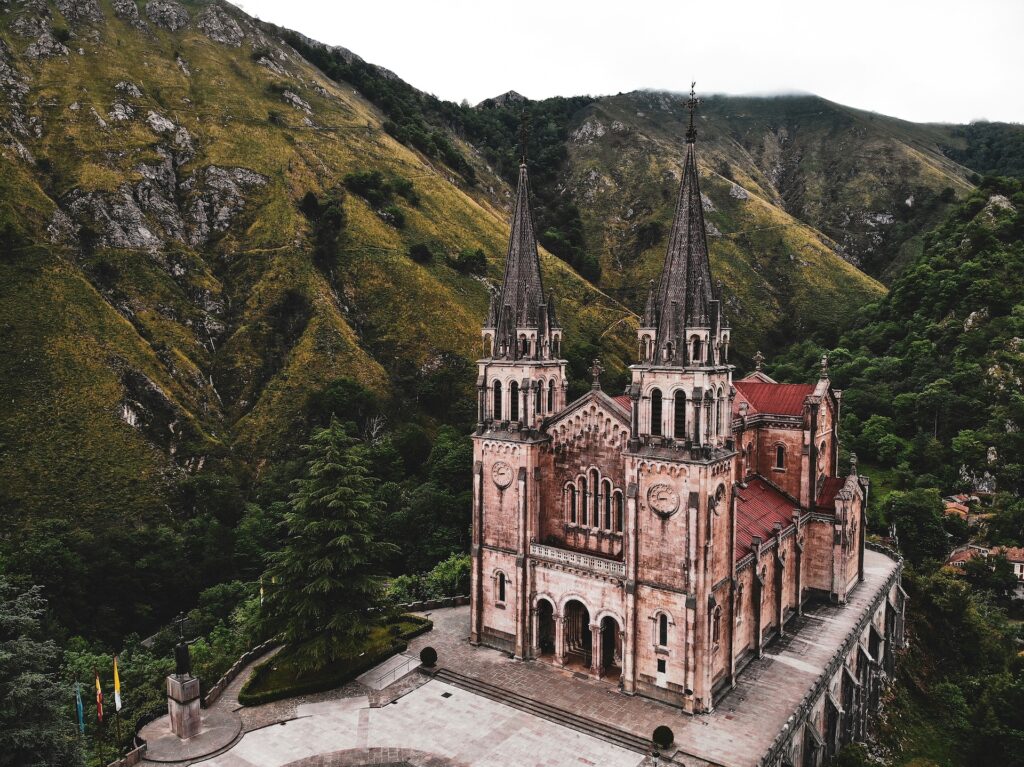
The Basilica of Covadonga
There are also quite a few places that still have Celtic background names. Cantabria is named after a Celtic tribe called the Cantabri; Covadonga is the Celtic version of Fuente de las Cuevas, which translates loosely to ‘fountain of the caves’.
In Iberian mythology there’s a whole different world of creatures and legends. In Galicia there’s a famous legend called Santa Compaña – a procession of souls that can’t move on, moving through towns with lit candles that nobody can see. The only way people know is because they can smell the burning wax.
There are little mischievous trolls like trasgu, a house elf depicted as a little gnome with a pointy red head who misplaces things and makes little noises throughout the night. They have witches, which is very typical in Celtic tradition, and in Galicia they call them meigas, and their power could be either good or evil. And in Asturias, right by the water, you have water sprites they call xanas.
There’s a week-long Celtic festival in Galicia every year in July. It’s a really beautiful introduction to the history they’re trying to keep alive in this area, because it sets them apart from the rest of the country. There are two festivals, one in Ortigueira and one in Avilés, both in July. The whole town gets involved, there’s a little Celtic village set up, and people dress up. It’s almost like a renaissance fair, but much further back in time.”
“Northern Spanish food is very local – they work with what they have, and they have a lot. They have seafood because they’re right by the Atlantic Ocean. They have the mountains, so it’s a little bit more meat heavy, a little bit more like comfort food. And they have a wide range of ingredients, so they have a wide range of different dishes.
Galicia is more of a seafood region. The most famous dish is pulpo gallego – octopus on potatoes with a little paprika on top. Relatively simple but fantastic, especially if you find a little bodega right on the shore. They also make bacalao al pil-pil – little pieces of cod fish sizzling in garlic oil (pil-pil is the name they give to sizzling oil, because that’s what it sounds like). And then there’s empanada gallega, which most people confuse with Argentinian empanadas, but these are completely different. This version is a squared pan pie with dough on the bottom, filled with meat, vegetables or tuna and another layer of dough on top, cut into slices.
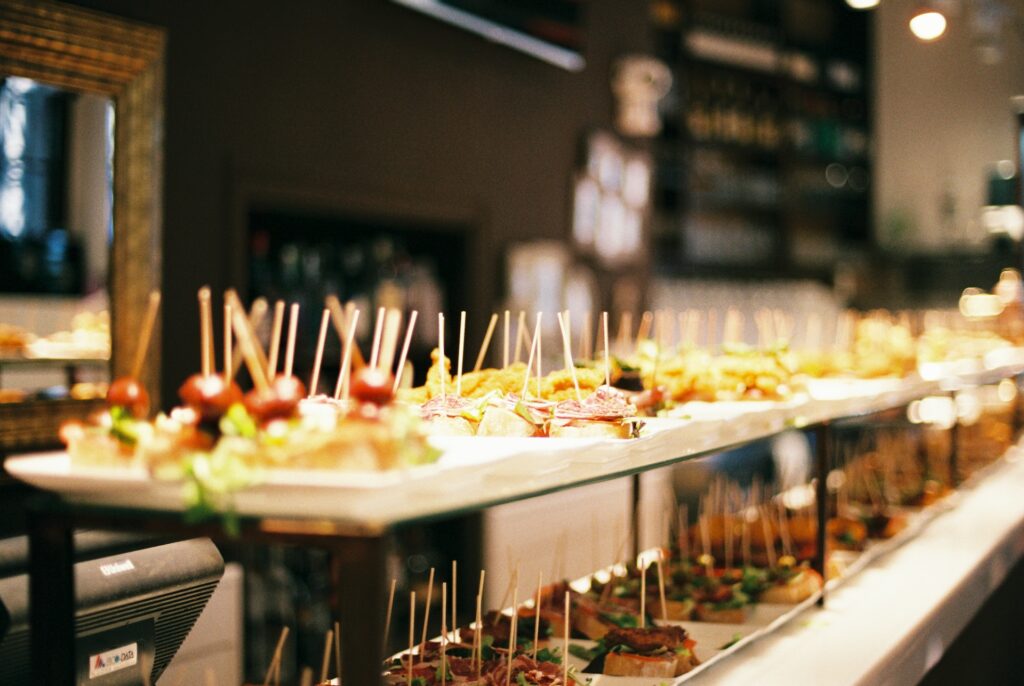
Pintxos – northern Spain’s answer to tapas
In Asturias and Cantabria you find more meat-heavy dishes. Cachopo is basically a Spanish cordon bleu with veal on the bottom and top, cheese and ham inside, fried and served with potatoes. There’s also fabada, a bean stew with huge beans, meat and local cheese like goat’s cheese from the mountains.
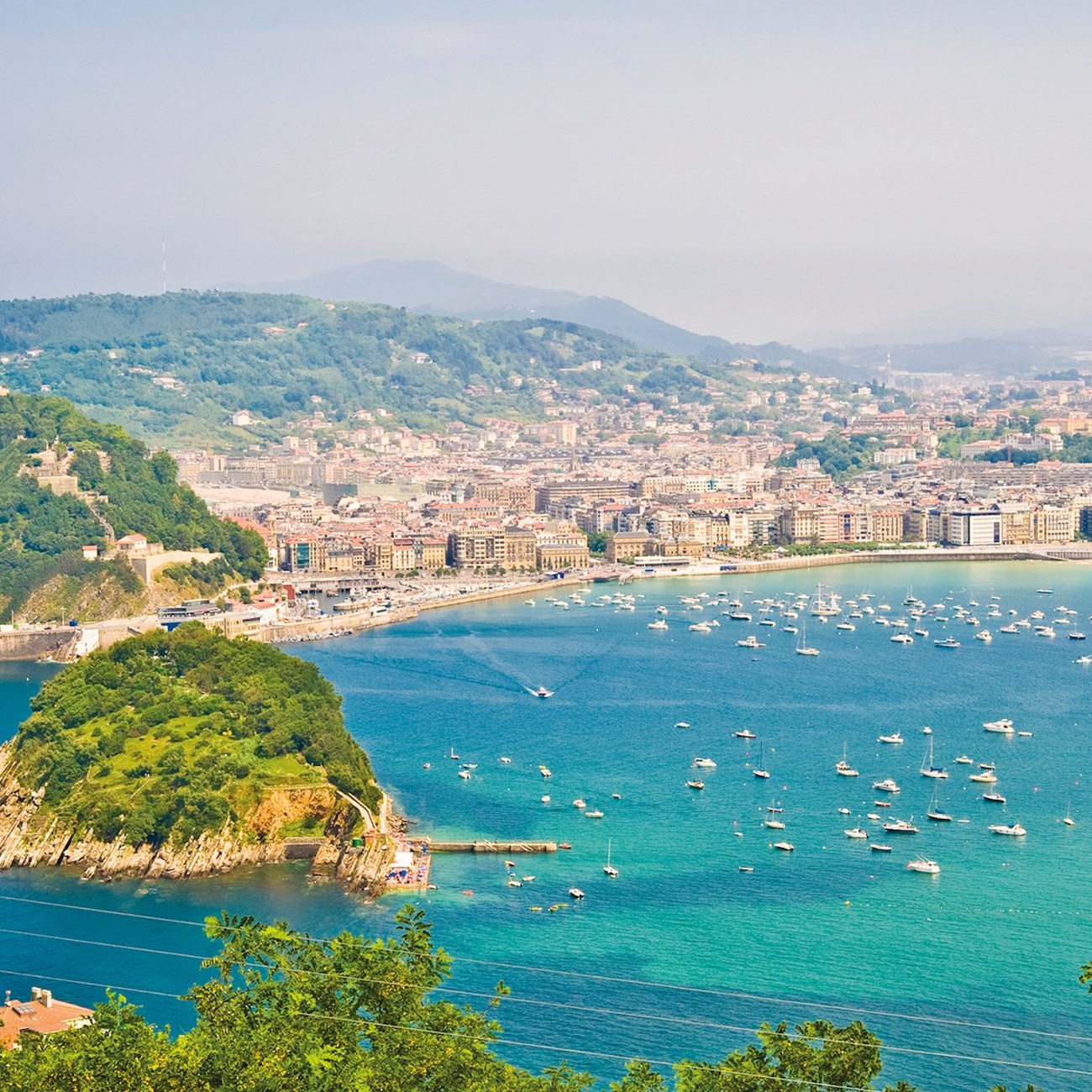
The best-known food scene in the north is the Basque Country, especially San Sebastián. It’s known for having a huge number of Michelin star restaurants, but you can also find little pintxo bars that are Michelin rated – so you can try high-quality food in a cheaper way. Pintxos are basically little snacks, similar to tapas but usually smaller. The word pintxo basically means ‘spike’, because back in the day they’d take a slice of bread with something on top and stick a toothpick through it. At the end of the night you’d pay for however many toothpicks you’d had. There are still bars that do that, which is really cool.
And then you have Basque cheesecake. It’s a baked cheesecake, not one that sets in the fridge, so it’s a little more creamy on the inside with a lovely baked outside. Some bakeries only make it twice a day – you have to get in line otherwise you miss out.
Northern Spain also has different drinks. In Asturias there’s sidra – cider – served in a very special way (called ‘escanciado’): one glass held down near the knee, the bottle up over the head, and pour from about a meter and a half. They only serve a little bit at a time, never filling the glass fully. If you walk through a town like Oviedo, you’ll probably see a waiter doing it in the street.”
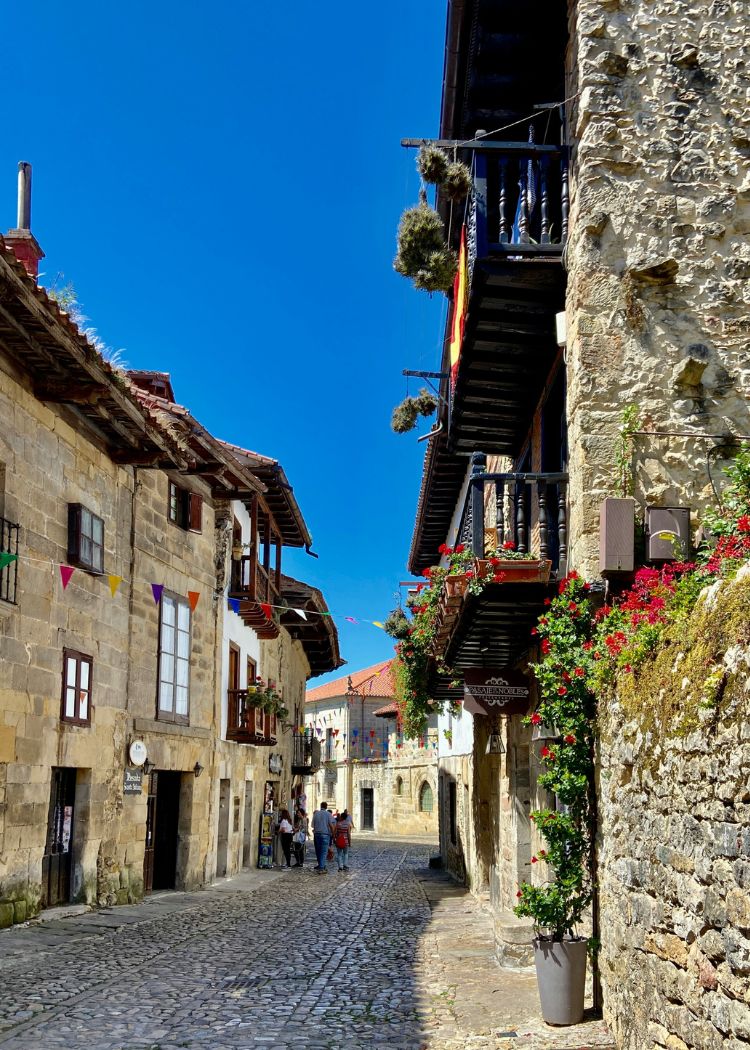
As well as Spain’s prettiest village, Santillana del Mar is also known as “the town of three lies” – it’s not holy (santa), flat (llana), or by the sea (mar).
“Santillana del Mar is definitely one of the prettiest villages I’ve seen, and I’m pretty sure a lot of Spaniards would agree. There’s still this very medieval vibe with beautiful stone architecture, cobbled streets and flower decorations. They’re very good at preserving it, even the signs outside shops fit in. It’s like stepping back in time until you see people in modern clothing.
With that said, it’s not the only one. There’s Cudillero, a really beautiful fishing village in Asturias. There’s also Lastres, a colorful village wedged on a clifftop, so you can walk up and look down on the colorful houses, the red roofs, and the blue ocean opening up in front of it. And then Cadaqués in Catalonia, a beautiful village on almost a peninsula, reaching out into the sea.”
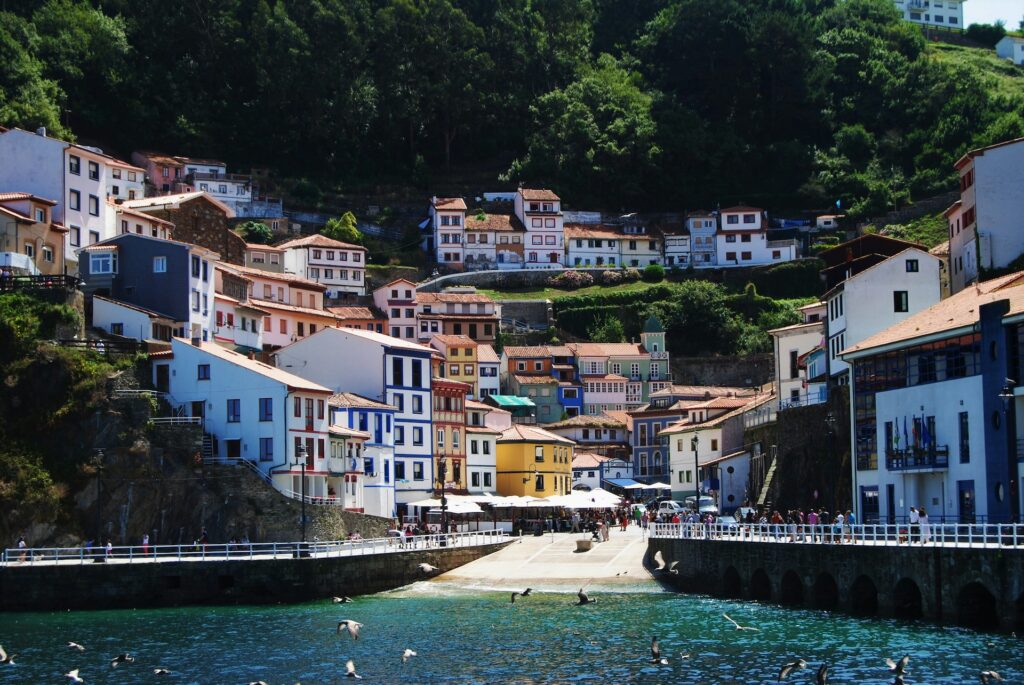
Cudillero, a beautiful Asturian fishing village
“If you’re visiting Northern Spain for events, I would say the best time is summer. In July you have the two Celtic festivals in Ortigueira and Avilés. You have the Running of the Bulls in Pamplona – technically northern Spain – which is a huge seven-day festival with a running of the bulls every morning and bullfights in the afternoon, and the city turns into this white and red sea of people. And then Semana Grande in Bilbao at the beginning of August, celebrating Basque culture with food, regional products, music acts and theatre.
Summer is generally a good time to travel there because the north stays cooler – you can get really warm weather without the heat. A lot of Spanish people who go on holiday in summer and don’t want a beach holiday head north to get away from the heat. June, July and August are great, and September is usually really nice too.”
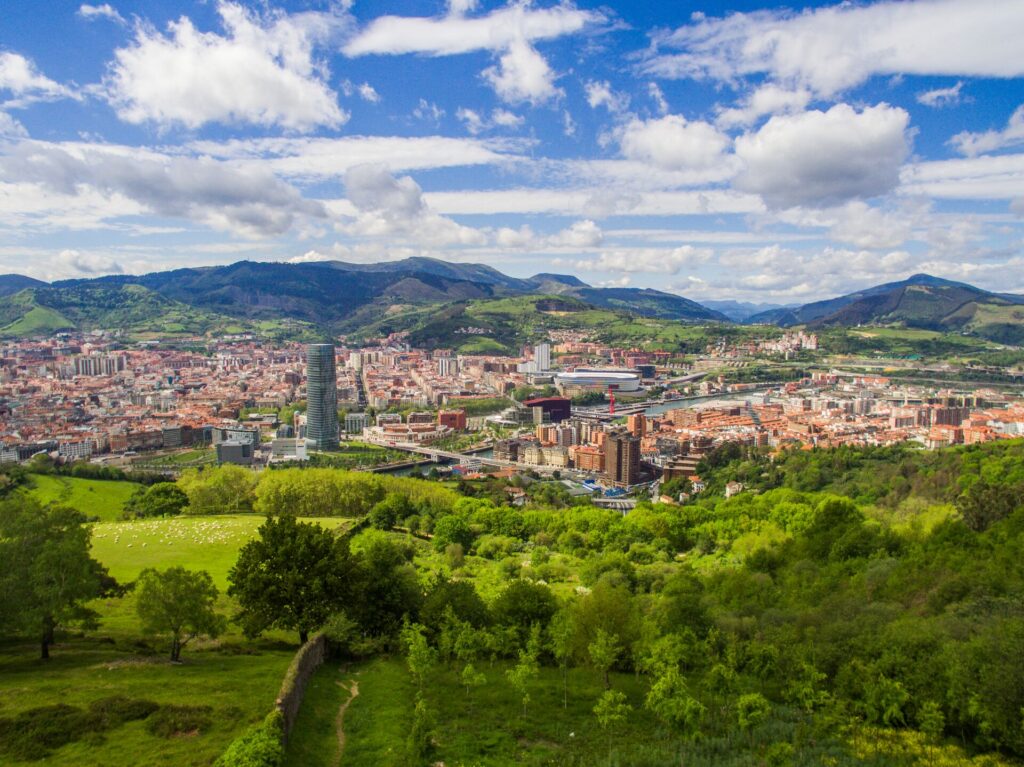
Bilbao, surrounded by forested mountains
If you feel entranced by the magic of northern Spain, then it’s time to see it for yourself. An Insight Vacations trip across northern Spain takes you from the ancient forests of Galicia to coastal views, old villages and deep valleys, meeting local artisans and stopping in key cities including Pamplona, Bilbao and San Sebastian. With passionate Local Experts and an experienced Travel Director with you every step of the way, you’ll truly get under the skin of this underrated region.
The itinerary? After traveling along Asturias’ Green Coast, a MAKE TRAVEL MATTER® Experience will treat you to a homemade farm-to-table lunch where you’ll learn about traditional cider production (and witness the dramatic cider pour up close). A Local Expert will show you the churches and cathedrals of Ovideo, before you venture into the Picos de Europa (which took the top spot on Time Out’s list of most beautiful places in the world) to visit the Holy Cave of Covadonga and take in the park’s magnificent scenery.
Soak up an afternoon in Santillana del Mar, deciding for yourself whether it really is Spain’s most beautiful village, before the streets of Bilbao and its iconic Guggenheim beckon. A scenic journey along the Costa Vasca takes you to San Sebastián, where a Local Expert will take you through the Old Quarter. You have an entire day in San Sebastián at leisure – let your taste buds guide you.
Along the way you’ll dine in top-rated restaurants, stay in 4- and 5-star hotels, and travel in style on our luxury coaches with unobstructed, panoramic windows – we know these views aren’t to be missed.
Discover Northern Spain in style with Insight Vacations.

LIKED THIS POST? SHARE WITH YOUR COMMUNITY
Plus recieve latest offers, travel inspiration, and discover how your travels will make a positive impact. Together, WE MAKE TRAVEL MATTER®