5 Winter Solstice Traditions That Will Surprise You

Save up to $3,400 per couple and enjoy a $300 flight credit
Winter solstice marks the turning point of the seasons; it’s not just about celebrating the shortest day, but what comes after – the beginning of longer days, new beginnings, and the promise of new life in spring.
Winter solstice occurs once a year in each hemisphere; 20 or 21 December in the northern hemisphere, and 20 or 21 June in the southern hemisphere. Technically it’s when one of Earth’s poles reaches its maximum tilt away from the sun, but spiritually it’s much more than that, with cultures far and wide celebrating it in different ways. Here are five winter solstice traditions from around the world that will surprise you.
Who celebrates the Winter Solstice?
Cultures across the globe celebrate winter solstice and have done for millennia, including Pagans, Celts, Native Americans, and Nordic cultures – but anyone can celebrate in their own way. There are common threads running throughout many of these traditions, including lighting candles (to mark the triumph of light over darkness), connecting with nature, acknowledging the balance of the seasons, setting intentions for the year ahead, and feasting on hearty food.
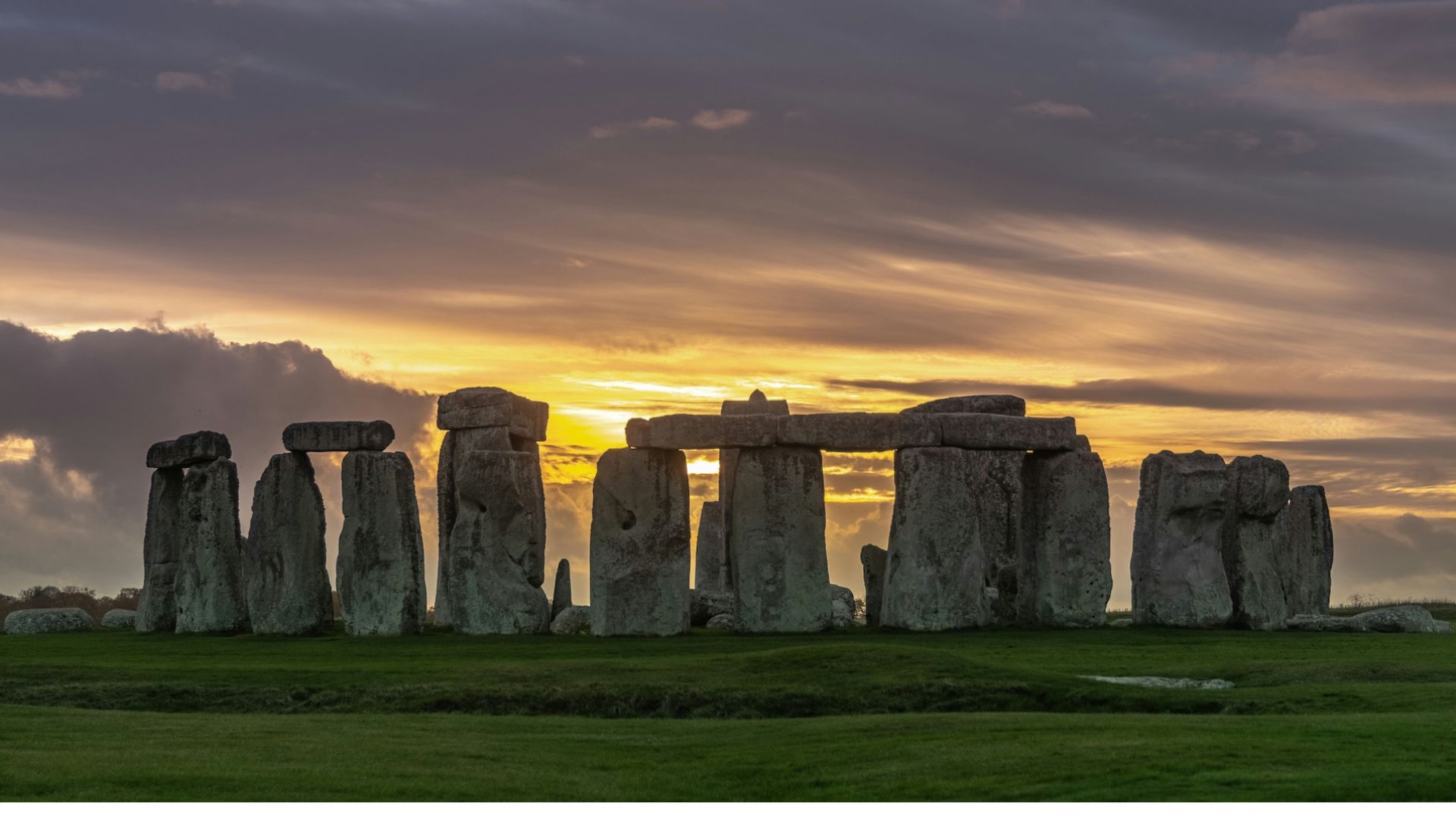

Stonehenge was built to align with the sun on the solstices; on the winter solstice, the sun sets to the south-west of the stone circle.
Pagan winter solstice traditions
Rooted in pre-Christian traditions, modern Pagan religions include Wicca, Heathenry and Druidry. Pagan beliefs are rooted in nature, believing that the Earth and its cycles are sacred.
The cycles of birth, growth and death are profoundly spiritual to Pagans, making winter solstice – a sign of rebirth – an important date in the Pagan calendar. In pagan winter solstice traditions in the northern hemisphere, witches, druids, and Wiccans celebrate the sun’s rebirth.
Rather than winter solstice, Pagans call it Yule, or Yuletide. Originating from ancient Germanic and Nordic cultures, the event was absorbed into Christian traditions as Christmas, but has been revived by many modern Pagans.
For Wiccans, Yule is a celebration of the sun god’s rebirth, and often involves lighting candles and decorating alters with evergreens and sun symbols. In Norse Paganism (also known as Heathenry), Yule is marked with feasts, toasts to chief god Odin, and lighting the Yule log. Druids celebrate the winter solstice with dawn ceremonies, storytelling and music, focusing on the sun’s rebirth.
One of the most famous Pagan winter solstice traditions is at Stonehenge in England, which dates back to ancient Druid rituals. To this day, thousands of people gather at this ancient site to witness the sun rise over the stone circle.
Celtic winter solstice traditions
Ancient Celts had deep spiritual ties with nature, and were connected to the lunar and solar cycles, and the changing of the seasons. Celtic winter solstice traditions are still alive today in Ireland, Scotland and Wales, with various cultural events, music festivals and storytelling sessions to revive these traditions.
It was seen a time of rebirth – winter solstice symbolizes the death of the old year as the sun’s power begins to return. The Celts saw life and death as part of a continuous cycle, reflected in the seasons. Ancient Celts celebrated with feasts, bonfires, and rituals like setting intentions and introspection.
Spiritually, the solstice was also a time when Celts believed the veil between the physical and spiritual worlds was thin, allowing for communication with ancestors and spirits. You’ll find standing stones and burial mounds across Scotland and Ireland that are aligned with sunrise or sunset on the solstice. Celts would have gathered at these sacred sites, and many communities still do.
In Ireland’s Boyne Valley, County Meath, Newgrange is a prehistoric Celtic monument dating back over 5,000 years. During the winter solstice sunrise light enters the mound through an opening above the doorway, eventually lighting up a narrow passage in an incredible feat of alignment. The illumination lasts for just 17 minutes.
The Callanish Stone Circle on the Isle of Lewis in the Scottish Outer Hebrides is 5,000-years-old, and often referred to as ‘the Stonehenge of the North’. Each year locals gather to see the sun’s rays pass through a gap in the stones during the solstice.
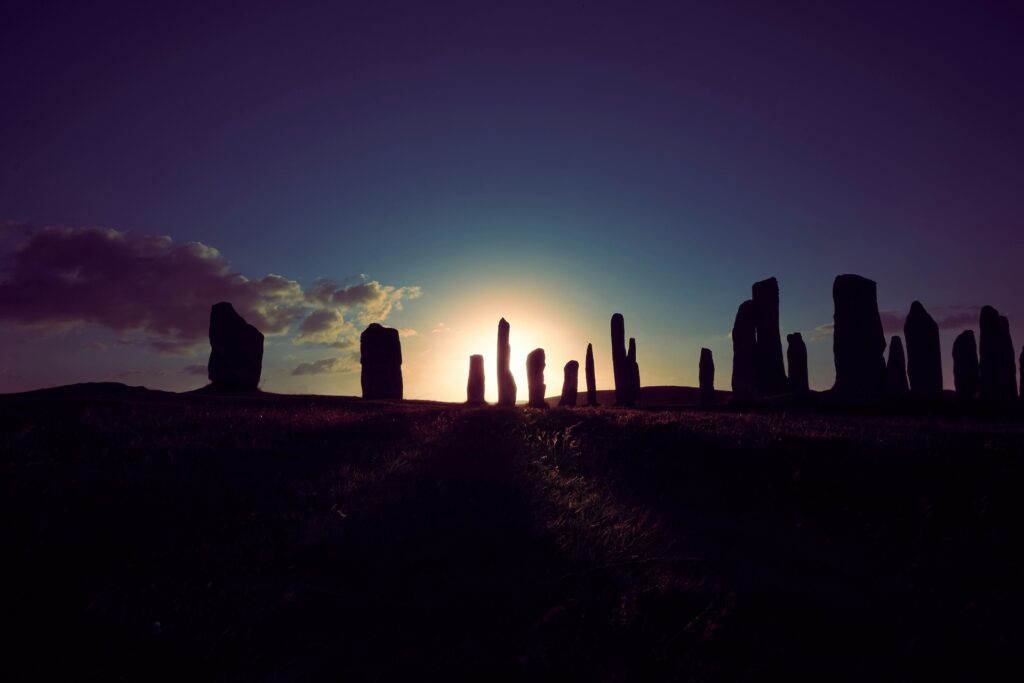
Callanish Stone Circle on the Isle of Lewis
Save up to $3,000* per couple on your first Premium Tour
Plus receive latest offers, travel inspiration, and discover how your travels will make a positive impact. Together, WE MAKE TRAVEL MATTER®. Subscribe NowNative American winter solstice traditions
The Winter Solstice marks the longest night and shortest day of the year. For many Native American tribes, winter solstice has been a celebration for centuries. Like many other cultures, the solstice is tied to the cycles of nature for Native Americans, though how they express or celebrate it differs between communities.
For many Native Americans, winter solstice is a time to pay homage to their sun deity through rituals and ceremonies. One example is Soyal, the winter solstice ceremony celebrated by the Hopi people of the American Southwest. The ritual honors the return of the sun and its life-giving energy through song and dance that often symbolizes prayers for good health, successful harvests, and the fertility of the land.
Meanwhile, the Blackfeet of Montana celebrate less through ritual, but more through quiet community. The Blackfeet celebrate the reemerging of Naatosi, the sun god, by symbolically place their tipis toward the rising sun in the east, and bringing the community together through games and dance rather than ritual or religious gatherings.
Each unique Native American winter solstice tradition reflects the peoples’ understanding of and connection to the celestial seasons.
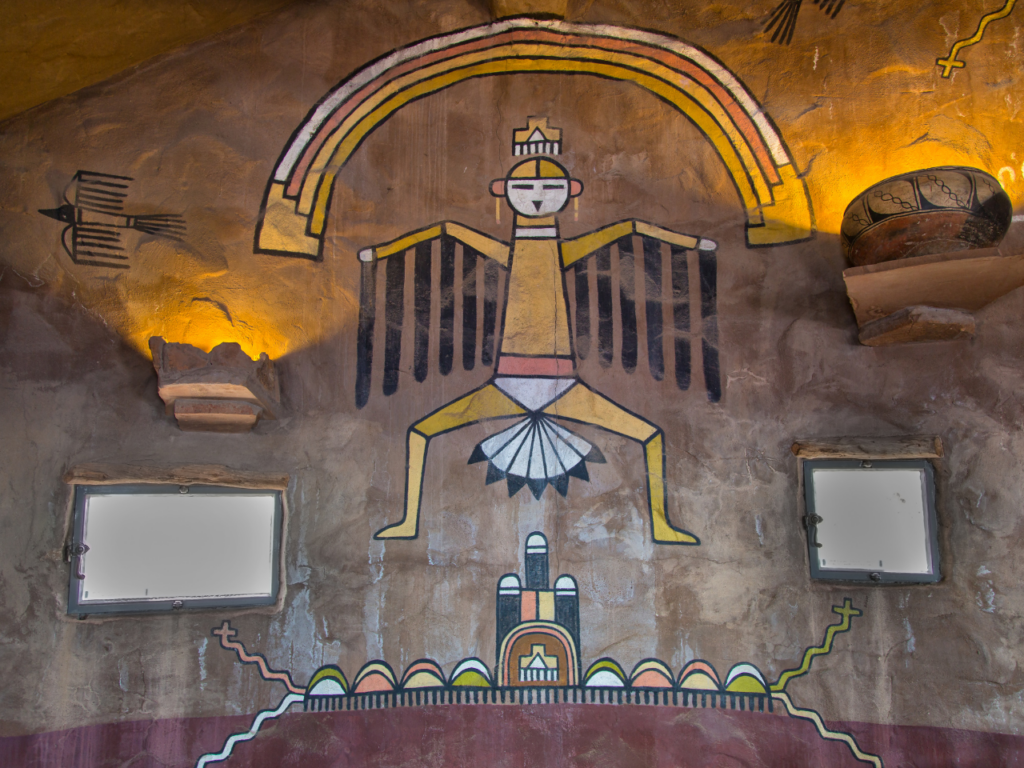
Hopi art depicting Soyal
Nordic winter solstice traditions
As mentioned in the Pagan winter solstice traditions above, Yule is deeply rooted in Norse and Nordic mythology – in Nordic countries it’s known as Jul or Jól – and so the way Nordic countries celebrate the longest night shares a lot of similarities with Pagan traditions.
Yule dates back to the Viking Age, and was more than just winter solstice; it was a 12-day celebration that began on the longest night and through to the New Year. Each night had different rituals, and those have evolved into modern interpretations like lighting candles, giving gifts and connecting with nature. Fire is a key part of Nordic winter solstice; Vikings also created Yule wreaths that would then be set on fire and thrown down a hill, calling for the return of the sun.
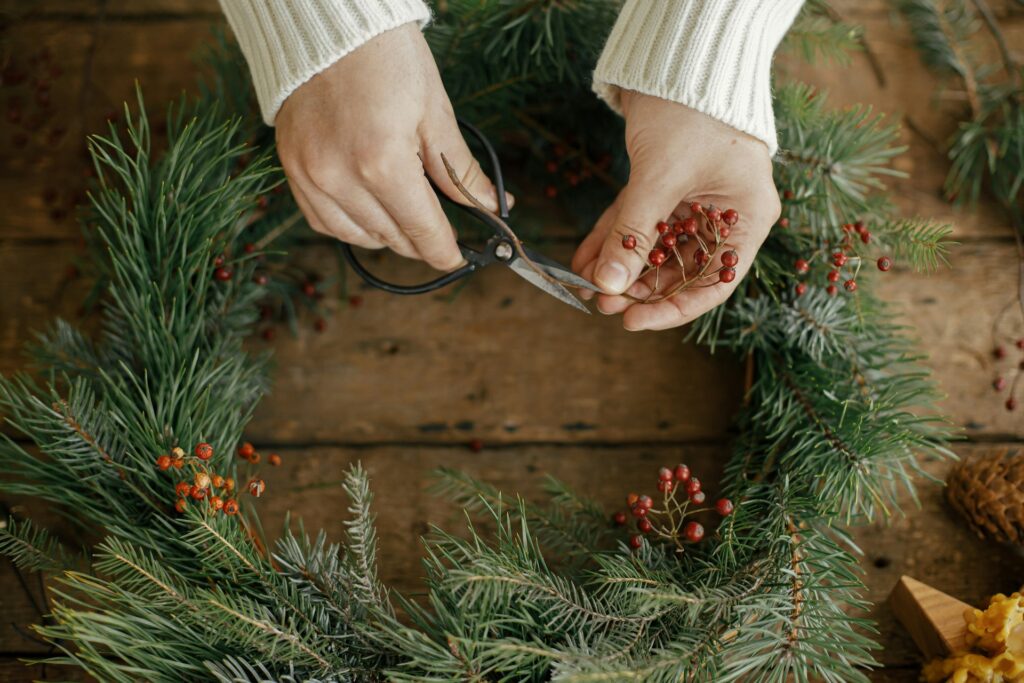
Wreath-making dates back to Viking winter solstice traditions
Chinese winter solstice traditions
Throughout China, winter solstice is celebrated with the Dongzhi Festival. Dongzhi (冬至) literally means ‘Winter’s Arrival’, and the celebration is all out bringing family together and worshipping ancestors. Rooted in the ancient philosophy of yin and yang, the festival symoblizes a turning point in the seasons when light (yang) begins to triumph over dark (yin). Families beat the winter cold together over warm, comforting meals. Dongzhi was first celebrated during the Zhou Dynasty (c. 1046-256 BCE), but became an officially recognized as a holiday during the Han Dynasty (206 BCE-220 A.D).
The winter solstice marks the point when yin forces are at their peak, but also the moment when they begin to give way to yang energy. This transition was seen as a time of renewal and hope, symbolizing the natural cycle of life.
A key part of Dongzhi is worshipping ancestors; people burn incense in front of their ancestors’ tablets and also place symbolic food offerings on a table nearby. One of the most well-known traditions is sharing food; generally in Northern China people will eat dumplings, while Southerners will feast on tang yuan, glutinous rice balls which can be sweet or savory.
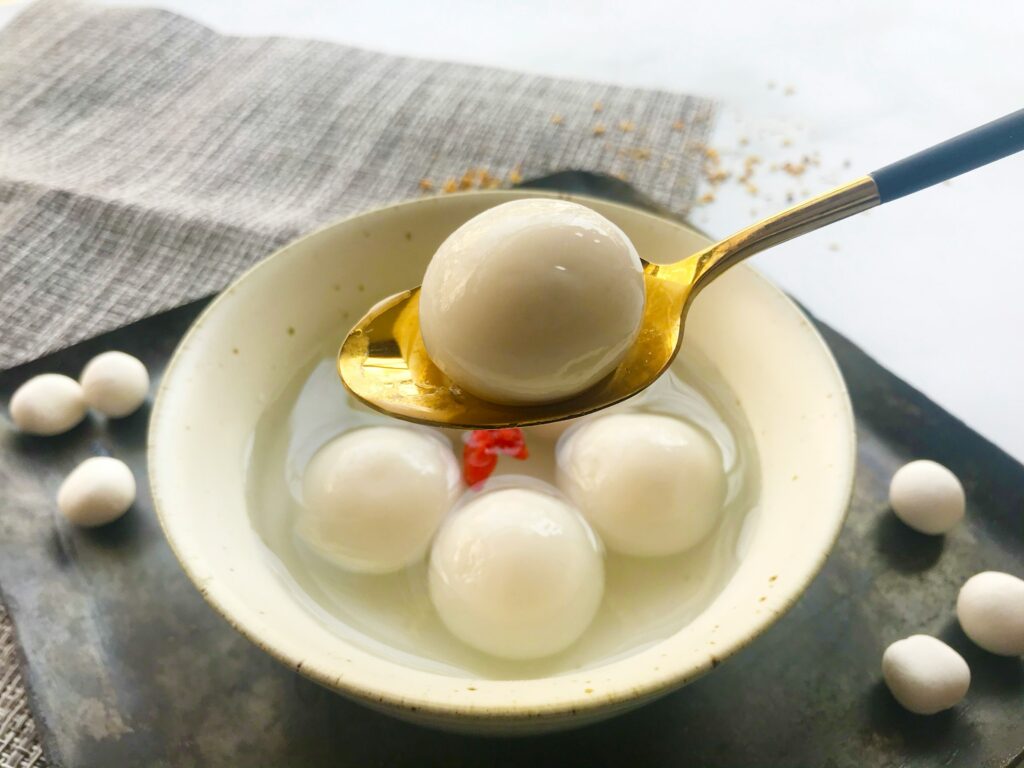
Tang yuan rice balls, a key part of Dongzhi celebrations
What is a traditional food for the Winter Solstice?
With winter solstice being the darkest night before the sun begins to reclaim winter and move towards spring, most cultures have a feast around this time – either to use up the last of the harvest before it goes off, or to fuel themselves for the rest of the cold weather (or both). In many northern Hemisphere countries, seasonal spices like cinnamon, clove and nutmeg would be used either in hot drinks or baked goods like cinnamon buns or bread, while root vegetables would be roasted to bulk out winter feasts. In southern China people enjoy tang yuan (rice balls) or filled with sweet or savory ingredients, or roasted meats like pork.
About Jess Williamson

Jess is an experienced writer and editor, with 6 years' experience working within the whisky industry. Her work has taken her to Scotland and beyond, while her personal travel highlights include backpacking around Vietnam with her sister, trips to California, Madrid, and the Greek islands.
LIKED THIS POST? SHARE WITH YOUR COMMUNITY
Keep exploring