
Secrets of the Alhambra: From Poetry to Napoleon
You can find Moorish architecture in a lot of places, but I think the Alhambra took it to the next level.
On top of a rocky hill overlooking the city of Granada, set against a backdrop of the Sierra Nevada mountains, you might think the surrounding views are the best part of visiting the Alhambra – but anyone who has been inside will tell you otherwise.
At nearly 800 years old, the impressive Alhambra complex ties together Napoleon, 12th century Muslim rulers and 19th century American writer Washington Irving, with evidence of its colorful history literally inscribed on its walls. Originally built as an Islamic palatial city, it later became a royal residence for Spain’s monarchy.
Our brilliant Spain Travel Director Maddy shares her intimate knowledge of the Alhambra, with the inside scoop on how to make the most out of your trip to the palace, from what you might miss to the best time to visit. Maddy has been a Travel Director since 2019, and currently lives in Barcelona when she’s not splitting her time traveling between the Iberian Peninsula and Central European countries.
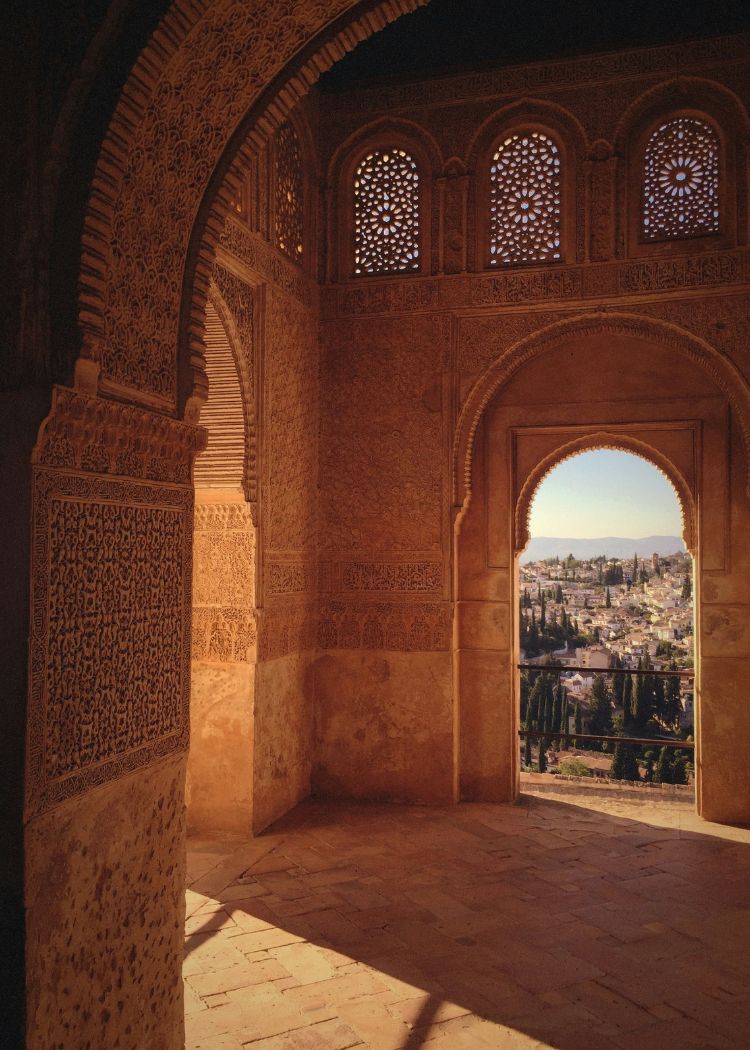

The inscriptions on the Alhambra’s walls contain poems and quotes from the Qur’an.
What is the Alhambra?
“The Alhambra is one of the most visited places in Spain, but as well as being a huge tourist attraction it’s technically known as a historic palace complex,” explains Maddy. “Most people think of just the Nasrid Palace, but the Alhambra itself is the whole complex – it’s almost like a small, fortified city that includes a garden complex, a summer palace, another palace, bath houses, mosques. It sits on a hill just above the city of Granada.”
“It was mostly built in the 12th and 13th century by the Nasrid Dynasty, who were the last Muslim rulers in Spain. They ruled over the Emirate of Granada until 1492, when the last Muslims were basically exiled to Morocco and the Christians took what they called ‘their’ country and unified Spain. It’s not just a beautiful place to visit, but a very historically important one.”
“There was around 700 years of Muslim rule in Granada, with different caliphates and emirates ruling over time. People already lived on that hill beforehand; initially the Jewish community lived on the slopes. Since it overlooked the city, the caliphates started building a fortified place up there. The Alcazar, the defensive part, was already there, but it was the Nasrid dynasty that turned it into what we can see today – the palaces with all the courtyards, bath houses and gardens.”
First impressions
Don’t judge a book by its cover, and don’t make your first judgement of the Alhambra from the outside; its external walls are comparatively plain compared to what’s within, though their red color often catches people’s eyes. In Arabic, ‘al-Ḥamrāʾ’ means ‘the red one’. “It’s not bright red, more of a clay red,” says Maddy. “But it glows really nicely – especially when the sun sets.”
Entering the Alhambra happens a lot earlier than many visitors think. “A lot of people get confused because they think the palace is the entrance, but you’re already inside the Alhambra itself once you’re within the city walls,” says Maddy. “Once you’re inside, it’s impressive right away. It’s very eccentric and decorated from the moment you step into the first palace, and that carries throughout the entire place.”
DISCOVER MORE ON
Spanish Heritage TOUR
What to look out for
“One of the things people notice right away is how intricate and detailed the decorations are, and how symmetric everything is,” explains Maddy. “But just because you can see it doesn’t mean you necessarily understand it. That’s why going with a guide is really handy, because once they explain why everything has been placed the way it is, everything just makes sense. The whole palace was extremely thought through – everything had meaning, some kind of symbolism, some kind of symmetry.”
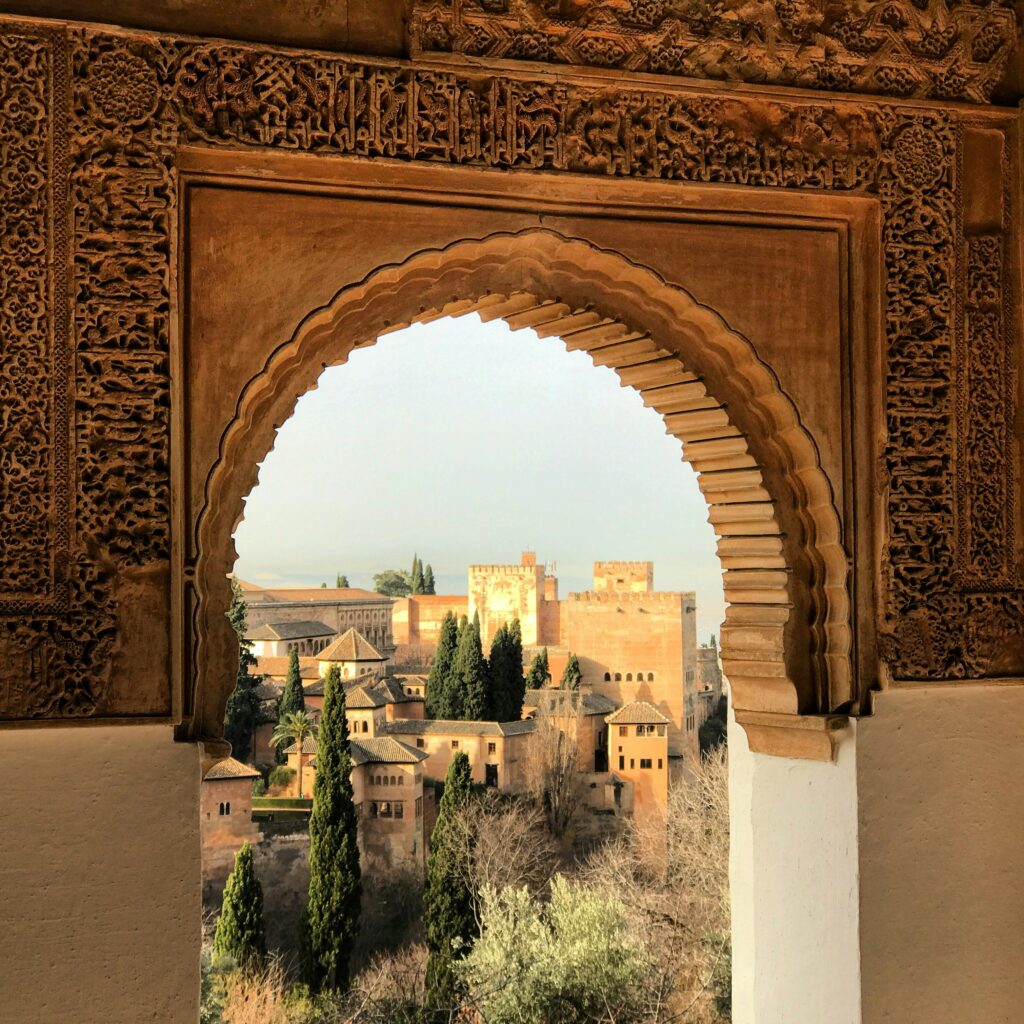
Decode the poetry written on the Alhambra’s walls
“One of the first things I always point out is that the symbols on the walls are not just symbols – a lot of them are written words.”
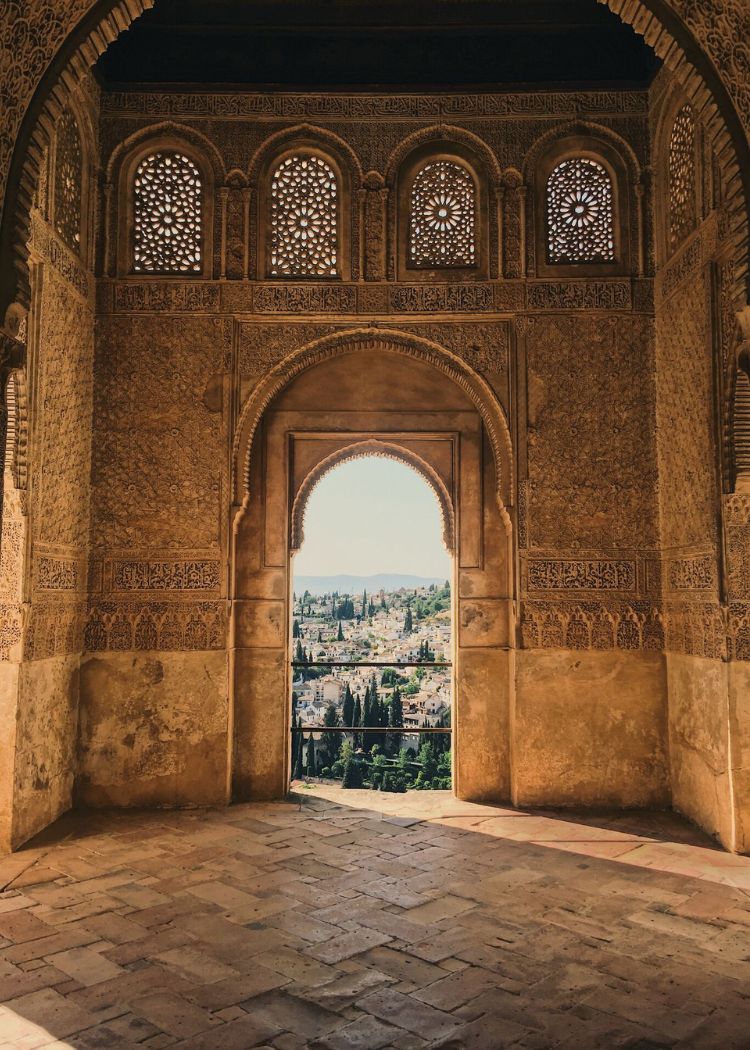
“Although the Alhambra is a building, it’s built up like a poem. The first rooms and courtyards are a little smaller, a little darker, and the further you go in, the more it opens up – like a story or poem. The building is telling you what you’re seeing on the walls with the tiles. There are mottos the family had throughout the years and allusions to their Muslim faith. Most people just don’t have the tools to read it, which is why it’s good to have a guide with you.”
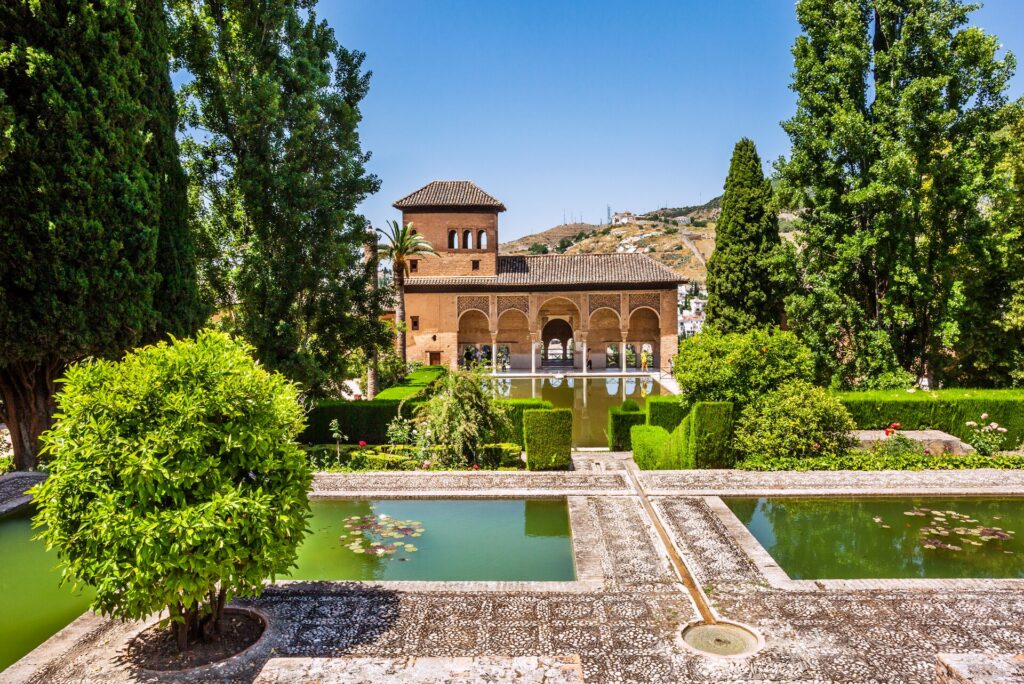
The Partal Palace and Garden
“The Alhambra was built to tell its story, but also with a mathematical, geometric background – the walls, the windows, the columns, the light, the water flows, the reflections. All of that was incredibly important. Where they would sleep in the palace was always arranged so light would come in through the windows at a specific point in the morning, and some of the tiles were placed to reflect that light. Nowadays a lot of the tiles and walls are white or beige, but originally it was really colorful – a lot of red and blue, potentially some gold. The color has just faded over time.”
“The way they used water is also fascinating, because the Alhambra sits up on a hill and – obviously – water doesn’t run uphill. But the Moors had an excellent understanding of how to use water and natural elements to keep things clean and cool, which is very important when it’s 40-45ºC (104-113°F). There’s a huge emphasis on purity and cleanliness in their faith which is why you have water in the rooms, not just in the gardens.”
“You can find Moorish architecture in a lot of places, but personally I think the Alhambra took it to the next level.”
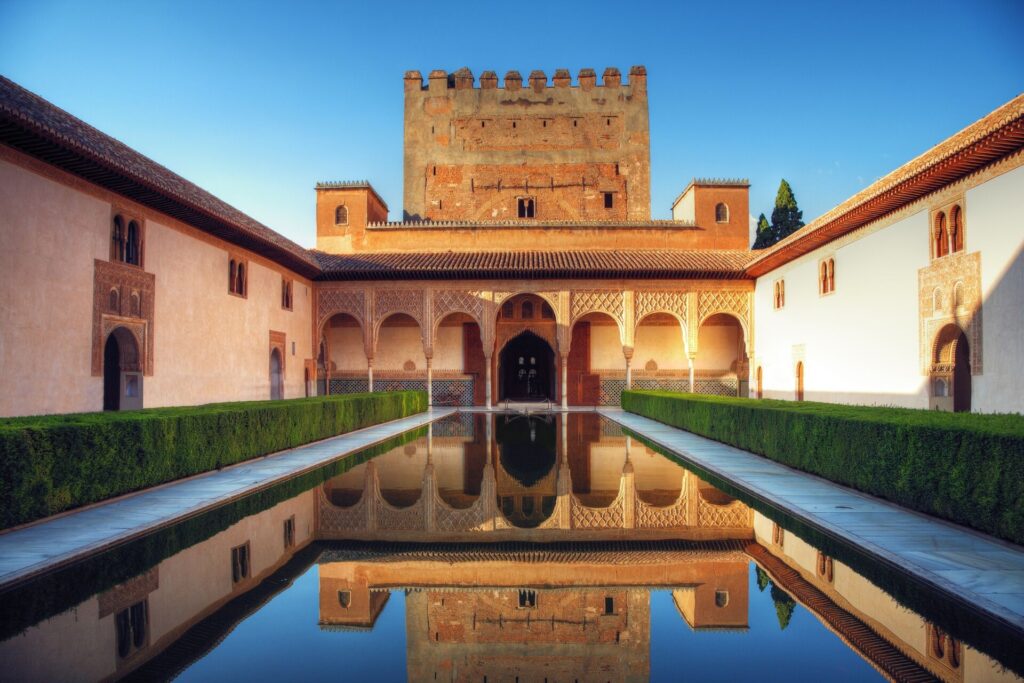
Water features are common throughout the complex to keep it cool
Save up to $3,000* per couple on your first Premium Tour
Plus receive latest offers, travel inspiration, and discover how your travels will make a positive impact. Together, WE MAKE TRAVEL MATTER®. Subscribe NowWhen to visit the Alhambra
There’s never a bad time to visit the Alhambra – it just depends on what aspect of the palace you want to see. “The light comes in at different points throughout the day, so there’s always something beautiful no matter when you go,” says Maddy. “Morning is nice because there are fewer crowds and it’s cooler. In the afternoon, the sun comes in through the courtyards and makes reflections – there are specific courtyards with a water channel where you can see the reflection of the building much better later in the day. So there are upsides to both!”
“They also have night visits, which I’ve heard are really nice – a very soft light illuminates the palace, and it gives the whole place a lot more mystery. Fewer people are let in, so it appears more mysterious than during the day.”
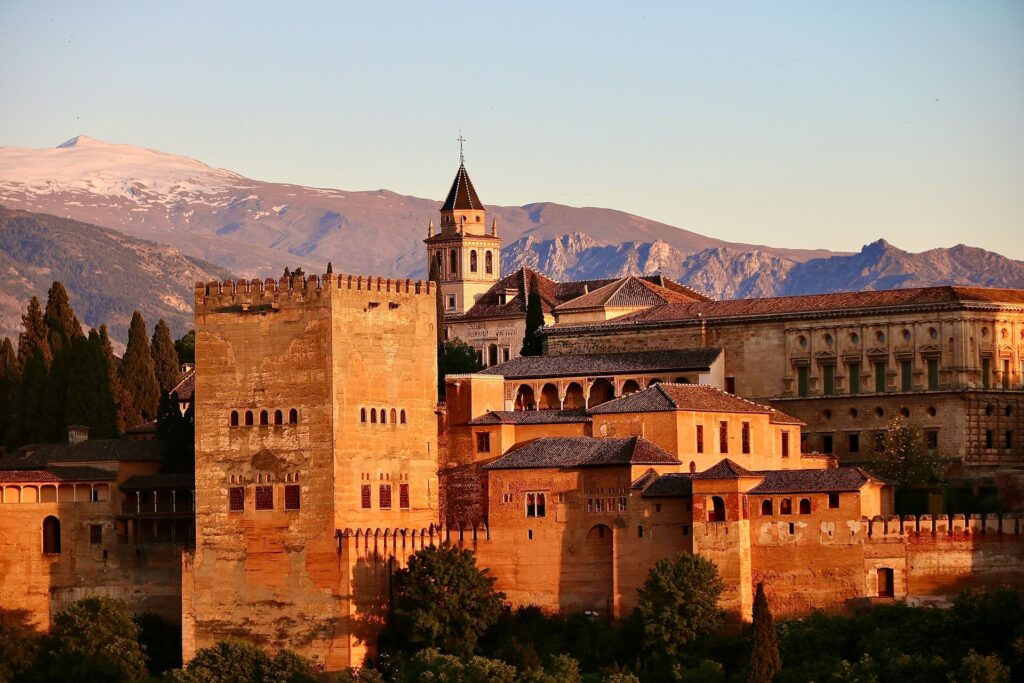
Sunset is one of the best times to see the Alhambra from afar
From another angle
Entering the palace complex isn’t the only way to appreciate the Alhambra. “The best way to see the Alhambra from the outside is from the hill across – an area called Albaicín, a beautiful old Moorish neighborhood with white houses climbing up the hill,” reveals Maddy. “There’s a viewpoint called San Miguel, and in the evening you get a really nice view of the sunset illuminating the Alhambra on the other side of the valley.”
“At sunset people gather in the little square. There are two or three cafes, people sit outside with a drink, there’s usually music, and you watch the sun go down and the Alhambra illuminate. I always recommend it, it’s really authentic.”
“It also gives you an idea of how big the whole complex is, because when you’re inside you can’t really grasp the size – you see all the details and beauty, but from across you can see how far the gardens reach, where the Summer Palace is, where the defensive towers were.”
Granada’s Albaicín district is considered one of the best places to see the fortress from a different vantage point.
Napoleon and the Alhambra
“The Alhambra is such a fascinating place that some stories get forgotten,” says Maddy, talking about the Alhambra’s connection with Napoleon.
“When Napoleon came through Spain during the Peninsular War (where Spanish, Portuguese, and British forces opposed French occupation in Iberia from 1807 to 1814), he used the Alhambra as a fortified defence,” she explains. “When he eventually lost his reign over Granada, he wanted to make sure nobody else could use the Alhambra. He blew up several defensive towers, and put dynamite around the palace itself to destroy everything, but Spanish soldiers saw and deactivated some of the fuses, and that’s why we still have it today. The palace had minor damage but was never fully blown up.”
Alhambra’s global influence
Around the same time there was a growing Romantic movement throughout Europe, which was at its peak between 1800-1850 when artists and writers were traveling to discover historic sites from hundreds of years prior. At this point, the Alhambra had been abandoned for many years and fallen into disrepair. “The Alhambra was one of the places the Romantics were extremely fascinated by,” says Maddy. “An American writer called Washington Irving even lived there for a bit – squatters had moved in at that point and it wasn’t well maintained.”
While serving as the American ambassador to Spain in the 1840s, Irving wrote a book called Tales of the Alhambra. It became so popular and influential that the book inspired a city in California to be named after the palace. During your visit, look out for the commemorative plaque with the words “Washington Irving wrote his Tales of Alhambra in these rooms in 1829“, inscribed in Spanish.
“The book’s success likely had something to do with how popular the Alhambra became over time, leading to it being maintained and becoming a tourism attraction.”
Similar Spanish architectural wonders
Love the Alhambra? Maddy has plenty of recommendations for architecture lovers who want to explore more of Spain. “If you’re into Moorish architecture, most of it you’ll find in the south,” she explains. “The Mezquita Cathedral in Córdoba is another incredible building – it used to be one of the biggest mosques in the world in the 9th through to the 11th century. When Córdoba was taken over by the Christians, they built a cathedral right in the center of the mosque. You have white and red brick horseshoe arches, inscriptions from the Qur’an, and a lot of Islamic symbolism. After walking through 200 or 300 of these arches, suddenly you’re standing in the middle of a cathedral. It incorporates both religions, but with beautiful Moorish architecture throughout.”
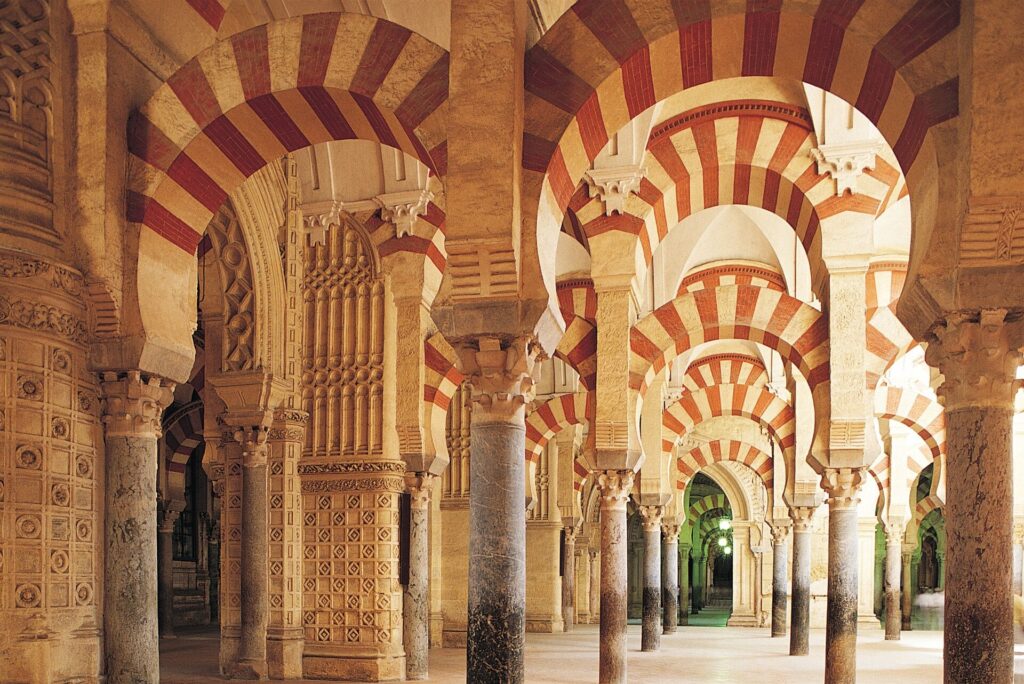
Mezquita Cathedral in Córdoba
“In Seville, the Alcázar is probably the most famous example of Moorish architecture – the palace where the caliph that ruled Seville used to live. It’s similarly built to the Alhambra but smaller. Interestingly, when the Spanish royal family visits Seville, they actually stay in that building. What’s really beautiful about it is the garden; it’s breathtaking, with a gallery walkway, peacocks, fountains and trees. It was also used as a filming location for Game of Thrones as the kingdom of Dorne.”
“In and around Seville you’ll also find Casa de Pilatos, which is really beautiful if you’re looking for tile art. The Plaza de España is only about 100 years old but was built with the red brick and tiles, clearly inspired by Moorish architecture. You can even paddleboard on the little canal that runs through it.”
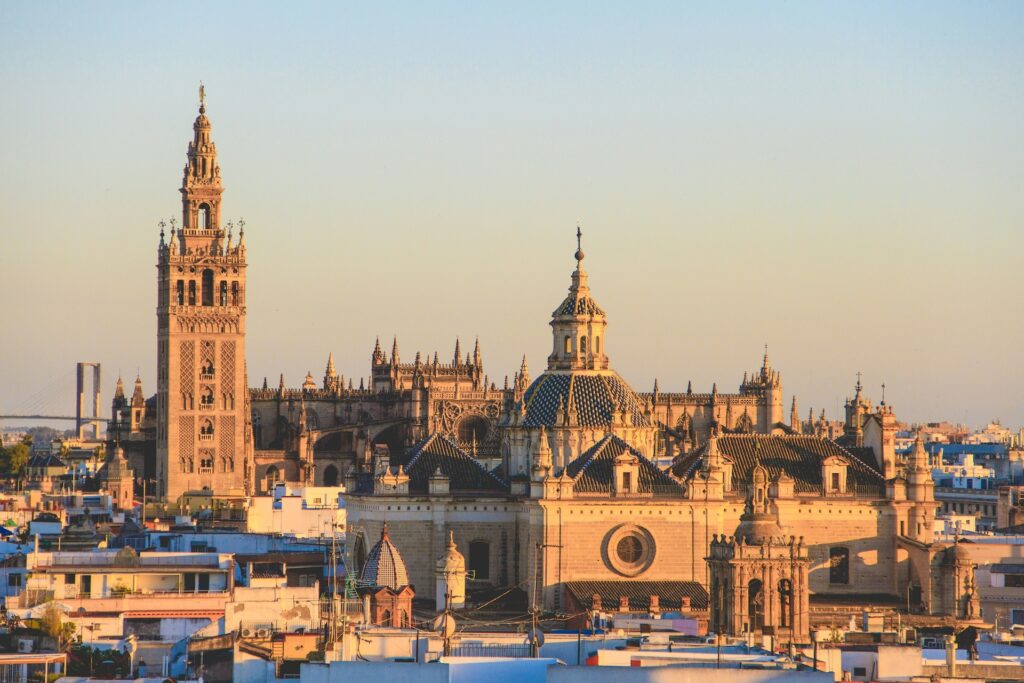
Seville Cathedral, another destination for architecture lovers
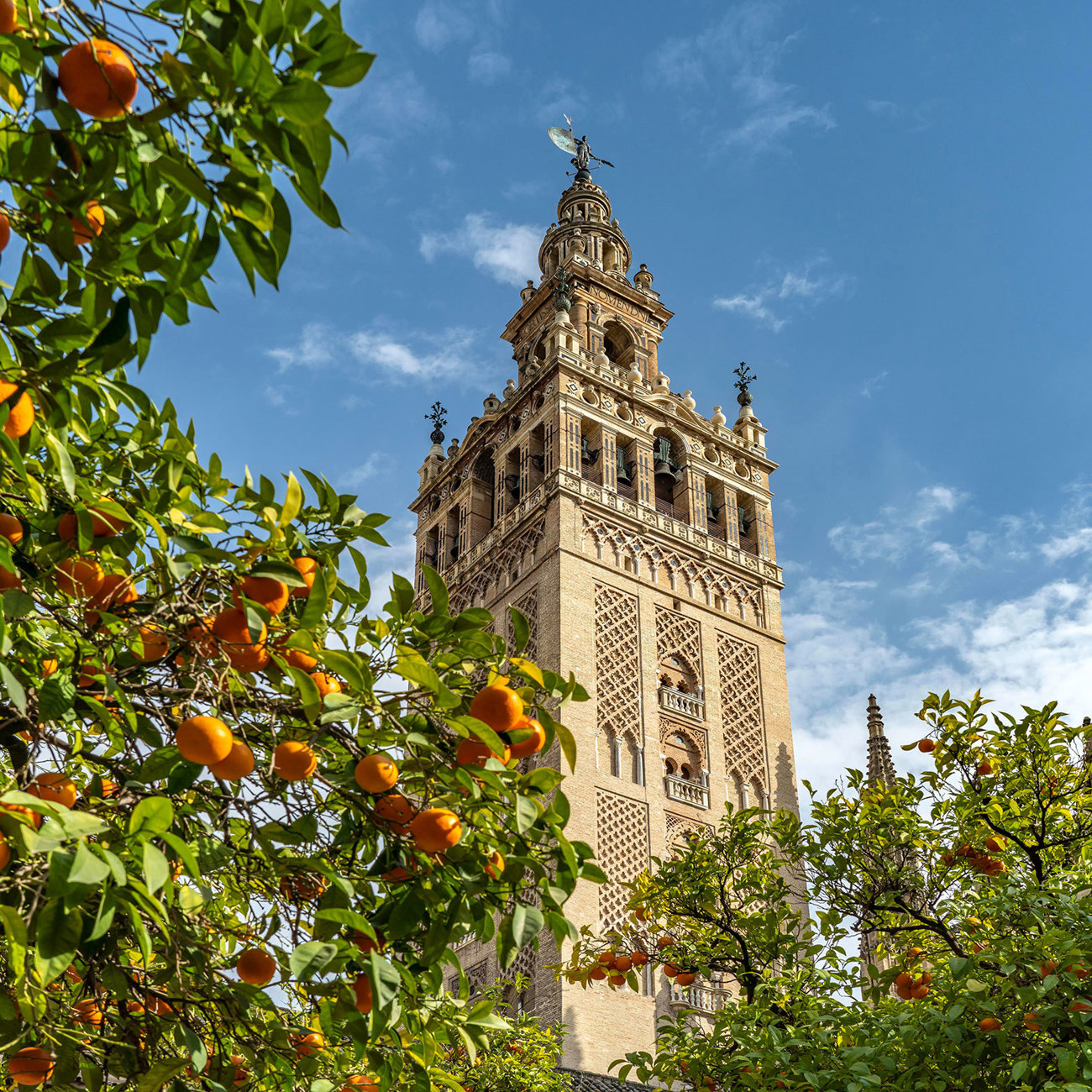
“Seville Cathedral is also stunning. It’s huge, with a clock tower that used to be a minaret (a tower built into or adjacent to a mosque, used to project the Muslim call to prayer). They just repurposed the minaret and built the cathedral adjacent to it. Inside there’s a courtyard with orange trees and little canals, very clearly where a mosque once stood.”
Uncover the secrets of the Alhambra Palace and other Spanish architectural wonders on Spanish Heritage and Highlights of Spain.
About Jess Williamson

Jess is an experienced writer and editor, with 6 years' experience working within the whisky industry. Her work has taken her to Scotland and beyond, while her personal travel highlights include backpacking around Vietnam with her sister, trips to California, Madrid, and the Greek islands.
LIKED THIS POST? SHARE WITH YOUR COMMUNITY
Keep exploring