National Treasure: Why Yellowstone National Park is North America's Greatest
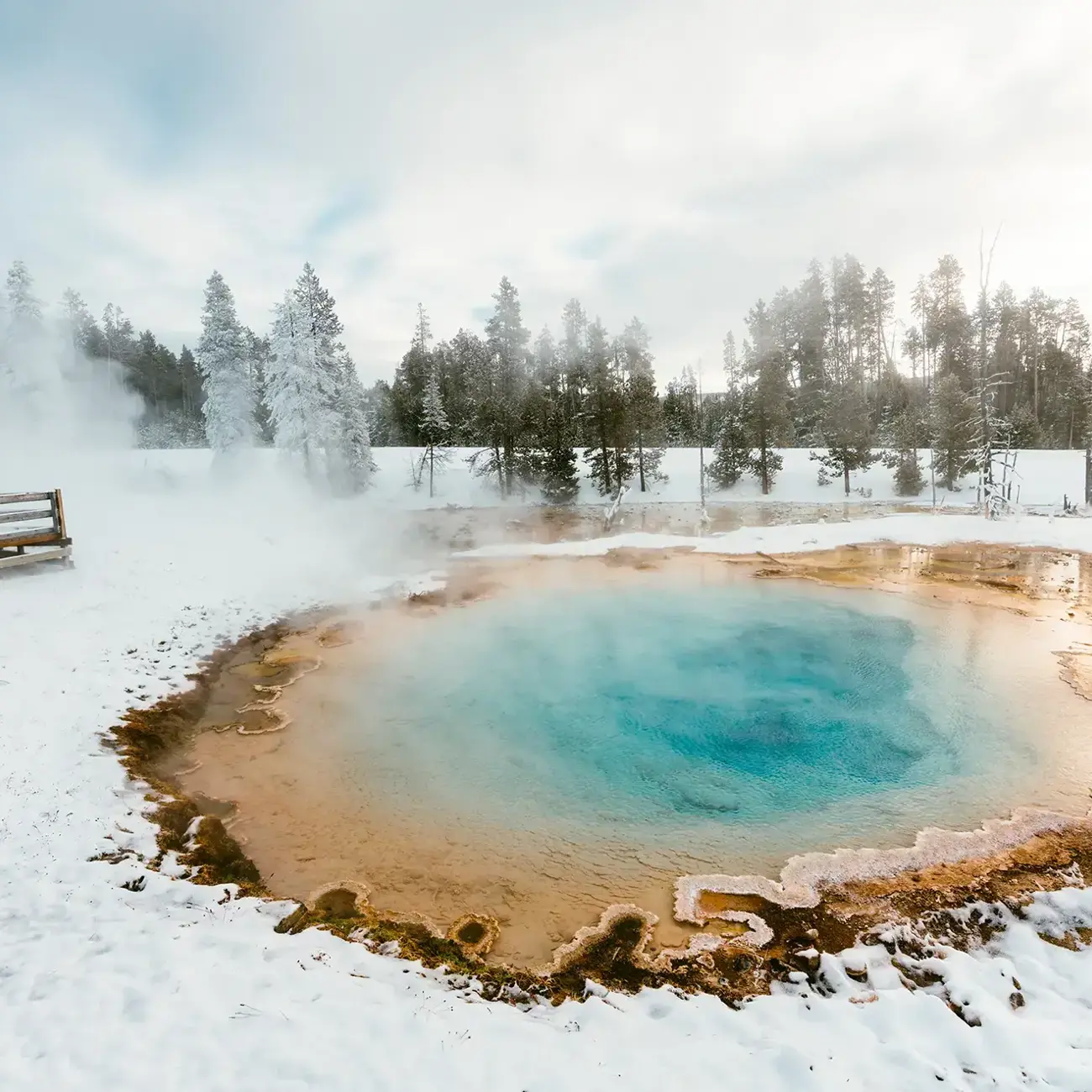



Summer is when most people meet Yellowstone, and with good reason: long days, open roads and every boardwalk within reach. But the park has a second season, one far fewer people ever see.
In winter, the park changes its terms. Snow closes the interior roads to cars, visitor numbers fall away, and Yellowstone starts showing its workings: how heat moves through the ground, how animals ride out temperatures far below zero, how a landscape this restless holds together under a few feet of snow.
“Fire and ice” is the phrase everyone reaches for, but “magic” would be better suited. On a cold morning in a geyser basin, water exists as liquid, steam and ice all at once, often within a few steps of each other. Here are eight reasons to go and see it for yourself.
Table of Contents

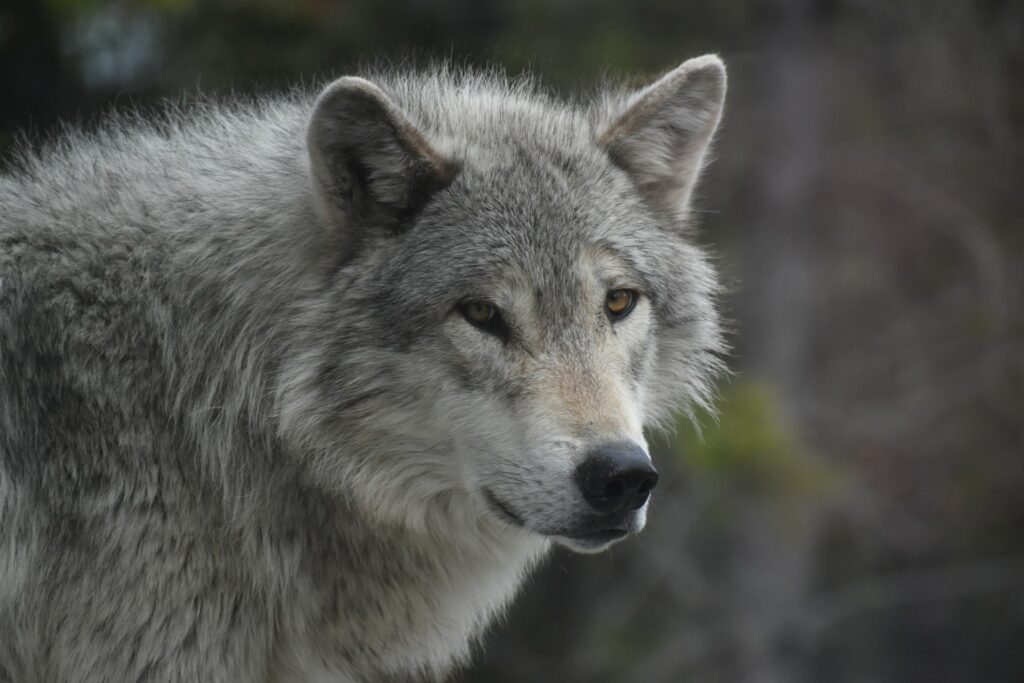
Winter is a top season for spotting gray wolves, alongside elk, coyotes, bald eagles and red foxes.
Winter accounts for only around 5% of Yellowstone’s annual visitors. One often-cited comparison puts it more starkly: at the peak of summer, more people arrive in four days than in the whole of December through March. What that means on the ground is simple. At Old Faithful, you hear your own boots on the snow, and anticipation in the silent air as you wait for its eruption. At the canyon overlooks, you wait for the light, not for a gap at the railing. Rangers and guides have time for a second question, and a third.
The road through Lamar Valley, in the park’s northern range, stays open to vehicles all winter, and this is where Yellowstone’s wolves are most often seen. Gray wolves were reintroduced here in 1995 after an absence of roughly 70 years, and their effect on elk, rivers and riverbank plants is still being studied.
Snow makes the valley readable. Dark shapes stand out against white slopes, tracks record who passed in the night, and ravens circling over a ridge often mean something worth a closer look. On Insight Vacations’ new Yellowstone Winter Escape Small Groups tour, you travel into Lamar Valley with MacNeil Lyons, a guide with 20 years’ experience leading tours in Yellowstone, who takes you to the park’s northern range, explaining the wolves’ return and the ecological balance it helped restore. Sightings are never promised, which is rather the point.
In 1995, 31 gray wolves were relocated to Yellowstone from Canada. This reintroduction proved to be a great success.
Bison have lived in central Yellowstone for some 10,000 to 12,000 years, and the park’s geothermal heat is part of the reason. In winter, much of the central herd gathers along the Firehole and Madison rivers, where warm ground holds less snow and some plants keep growing year-round.
On the coldest mornings, the bison wear a coat of frost on their backs. Their fur insulates so well that the frost settles and stays. Watch one feed and you’ll see it swing its huge head from side to side, clearing snow out the way to reveal grass below.
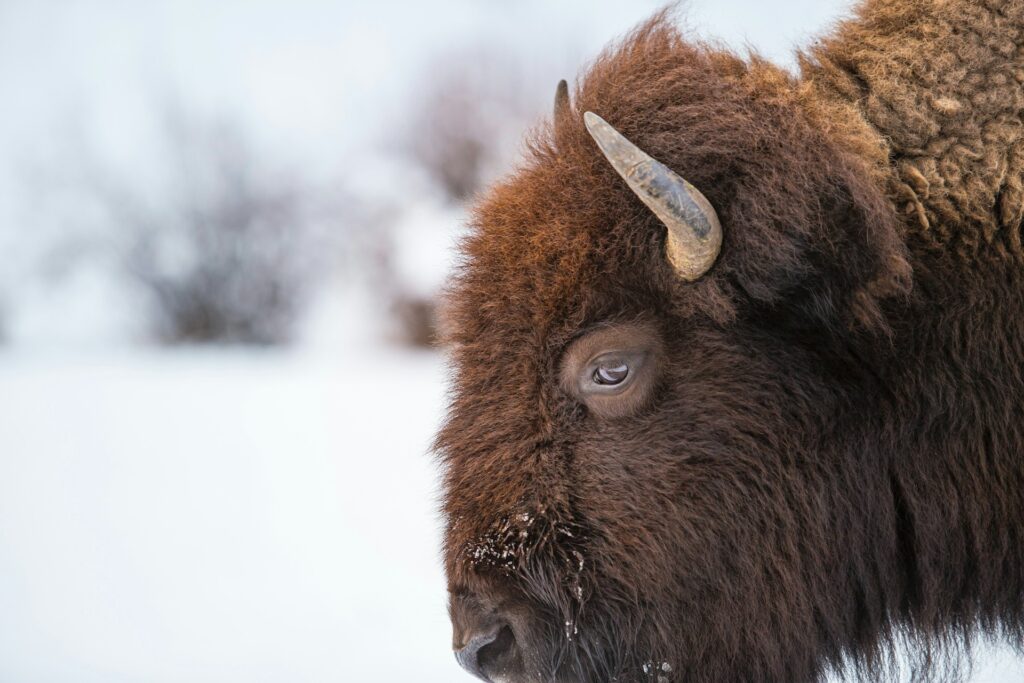
Yellowstone is the only place in the U.S. where bison have lived continuously since prehistoric times.
Cold air makes Yellowstone’s thermal features far more visible. Steam condenses faster in freezing temperatures, so plumes rise thicker and hang longer over the basins. Mammoth Hot Springs smokes against its own white terraces, and Norris Geyser Basin, the park’s hottest, can vanish inside its own weather.
Two nights at the Old Faithful Snow Lodge on Days 3 and 4 of the Yellowstone Winter Escape put you only a short walk from the geyser itself. It erupts roughly every hour and a half, and in winter you watch from the snow with a handful of people rather than a few thousand. Look at the lodgepole pines nearby, too: frozen spray turns them white, branch by branch.
Hot water draining from the thermal basins keeps stretches of the Firehole, Madison and Yellowstone rivers open through the deepest cold. That open water is a lifeline. Trumpeter swans need it as both runway and larder, and a small resident population is joined each winter by migrants from Canada. River otters fish the same channels, and bald eagles watch from the pines.
It’s a story best told by the people who study it. In Gardiner, at the park’s northern edge, a MAKE TRAVEL MATTER® Experience with Yellowstone Forever, the park’s official nonprofit partner, looks at exactly how wildlife survives a Yellowstone winter.
Yellowstone is home to the largest concentration of mammals in the lower 48 states.
The Lower Falls of the Yellowstone River drops 308 feet into the Grand Canyon of the Yellowstone, roughly twice the height of Niagara. In winter, its spray freezes onto the canyon walls and builds a cone of ice at the base, while the river keeps pouring through the middle.
The photographer Frank Jay Haynes took the first winter photographs of the falls in January 1887. Stand at the rim with the canyon’s yellow rock dusted white and it’s easy to see why he made the journey.
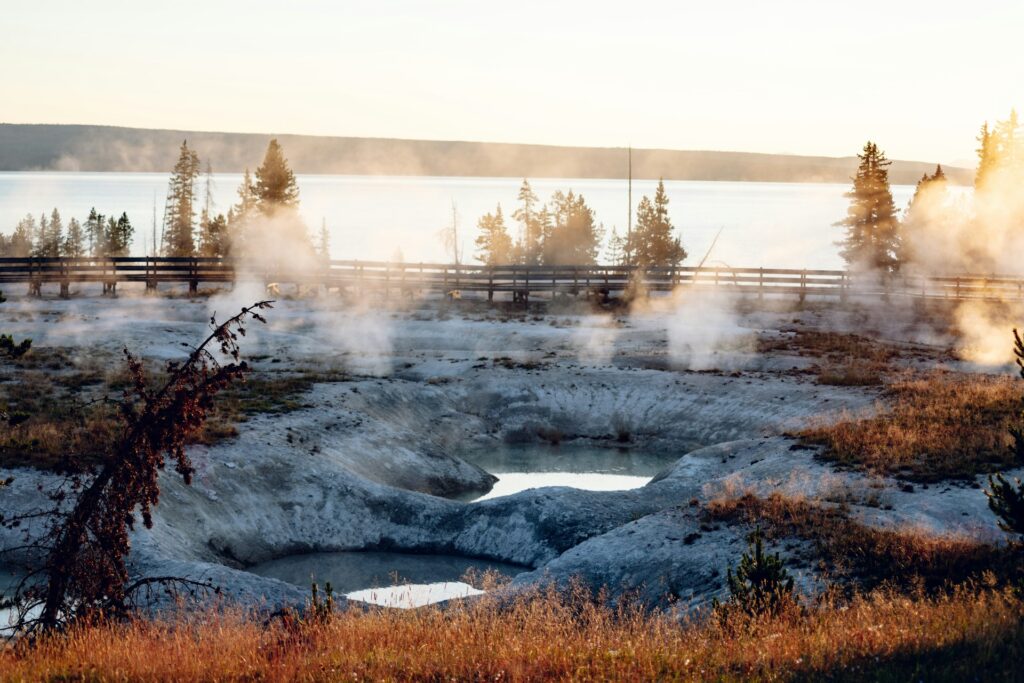
Yellowstone National Park has roughly half of all active geysers on Earth.
Once enough snow settles, usually by mid-December, the park’s interior closes to private vehicles. The only way in is by guided snowmobile or snowcoach, a tradition that began in 1955 with the first Bombardier coaches, designed by a Quebec inventor for Canadian winters.
Today’s snowcoaches are heated, high-riding and driven by guides who know where the bison tend to cross. On the Yellowstone Winter Escape you spend a full day aboard, traveling routes that only exist in winter and stopping at the Grand Canyon of the Yellowstone on the way to Old Faithful. Nobody has to think about the driving.
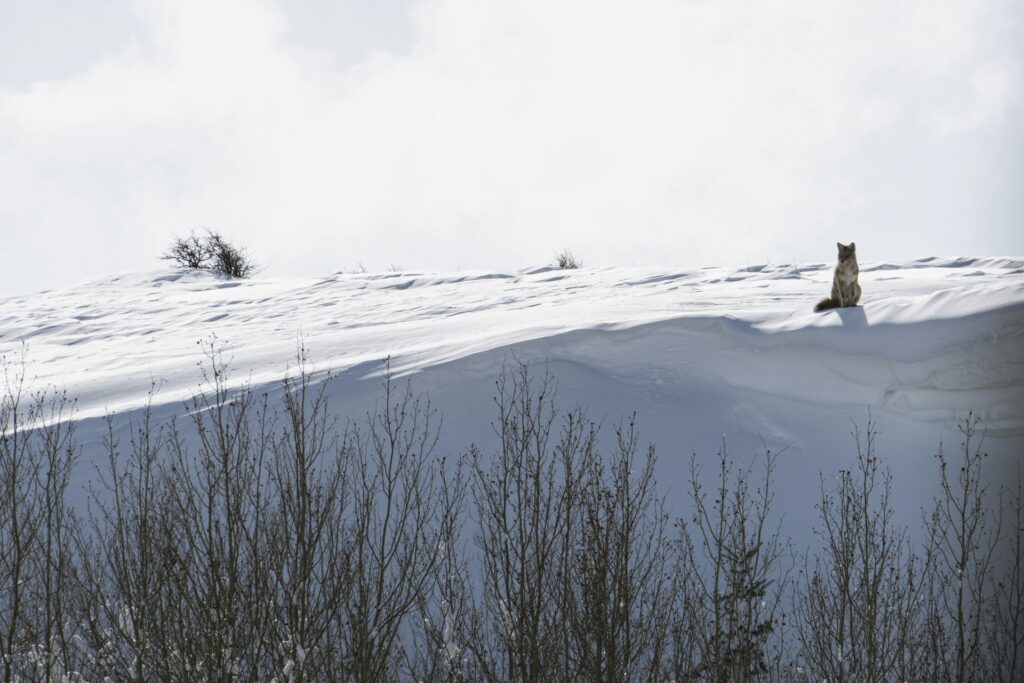
Fresh snow absorbs sound, and Yellowstone’s winter silence is something visitors tend to mention long after they’ve forgotten the temperature. Out here, even the coyotes hunt by ear, listening for voles moving beneath the snow before they leap.
Travel in winter and Yellowstone starts to explain itself: why the bison gather where they do, why the swans stay, why the steam hangs the way it does. Summer is when you see Yellowstone; Winter is when you understand it.

LIKED THIS POST? SHARE WITH YOUR COMMUNITY


Plus recieve latest offers, travel inspiration, and discover how your travels will make a positive impact. Together, WE MAKE TRAVEL MATTER®