The 13 Most Beautiful Medieval Towns in Europe
In the most beautiful medieval towns in Europe there still lives the last embers of the Old World. You feel it in cobblestones worn smooth by a thousand years of footsteps, in market squares that have been stage to arguments, deals, and great dramas, in city walls built to keep the world out that now only hold the past in.
Europe’s beautiful medieval towns offer something no modern city can manufacture: authenticity that was never designed to impress you. These places were built for living, trading, and surviving…the fact that they’re breathtaking is almost incidental. Here are thirteen that generously reward the curious traveler.


Europe’s first universities were medieval. Bologna (1088), Oxford (around 1096), and Paris (around 1150) all emerged from the medieval period.
1. Rothenburg ob der Tauber, Germany
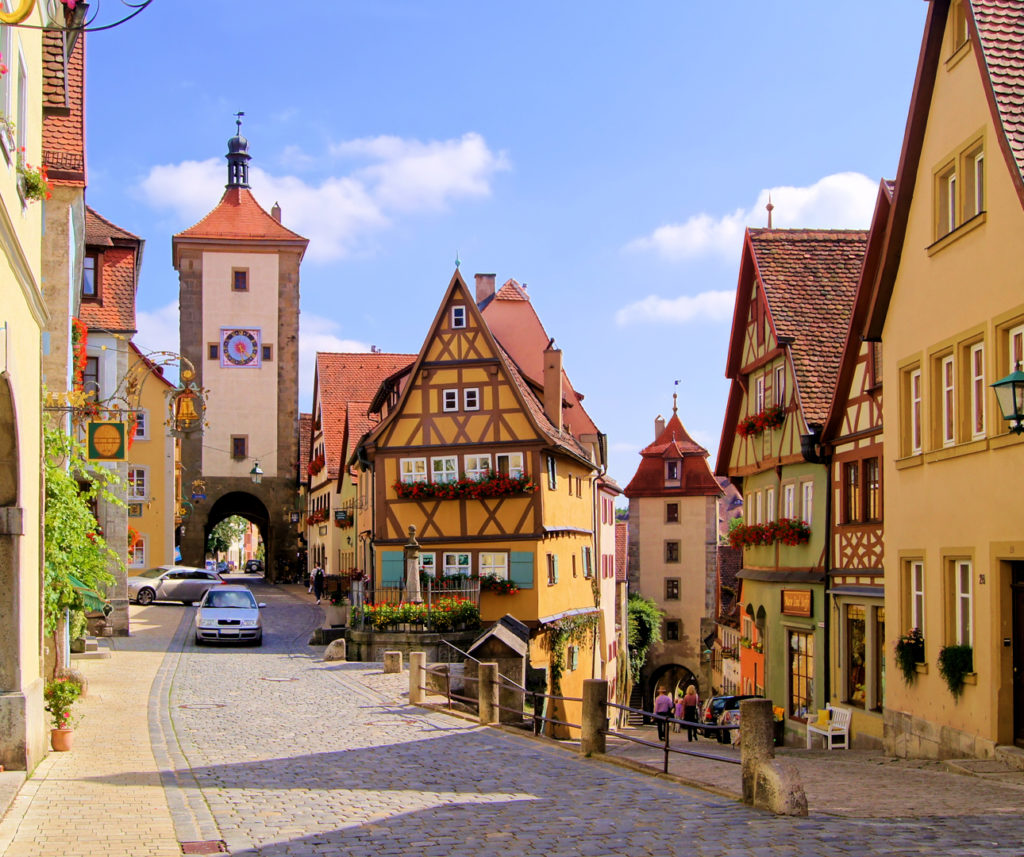
If a medieval town existed only in the imagination, it might look something like Rothenburg. Perched above the Tauber Valley in Bavaria, its intact ring of walls, half-timbered houses, and soaring Gothic church spires have remained essentially unchanged since the 17th century.
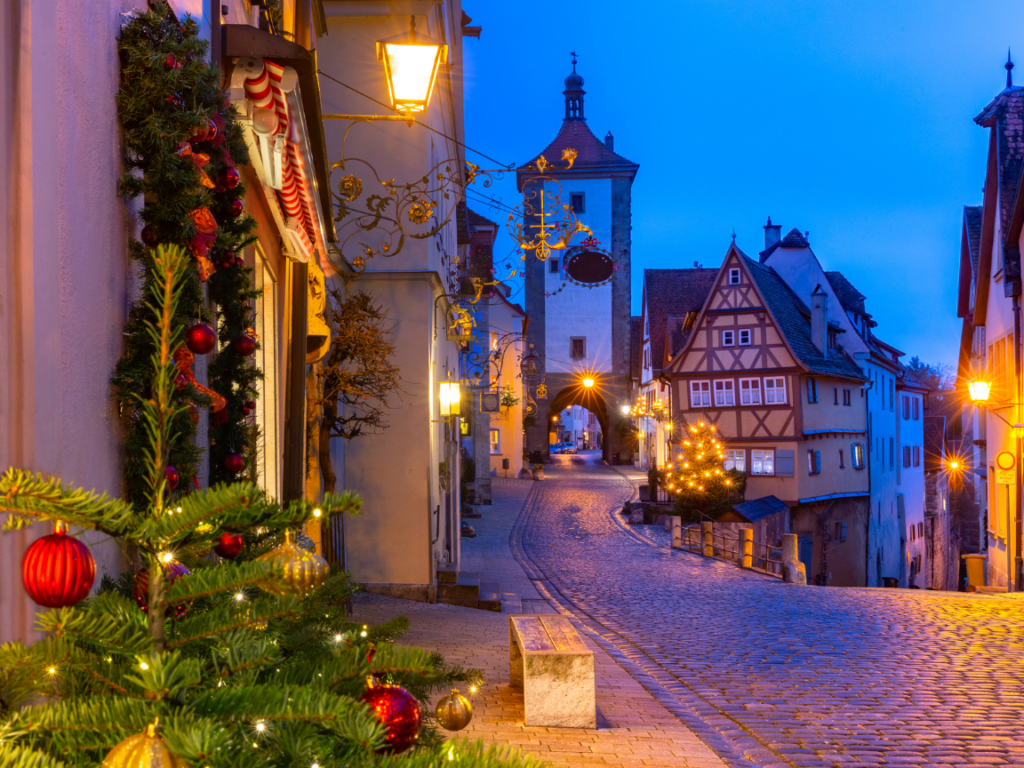
The town’s double-arched Plönlein, a small square where two cobbled lanes diverge beneath a timber-framed house, is perhaps the most photographed corner in Germany. But the real reward is walking the full circuit of the ramparts at dusk, when the day-trippers thin and the town settles back into itself. Below the walls, the Tauber Valley drops away into a patchwork of vineyards and orchards. Above, the spire of St. Jakob’s Church marks a skyline unchanged since the Thirty Years’ War.
Insightful tip: The town is extraordinarily busy in summer; visit in shoulder season (April–May or October) and you’ll have the morning streets almost to yourself. Don’t miss the Käthe Wohlfahrt Christmas shop, which operates year-round with an enthusiasm that is either charming or alarming, depending on your tolerance for festive décor.
See it with Insight: Rothenburg is a highlight of the Best of Germany tour, where your Travel Director leads a guided walk through the medieval streets with a Local Expert, including a Franken culinary experience that goes well beyond the famous Schneeball pastry.
2. Bruges, Belgium
Few cities in Europe have the confidence to be this beautiful without apology. Bruges (or Brugge to its Flemish-speaking residents) was once among the wealthiest cities in medieval Europe, a trading hub connecting England’s wool merchants with the silk routes of the East. Then the River Zwin silted up in the late 15th century, the merchants drifted to Antwerp, and Bruges was preserved in amber.
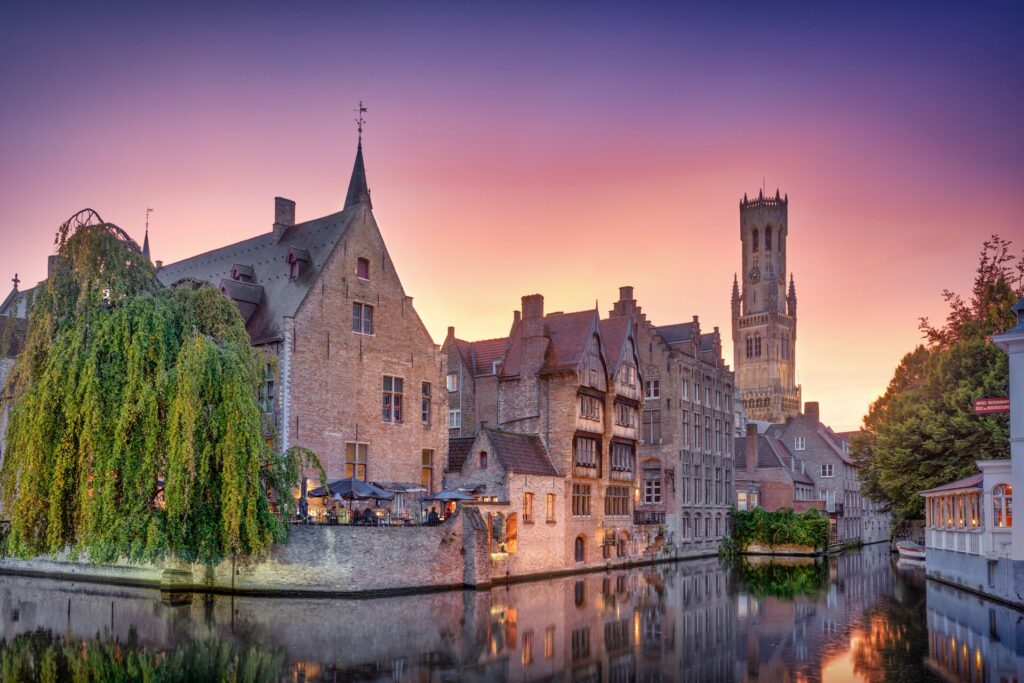
What remains is a near-perfect medieval city: a lacework of canals, step-gabled guild houses, and the Belfry tower that has marked the city’s hours since 1240. The Flemish Primitives—Van Eyck painted the Ghent Altarpiece here; Memling spent his career here—left a visual legacy that fills the Groeninge Museum and the Hospital of St. John. The Basilica of the Holy Blood claims to hold a relic of Christ’s blood brought back from the Crusades, and whether or not you’re inclined to believe that, the procession it generates each Ascension Day is one of the great spectacles of Flemish civic life.
Insightful tip: The canal boat tours are worth it even if they feel touristy. The city reads entirely differently from the water. Book the first boat of the morning. The Markt square cafés are beautiful but overpriced; walk one street back and the prices drop considerably.
See it with Insight: Bruges features on several Insight itineraries covering Belgium and the Low Countries. Your Travel Director will navigate you past the tourist trail to the city’s quieter corners.
3. San Gimignano, Italy
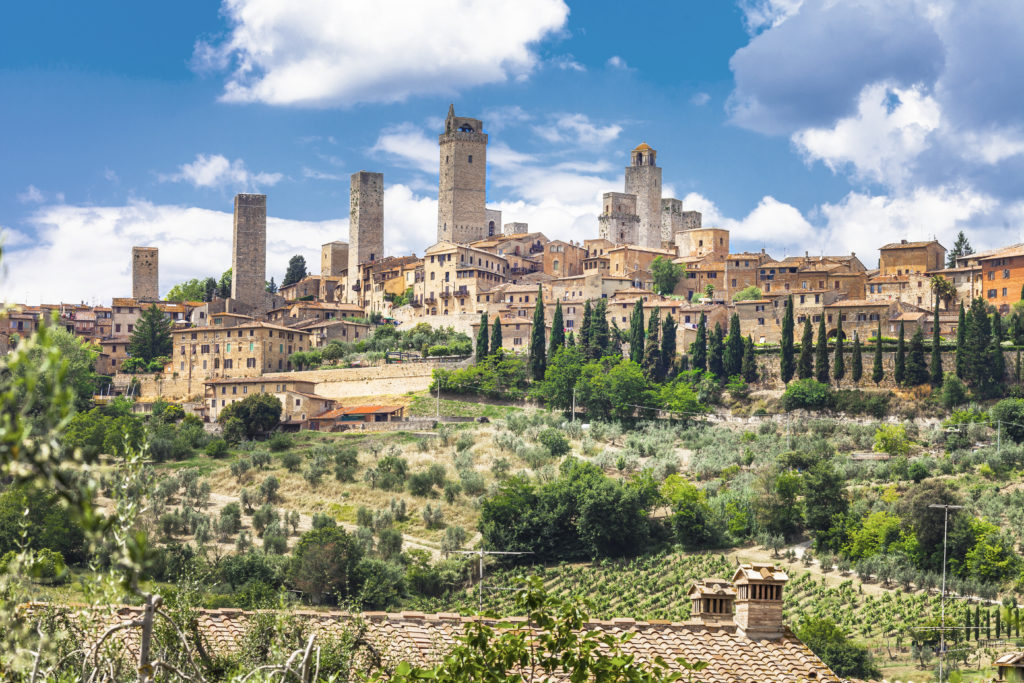
Medieval status anxiety built this town. San Gimignano’s famous towers (fourteen survive of the original seventy-two) were erected by rival noble families, each trying to build higher than the neighbours. The result is a beautiful Tuscan hilltop skyline rising above the vineyards that produce Vernaccia di San Gimignano, one of Italy’s oldest documented white wines.
The town is compact enough to walk completely in a morning, but dense enough in interest to fill a day: the Collegiata’s frescoes depict heaven and hell with a vividness suggesting their painters had given both serious thought; the Civic Museum holds the first known painted secular bedroom scene in European art; the Piazza della Cisterna has been the social centre of the town since the 13th century and shows no signs of changing its habits.
Insightful tip: San Gimignano is a day-trip destination from Florence and Siena, meaning it floods with visitors by mid-morning. Staying overnight, even one night, transforms the experience entirely. The surrounding countryside produces excellent Vernaccia (white) and Chianti Colli Senesi (red); ask in the enoteca rather than buying from the tourist shops.
See it with Insight: San Gimignano features on the Country Roads of Umbria & Tuscany tour and the broader Italian Elegance itinerary. On both, your Travel Director takes you to meet a world-champion gelato maker; a detail that sounds whimsical until you taste it.
4. Český Krumlov, Czech Republic
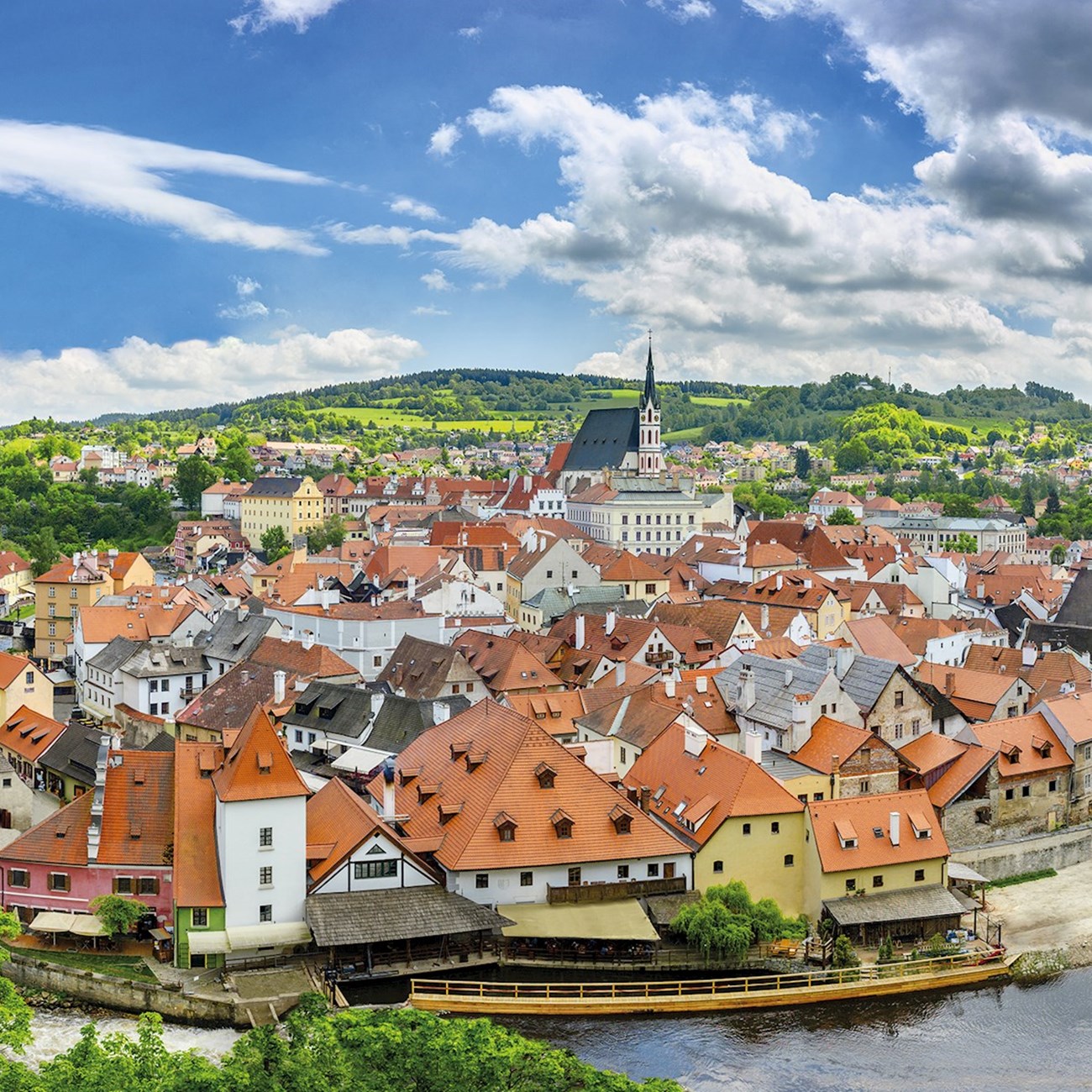
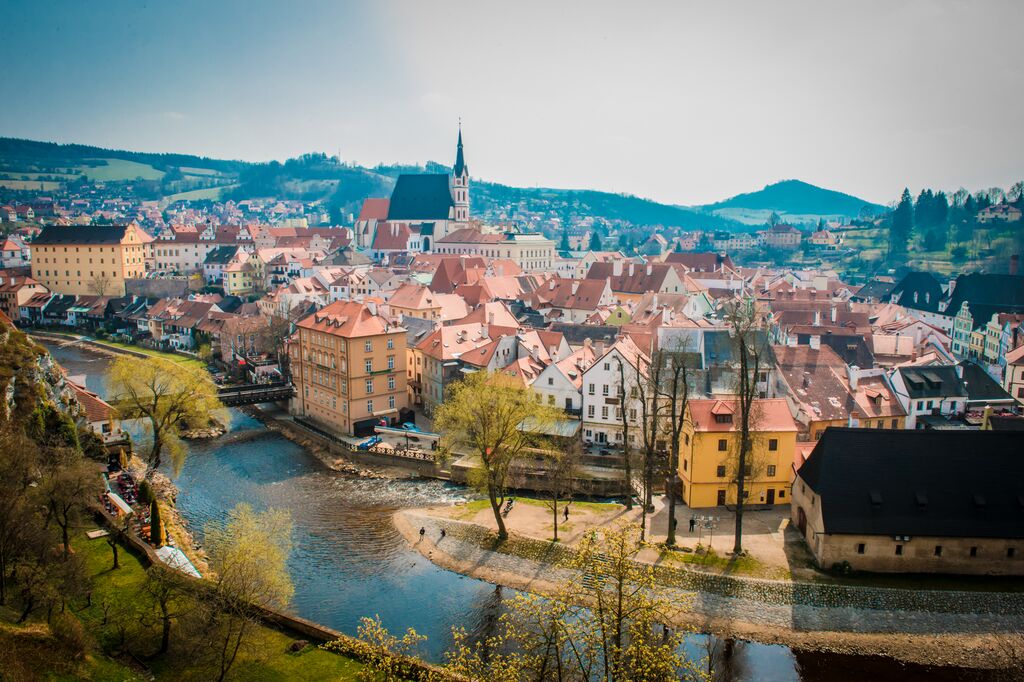
In the far south of Bohemia, where the Vltava River bends almost back on itself, Český Krumlov occupies a peninsula so dramatically situated it looks like a set someone forgot to dismantle. The castle, second largest in the Czech Republic after Prague, rises above a town of baroque facades. Its Renaissance courtyards and streets have changed so little that the 16th century feels genuinely closeby.
The castle complex is extraordinary: five courtyards, a Renaissance fountain, a Baroque theater with original stage machinery still in working order, and formal gardens that staircase down the hillside. Below, the old town’s colored plaster houses press together so tightly it looks like a drawing, and the Vltava curves around everything like a moat the river built itself.
Insightful tip: Český Krumlov is an easy day trip from Prague or Salzburg, but the town empties of day-trippers by late afternoon and takes on an entirely different quality in the evening. The river also offers kayaking and rafting, which are surprisingly popular, and a genuinely good way to see the castle from an angle most visitors miss.
See it with Insight: Český Krumlov is a highlight of the Country Roads of Central Europe tour (Vienna–Budapest via Prague), with a full orientation led by your Travel Director through the medieval streets, plus free time to explore at your own pace.
5. Dubrovnik, Croatia
The great Adriatic city-state that was never conquered, never absorbed, never really told what to do by anyone. The Republic of Ragusa maintained its independence for over four centuries through a combination of shrewd diplomacy, sophisticated governance, and walls so formidable that even the Ottoman Empire couldn’t get through. Inside those walls, arguably the finest medieval fortifications in Europe with two kilometers of walkable ramparts, the city is a marvel of urban planning: fountains, monasteries, an orphanage founded in 1432 (one of the earliest in Europe), and a pharmacy that has been operating since 1317.
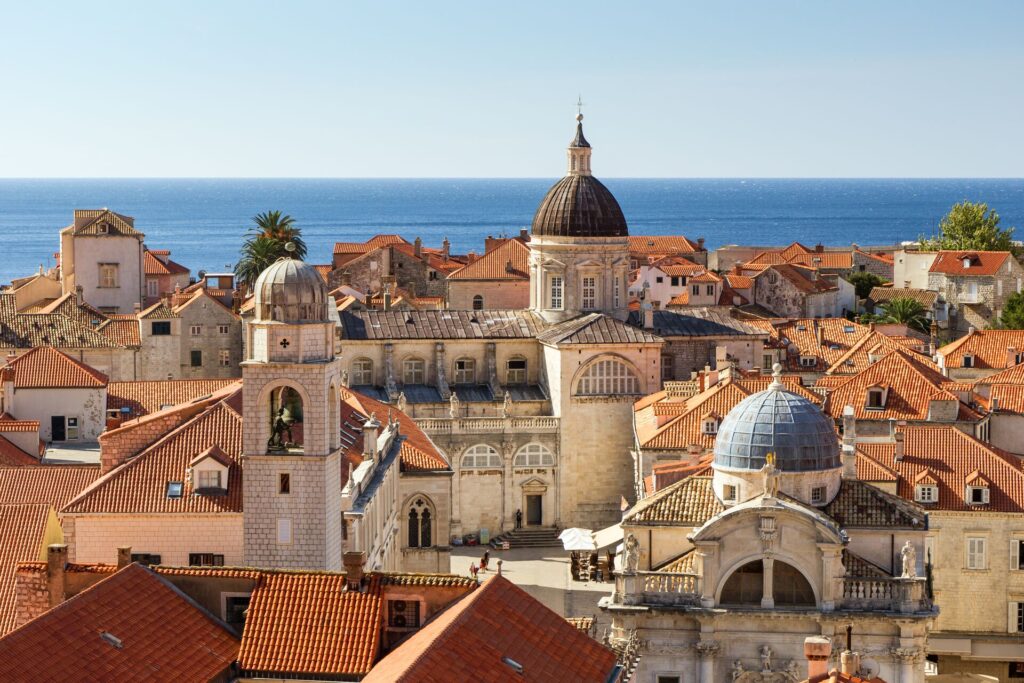
The Adriatic beyond the walls is intensely blue against honey-coloured limestone. The main street, the Stradun, is paved in marble worn so smooth by centuries of footsteps it reflects the sky. Dubrovnik is one of the rare places that exceeds its own considerable reputation.
Insightful tip: Dubrovnik suffers serious overtourism in July and August. Come in May, June, or September for the same light and beauty with a fraction of the crowds. Walk the walls first thing in the morning; by 10am they’re busy, by noon they’re a slow-moving queue. The cable car to Mount Srđ gives exceptional views and most visitors skip it. Don’t.
See it with Insight: Dubrovnik is the grand finale of both the Country Roads of Croatia and Eastern Capitals & the Dalmatian Riviera tours. Insight guests enjoy a guided walk along the city walls with a Local Expert as well as a farewell dinner and sunset cruise to sunset your Balkan adventure.
6. Mont Saint-Michel, France
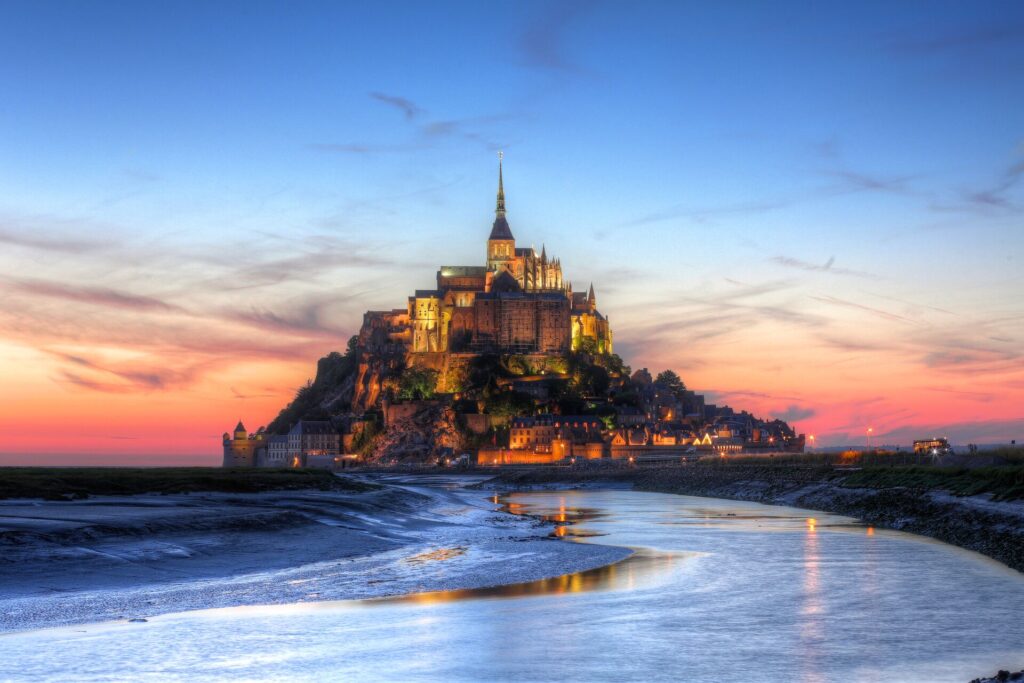
Technically an island at high tide, a peninsula at low, and a pilgrimage site since the 8th century, Mont Saint-Michel operates by its own logic entirely. The Benedictine abbey, which was begun in 966 by monks who had to blast granite from the tidal rock to lay foundations, is one of the great architectural achievements of medieval Europe.
At its peak the Mont attracted pilgrims from across Christendom, crossing the treacherous bay on foot and guided by monks. It was a genuinely dangerous undertaking at a time when tidal surges moved faster than a horse. That sense of something hazardous and courageous still clings to the place when the tide comes in and the causeway disappears. The interior of the abbey is a lesson in Gothic engineering: the monks solved the problem of building a massive structure on a pointed rock by essentially stacking entire new buildings on the backs of older ones, creating a labyrinth of crypts, chapels, and refectories below the soaring nave.
Insightful tip: The tourist village immediately inside the gates is relentlessly commercial, try to push through it. The abbey itself justifies every step. Tidal timings are published online; checking them before you visit is worth five minutes of planning. A guided tour of the abbey interior reveals architectural details you’d otherwise walk straight past.
See it with Insight: Mont Saint-Michel features on Insight’s France itineraries covering Normandy and Brittany, where your Travel Director provides historical context that turns a famous landmark into a genuine story.
Save up to $3,000* per couple on your first Premium Tour
Plus receive latest offers, travel inspiration, and discover how your travels will make a positive impact. Together, WE MAKE TRAVEL MATTER®. Subscribe Now7. Toledo, Spain
Toledo was, for a time, the most cosmopolitan city in the Western world. Under medieval Castilian rule it became the site of one of history’s more extraordinary intellectual exercises: Christian, Muslim, and Jewish scholars working in close proximity translating philosophical and scientific texts from Arabic into Latin, transmitting classical Greek knowledge into Renaissance Europe, and producing work that helped reshape an entire civilisation.
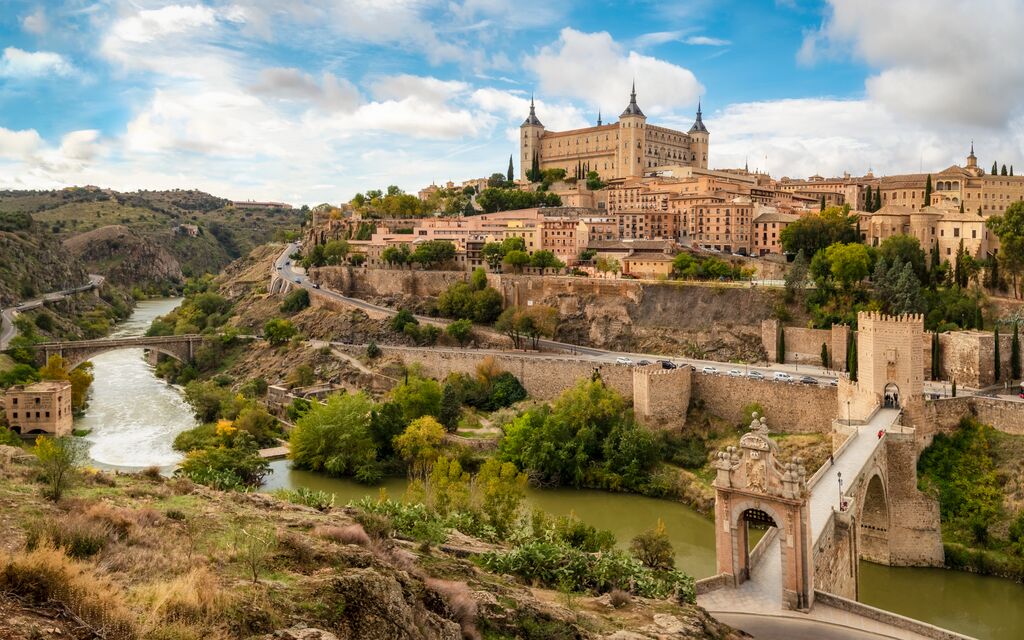
The city sits on a rocky promontory encircled by the Tagus River, its cathedral, synagogues, and mosques pressed together in streets so narrow that sunlight reaches the ground only briefly. El Greco came here in 1577, found the city’s light and drama suited something in his temperament, and never left. His house is still there, and the Church of Santo Tomé still holds The Burial of the Count of Orgaz, the painting that most people consider his masterwork. Toledo’s artisan tradition in Damascene work (gold and silver wire inlaid into darkened steel) dates to the Moorish period and is still practised by hand in the old quarter.
Insightfulk tip: Toledo is a 30-minute high-speed train from Madrid and completely doable as a day trip, though an overnight stay reveals the city after the day visitors leave and is considerably more atmospheric. The Mirador del Valle viewpoint on the south bank of the Tagus gives the classic panoramic view and is best in the late afternoon light.
See it with Insight: Toledo is a centrepiece of both the Best of Spain & Portugal and Amazing Spain & Portugal tours, where guests visit a Damascene craftsman’s workshop for a hands-on demonstration of the ancient inlay technique, and the Church of Santo Tomé to see the El Greco in situ.
8. Tallinn, Estonia
The best-preserved medieval old town in northern Europe belongs not to Germany or France but to Estonia. This seems to surprise visitors until they’re standing in Tallinn’s Town Hall Square, surrounded by Gothic architecture so complete it takes a conscious effort to remember what century you’re in.
Tallinn’s survival is partly accidental: Soviet planners found the old town too architecturally complex to modernise efficiently and left most of it alone. What emerged is a city with extraordinary medieval bones: the 13th-century Town Hall, 26 surviving towers along the city walls, the Church of the Holy Spirit with its ornate 1684 clock still keeping time, and Toompea Castle overlooking the lower town from the limestone escarpment that divides the city into two distinct medieval communities. The upper town was for the bishops and nobles; the lower for the merchants. The tension between them is still readable in the architecture.
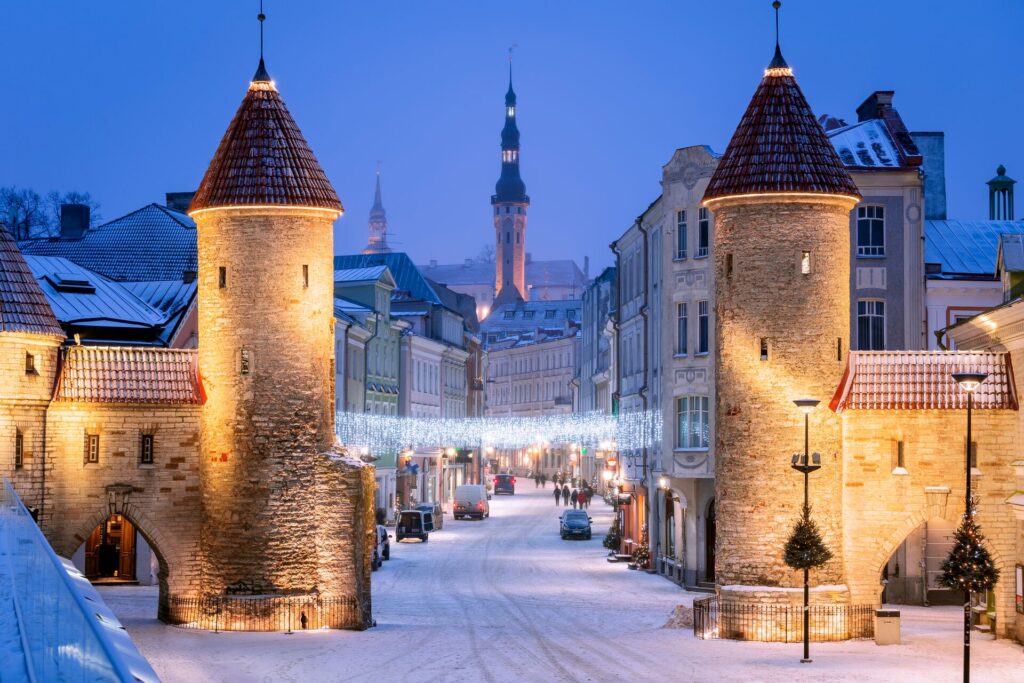
Insightful tip: Tallinn is compact and very walkable, with the medieval core of the city taking only about 20 minutes to cross at a stroll. The Viru Gate area gets busy; the streets north of the Town Hall Square and the area around the Dominican Monastery are quieter and equally rewarding. Tallinn also has a serious food scene; the restaurant density in the old town is higher than you’d expect.
See it with Insight: Insight includes Estonia on select Baltic and Northern Europe itineraries. It is a region that rewards the traveller willing to look beyond the obvious, and where your Travel Director’s local knowledge genuinely earns its place.
9. Albarracín, Spain
Less visited than Toledo and considerably more rewarding for it, Albarracín clings to a cliff above the Guadalaviar River in Aragon like a town that never quite committed to the ground. Its rose-pink defensive walls, which unusually circle the nearby mountain rather than just the town itself, date to the 10th century, when the city was the capital of an independent Moorish taifa kingdom.
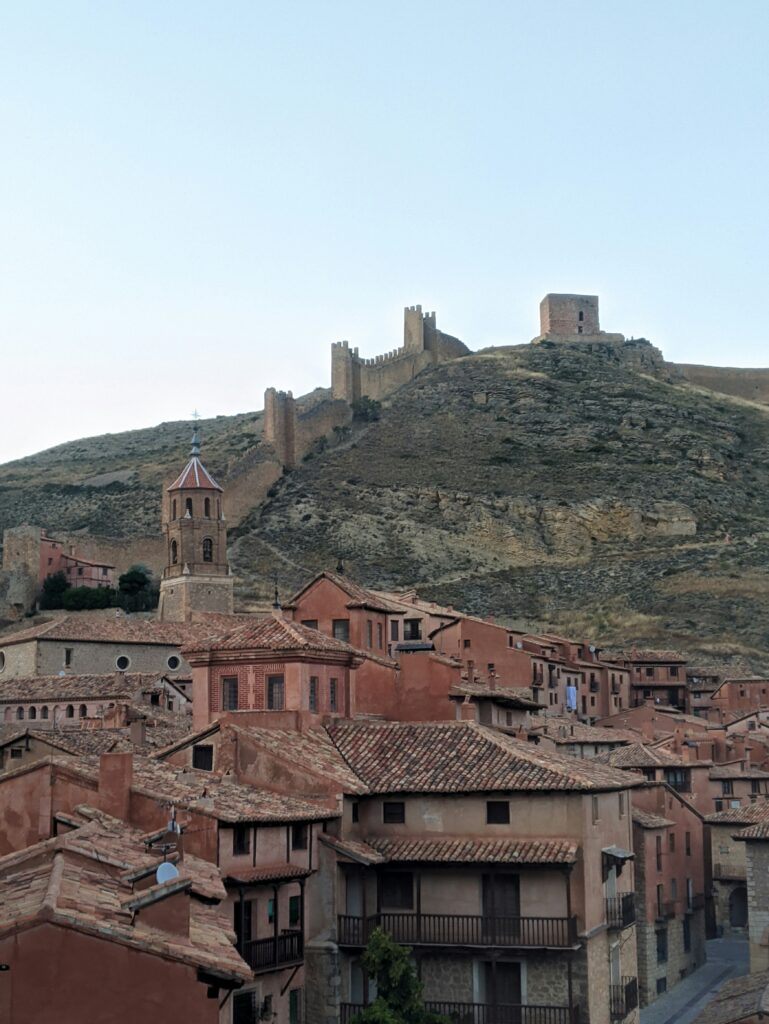
The streets are so steep and narrow that cars are structurally impossible in much of the old quarter, which means Albarracín has the rare distinction of being a genuinely pedestrian medieval town rather than a pedestrianised one. The cathedral museum holds an outstanding collection of 16th-century tapestries, while the Plaza Mayor is one of the most photogenic squares in Spain. Almost nobody outside Spain knows this place exists, which seems unlikely to last.
Insightful tip: Albarracín is roughly 40km from Teruel (itself worth a half-day for its Mudéjar towers). It’s not on a major tourist circuit, which is much of the point. Hire a car and make a detour. Accommodation is limited but charming, so booking ahead is essential in summer.
10. Ghent, Belgium
Bruges gets the tourists, Ghent gets the Belgians. This living medieval city is home to a major university, a serious restaurant culture, and a historic centre that contains three medieval towers visible from a single viewpoint: Saint Bavo’s Cathedral, Saint Nicholas’ Church, and the Belfry, the only such trio in Belgium.
Saint Bavo’s Cathedral is worth the journey on its own. It contains the Ghent Altarpiece: Jan van Eyck’s 1432 polyptych, a work so technically advanced it still baffles art historians trying to explain how exactly it was achieved. The Hubert and Jan van Eyck brothers painted twelve panels depicting a celestial Jerusalem with a luminosity that had never been attempted in European painting before and arguably never surpassed since. The Adoration of the Mystic Lamb panel was stolen in 1934 and recovered only recently; it now sits in a dedicated, climate-controlled viewing room with security that seems almost touching for a painting.
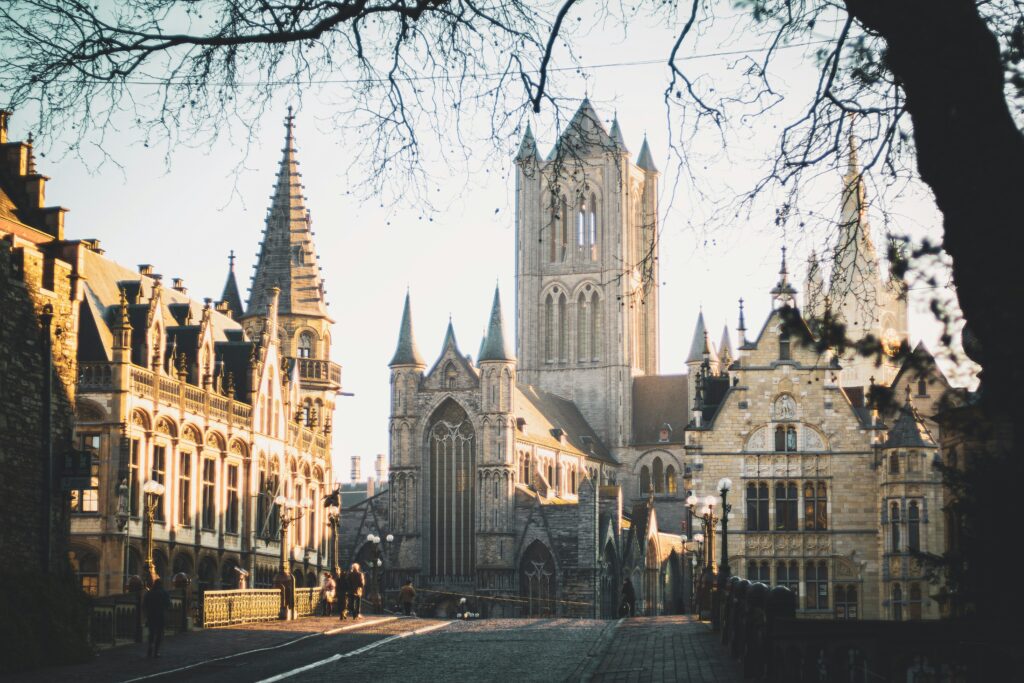
Insightful tip: Ghent is 30 minutes from Brussels and 25 from Bruges by train, so easy to combine in either direction. The Graslei and Korenlei quaysides along the river give the classic view, best time to take a boat is sunset. The student population keeps the city’s bars and restaurants genuinely good value by Belgian standards.
See it with Insight: Many of Insight’s Belgium itineraries include both Bruges and Ghent, giving you the full picture of Flemish medieval life, from merchant wealth to artistic genius, with local experts who make the story coherent.
11. Évora, Portugal
Évora has been continuously inhabited for over two thousand years, which perhaps explains why it wears its history so lightly. A Roman temple stands in the town centre with the casual confidence of something that simply belongs there. Sixteen Corinthian columns, largely intact, somehow survived because medieval builders incorporated them into a slaughterhouse and later a palace. The aqueduct still works. The 12th-century cathedral is the largest medieval cathedral in Portugal.
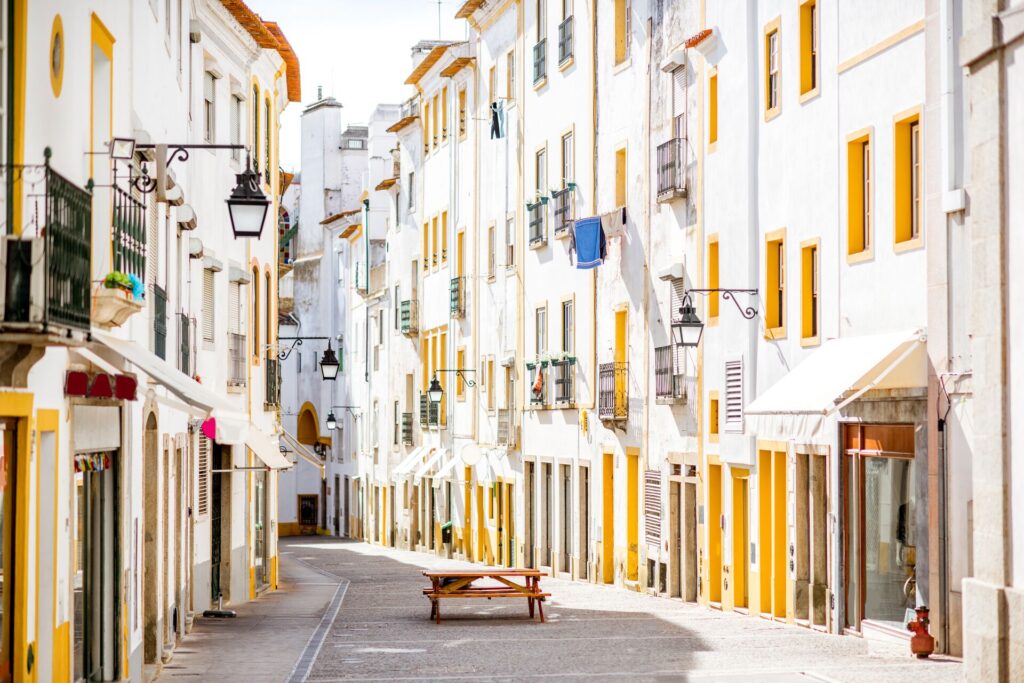
The Chapel of Bones (Capela dos Ossos) is another matter entirely. Built by Franciscan monks in the 16th century, its interior walls are lined with the skeletal remains of some five thousand people. The inscription above the entrance reads, roughly translated: We bones here await yours. It is either deeply disturbing or oddly clarifying, depending on your philosophical inclination.
Insightful tip: Évora is the capital of the Alentejo region, which produces some of Portugal’s finest wines: big, structured reds from Aragonez and Trincadeira grapes. Most restaurants in the old town will recommend them correctly. The town is quiet and unhurried, rewarding slow walking and extended lunches.
See it with Insight: Évora features on Insight’s Portugal tours, where guests enjoy a guided visit of the cathedral and Roman Temple of Diana.
12. Mdina, Malta
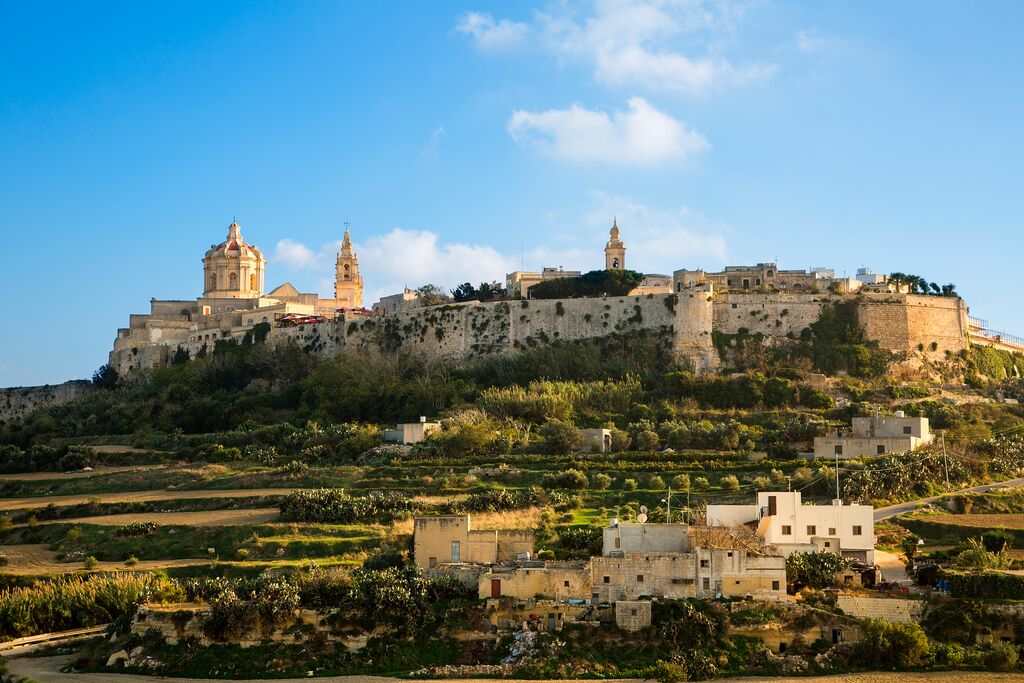
They call it the Silent City, and the name earns itself within minutes of entering through the main gate. Mdina served as Malta’s capital for centuries before the Knights of St John moved their seat of power to Valletta in 1570, and it has existed in a state of dignified, aristocratic quiet ever since. The permanent population of the walled city is fewer than three hundred people.
The streets are wide enough for a nobleman’s carriage and no wider. The palaces belong to Maltese noble families who have occupied them for centuries and show no signs of leaving. At dusk, the honey-coloured limestone glows with a warmth that seems to come from inside the stone itself; the light in Malta in the late afternoon does things to golden rock that you don’t see anywhere else in the Mediterranean. The Norman architecture is overlaid with baroque additions, the whole ensemble enclosed in Arab-designed fortifications; a compressed history of everyone who has ever tried to control this island.
Insightful tip: Mdina is best visited outside peak hours, before 10am or after 4pm, when the majority of tourists have gone. The Cathedral Museum holds one of the finest collections of Dürer woodcuts and etchings outside Germany. The bastion views over the Maltese interior are best in the early morning.
See it with Insight: Mdina is a highlight of Insight’s Easy Pace Malta tour, where a Local Expert guides guests through the Silent City’s fortified streets, bringing to life the layers of Arab, Norman, Spanish, and Knights’ history that are compressed into less than a square kilometre.
13. Provins, France
An hour southeast of Paris and almost invisible on the English-speaking tourist circuit, Provins was once one of the most important cities in medieval Europe. As the site of the great Champagne Fairs, the trading events that functioned as the economic engine of the medieval West. It was briefly, and demonstrably, more commercially significant than Paris.
What remains is a two-tiered town whose upper city is still encircled by largely intact 12th-century ramparts, with a network of underground passages used by medieval merchants to store and move goods between trading seasons. The Caesar Tower, an unusual 12th-century keep with an octagonal superstructure on a square base, gives views across the flat Brie countryside that were presumably strategic and are now simply beautiful. UNESCO listed the whole ensemble in 2001. The discovery of it still feels, pleasingly, like your own.
Insightful tip: Provins is straightforward by train from Paris Gare de l’Est (under 90 minutes). The underground passages can be visited on guided tours departing from the town centre; they’re atmospheric and genuinely informative about medieval commerce. In summer, the ramparts host a medieval festival with jousting, falconry, and theatrical performances (theatrical in the best sense).
What Contributed to the Growth of Towns in Medieval Europe?
In the early medieval period, most of Europe’s population was rural, tied to agricultural land in a feudal system that offered little incentive for movement. Towns that existed at all were largely remnants of Roman settlement, functioning at a fraction of their former scale.
What changed everything was trade. As agricultural productivity improved from around the 10th century, surplus goods created the conditions for markets. Markets attracted traders. Traders needed protection from local lords and badits. The merchant class emerged, and with it the first stirrings of civic life. The Church played an equally decisive role. Cathedral cities drew pilgrims, and pilgrims spent money. Monasteries provided the infrastructure (like roads, bridges, literacy) that made trade possible across greater distances. By the 12th and 13th centuries, many European towns had negotiated charters granting self-governance in exchange for taxation: the birth of the urban middle class whose values would eventually reshape the continent.
The towns that survive most beautifully today like Bruges, Toledo, Provins, they tend to share a telling backstory: a period of extraordinary prosperity, followed by the economic decline that left their medieval fabric untouched. History’s gift to the curious traveler is, frequently, someone else’s misfortune.
Experience Medieval Europe With Insight Vacations
The best medieval towns reward the kind of curious attention that reveals a carved doorway you would otherwise walk past, or leads you to a conversation with someone whose family has lived in the same street for generations.
Insight Vacations’ European journeys are designed for exactly that quality of experience. Expert Travel Directors and Local Experts bring historical context that transforms what you’re looking at — a tower, a market square, a cathedral, a set of ancient bones — into something you genuinely understand. Because there’s a real difference between seeing a medieval town and knowing one.
Browse Insight Vacations’ European tours and find the journey that fits your curiosity.
About Jason Brasier

I'm Jay – born in Italy, raised in South London. Having French sisters and Hungarian ancestors, I've always been fascinated with the world and its cultures, and I carry this curiosity into my writing for Insightful. My favourite destinations I've traveled to so far have been Italy, Peru, France and Brazil.
LIKED THIS POST? SHARE WITH YOUR COMMUNITY
Keep exploring