Is Halloween American? The Ancient Roots of a Modern Tradition
Costumes, candy, carved pumpkins: halloween feels about as American as a Thanksgiving parade. But does the October holiday, which sees porches across the country fill with spooky decorations and the sound of children yelling ‘Trick or Treat!’ come from the USA? The story, in fact, starts much earlier, and an ocean away: on a hilltop in Ireland, in a farming calendar that measured the year by light and dark. Here is how a Celtic fire festival became the Halloween we know today.
Table of Contents
- Is Halloween American?
- Samhain and the Celtic New Year
- A Fire on the Hill
- All Hallows’ Eve
- Turnips Before Pumpkins
- Crossing the Atlantic
- Halloween in Ireland Today
Is Halloween American?
Is Halloween American? Not in origin. Halloween grew out of Samhain, a Gaelic festival marking the end of the harvest, observed in Ireland, Scotland and the Isle of Man for well over a thousand years before the United States existed. Christianity layered its own feast days on top, and Irish and Scottish emigrants carried the customs west in the nineteenth century.
What America did was amplify it. The carved pumpkin, the organized trick-or-treat and the sheer commercial scale are largely American contributions. The honest answer, then, is that Halloween was born in Ireland and raised in America.
Samhain and the Celtic New Year
Samhain (pronounced roughly “sow-in”) occurred around November 1, when cattle came down from summer pastures and the last of the harvest was gathered in. It marked the turn from the light half of the year to the dark, and many historians describe it as the start of the Celtic new year.
It was also a threshold. Medieval Irish literature treats Samhain as the night the boundary between this world and the Otherworld wore thin. In the tale Echtra Nerai, the young warrior Nera slips through that boundary on Samhain night and finds himself among the people of the sídhe, the fairy mounds of Irish lore. Folk tradition in Ireland kept the idea alive for centuries: food was left out for the returning dead, and some say disguises were worn so that wandering spirits would pass you by. Do those habits sound familiar?
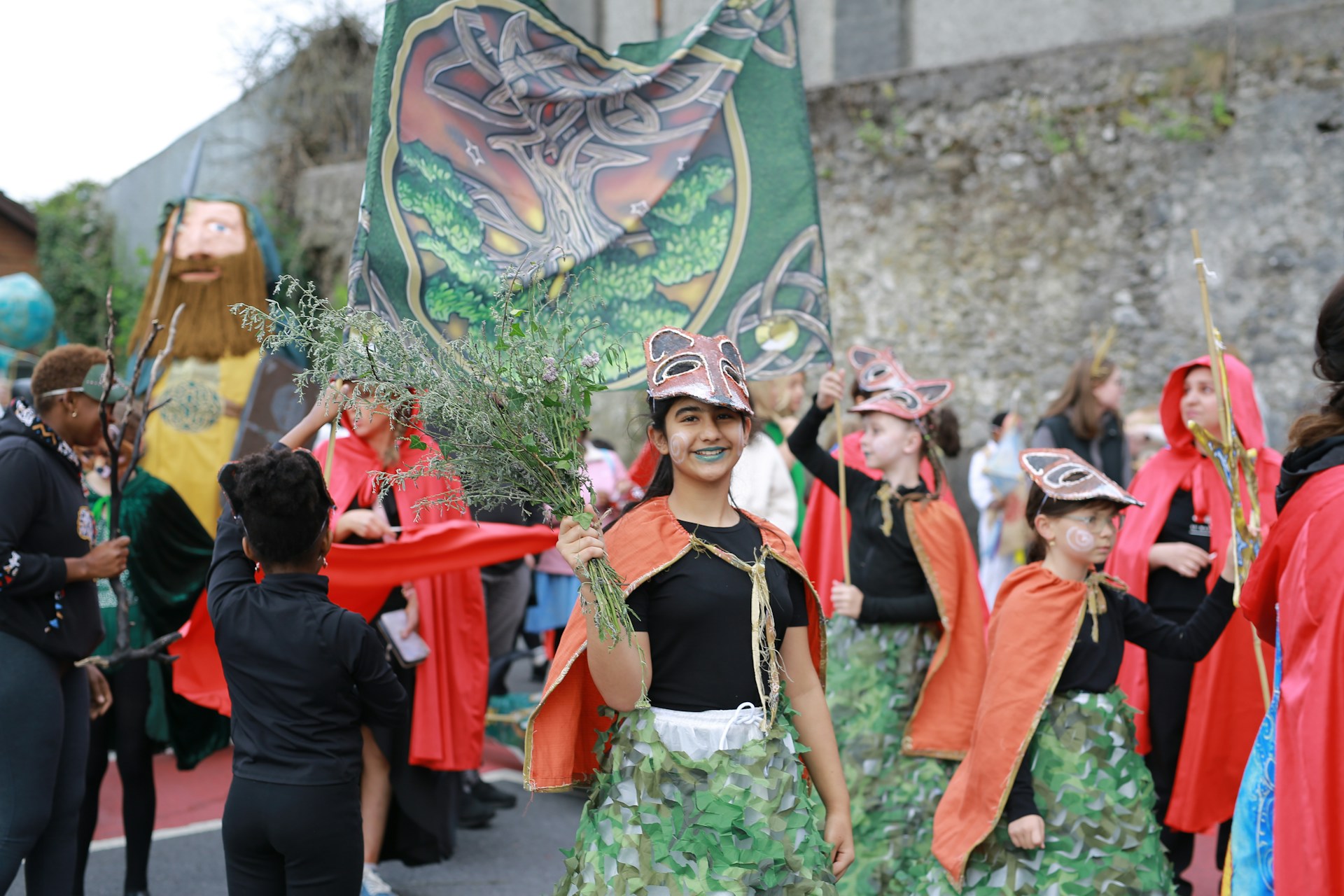

Early Gaelic traditions involved displaying enemy skulls on Samhain to scare away malevolent spirits.
A Fire on the Hill
About 40 miles northwest of Dublin, outside the town of Athboy in County Meath, a low hill ringed with ancient earthworks lays claim to being Halloween’s birthplace. It is Tlachtga, known today as the Hill of Ward, and medieval texts tie it directly to Samhain.The seventeenth-century historian Geoffrey Keating described what happened there: on Samhain eve, every fire in Ireland was put out. The druids then lit a great bonfire on Tlachtga, and people carried its flame home to rekindle their hearths for the winter. Archaeologists from University College Dublin began excavating the hill in 2014, and the old story has found a modern echo: each Halloween, a ceremonial fire is lit on Tlachtga once more as part of the Púca Festival.
All Hallows’ Eve
Christianity reached Ireland in the fifth century. Rather than stamp out older festivals, the Church often folded them into its own calendar, and Samhain was no exception. The key date is November 1, which marks All Saints’ Day: a feast honoring every saint at once. All Souls’ Day, set aside for praying for the dead, followed on November 2.
“Hallow” is an old word for a saint, so the night before All Saints’ Day was All Hallows’ Eve. Over time, that shortened to Hallowe’en. Historians still argue over whether the Church chose November 1 to overlay Samhain on purpose. Either way, the effect was the same: the old festival of the dead and the new days of saints and souls merged into a single season.
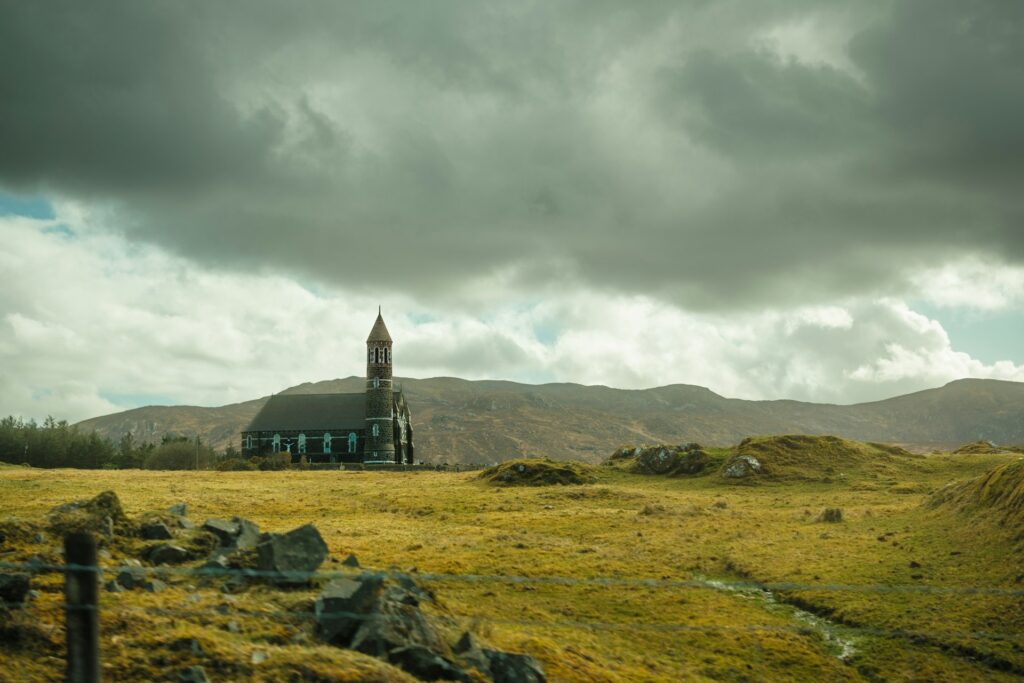
Some Neolithic passage tombs in Great Britain and Ireland are aligned with the sunrise at the time of Samhain.
Turnips Before Pumpkins
Long before pumpkins, the Irish carved turnips, and sometimes potatoes, into lanterns with grim faces. This tradition came from a story in Irish folklore about Stingy Jack, who tricked the devil twice. Barred from both heaven and hell, he was left to wander the dark with nothing but an ember in a hollowed turnip to light his way: Jack of the Lantern.
Other Halloween customs have similar roots. In Scotland and Ireland, “guisers” were people who went door to door in disguise, offering a song or a rhyme in exchange for food or coins. In England, the poor went “souling” around All Souls’ Day, praying for the dead in return for small spiced soul cakes. And in 1785, Robert Burns devoted an entire poem, “Halloween,” to the night’s games and fortune-telling in rural Scotland.
Save up to $3,000* per couple on your first Premium Tour
Plus receive latest offers, travel inspiration, and discover how your travels will make a positive impact. Together, WE MAKE TRAVEL MATTER®. Subscribe NowCrossing the Atlantic
In the 1840s, The Great Famine drove well over a million Irish people to emigrate, most of them to North America. They brought Samhain / Hallowe’en with them and found, in the pumpkin, a native crop far easier to carve than a turnip. Thus, carving scary faces into pumpkins was born.
Over the following decades, American life reshaped the holiday. Community parties and parades in the early twentieth century were partly an effort to rein in rowdy pranks. The phrase “trick or treat” was appearing in print in North America by the late 1920s, and the postwar suburbs, alongside candy makers and costume companies, turned it into the national event it is today. That American version then traveled back across the Atlantic, which is why pumpkins now sit on Irish doorsteps where turnips once did.
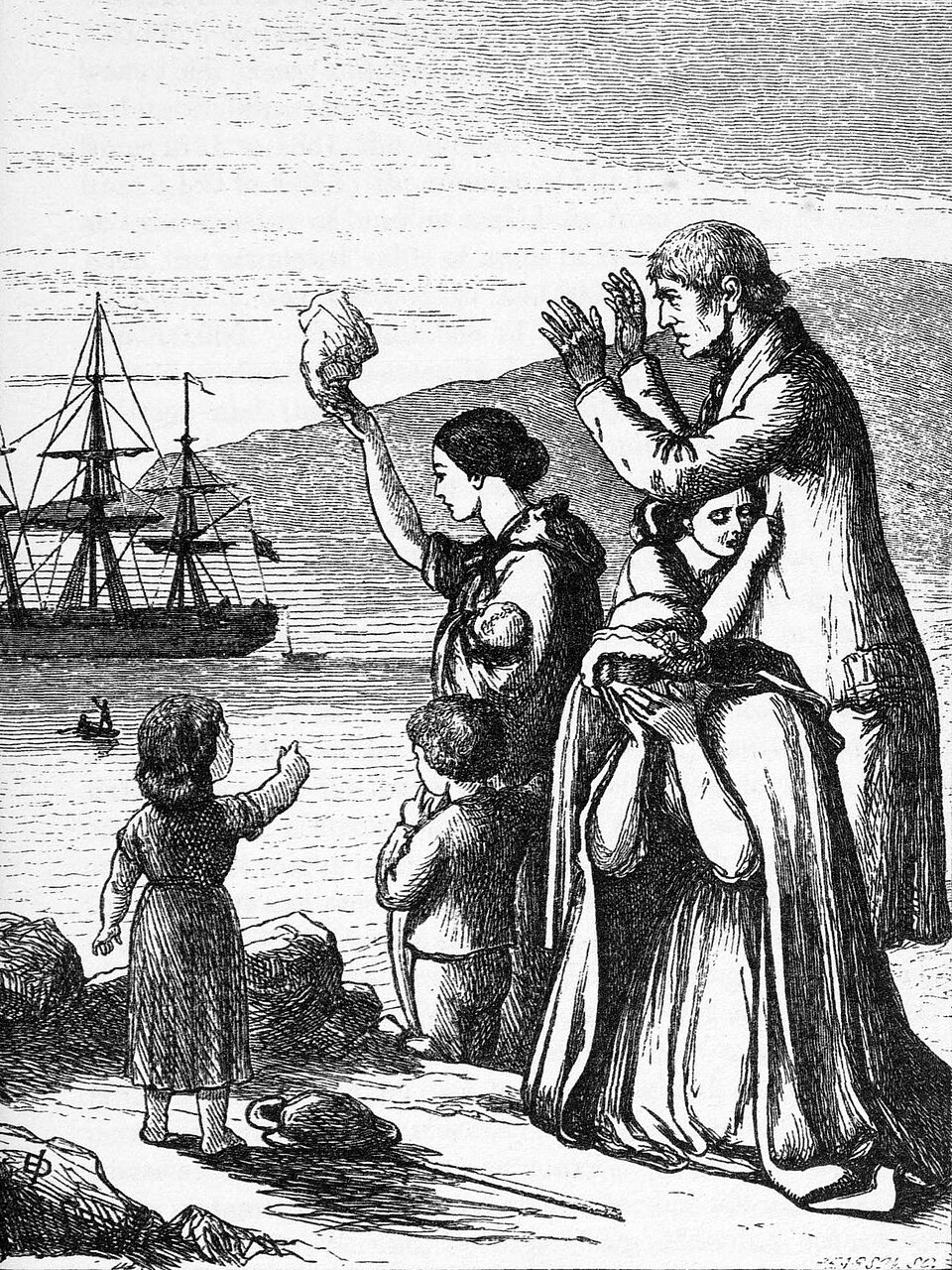
By 1910, there were actually more people of Irish descent living in New York City than there were living in Dublin.
Halloween in Ireland Today
Ireland still keeps the older night close. In Meath, the Púca Festival takes its name from a shape-shifting spirit of Irish folklore and returns the celebration to Athboy, Trim and the hill where it is said to have begun. Derry, in Northern Ireland, hosts one of Europe’s largest Halloween celebrations. And in kitchens across the country, barmbrack, a fruit loaf baked with a ring hidden inside, is still sliced on Halloween; whoever finds the ring, the tradition goes, will marry within the year.
You don’t need to visit in October to feel how close that history runs to the surface. Insight’s Country Roads of Ireland journey opens in Dublin with the Book of Kells and closes on the basalt columns of the Giant’s Causeway, a coastline Irish myth attributes to giants. Between the two lie castles, monastic ruins and a countryside where folklore has never gone away.
So, is Halloween American? Its accent certainly is. Its bones, though, are Irish.
About Jason Brasier

I'm Jay – born in Italy, raised in South London. Having French sisters and Hungarian ancestors, I've always been fascinated with the world and its cultures, and I carry this curiosity into my writing for Insightful. My favourite destinations I've traveled to so far have been Italy, Peru, France and Brazil.
LIKED THIS POST? SHARE WITH YOUR COMMUNITY
Keep exploring