10 Most Famous Celebrations and Festivals in Peru You Need to Know About
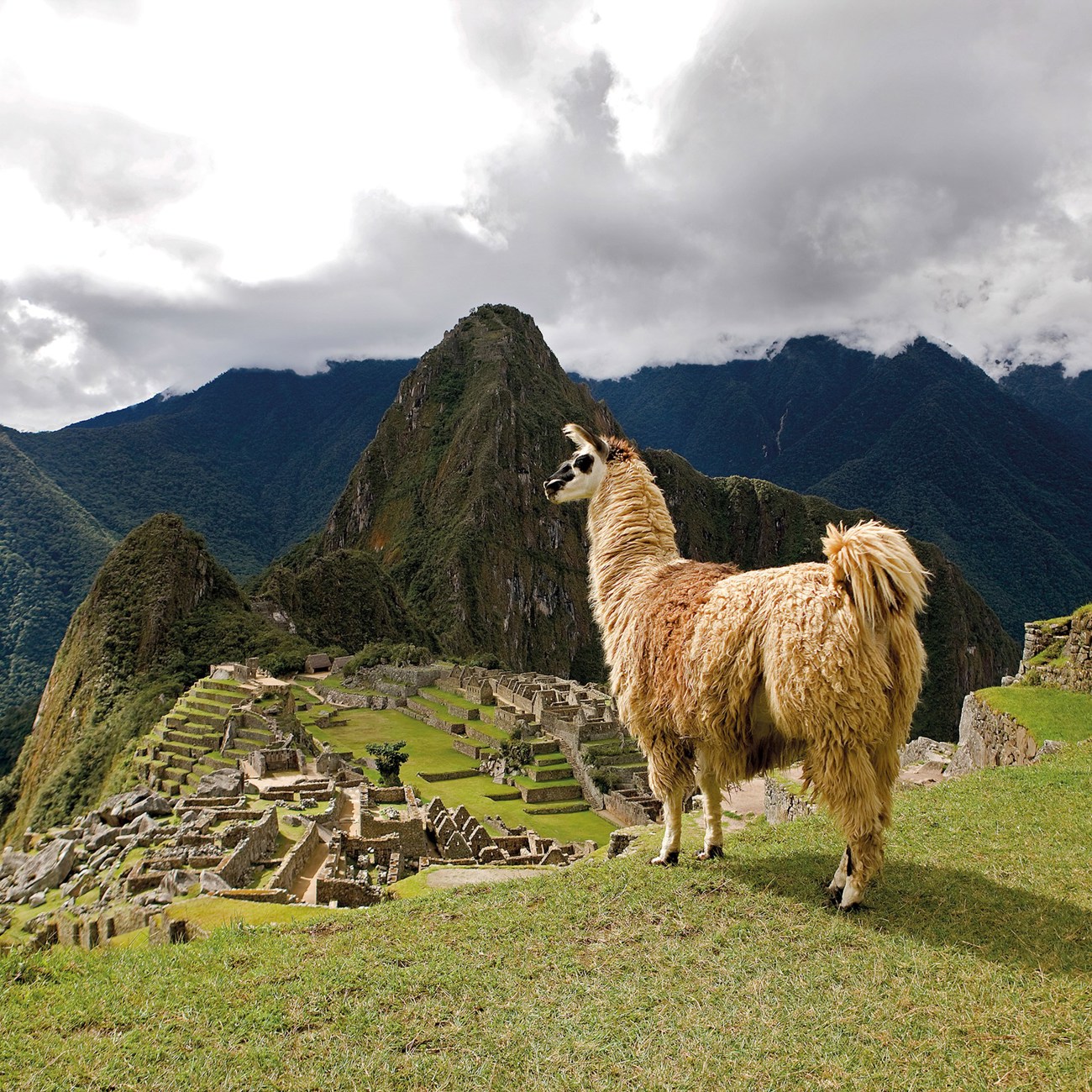
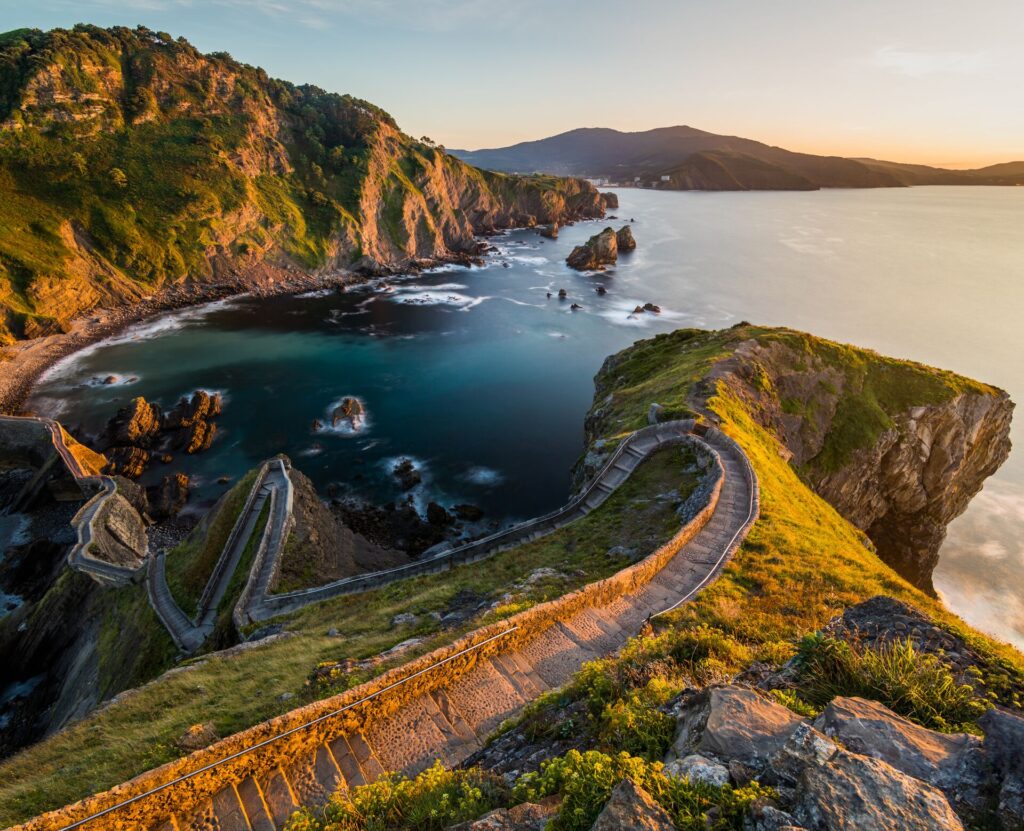



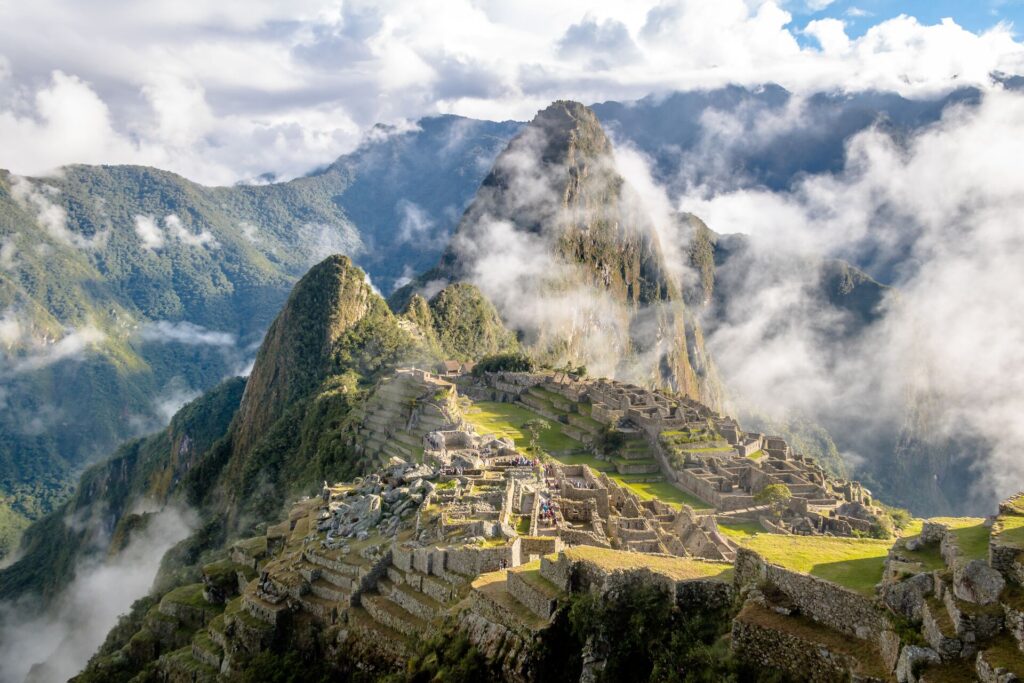
Walk through the streets of Cusco or stand in the morning mist at Machu Picchu and you quickly sense it: Peru feels different. The mountains seem alive, the clouds move like messengers, and rituals to honour the earth sit comfortably alongside Catholic churches and everyday city life. Peru’s spirituality tells of a way of seeing the world that’s been passed down for thousands of years, and is still very much alive today.
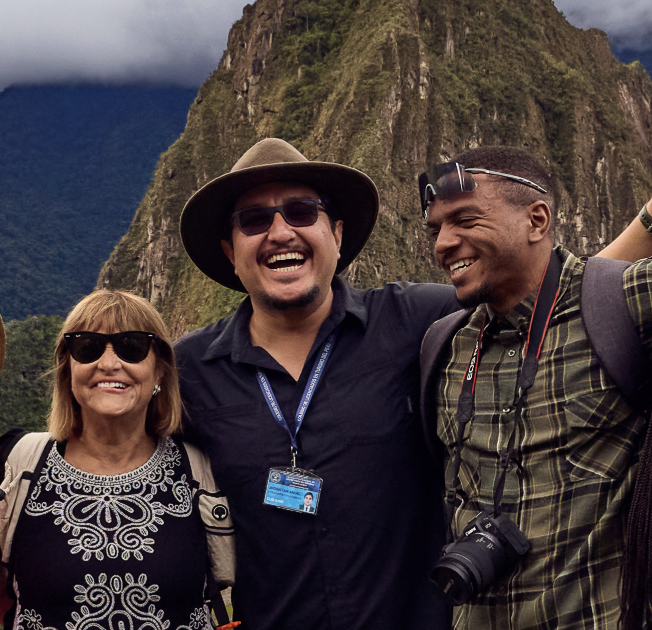
To understand more, we spoke with Jhonatan Fernández, a Local Expert who guides Insight Vacations guests in the Sacred Valley and Cusco. His stories of Pachamama, coca leaves and the “three worlds” of Andean cosmology show how deeply this landscape shapes the people who live here, and how travellers can connect with Peru’s spirituality in a respectful way.
One of the most powerful moments you can have in Peru is in making an offering to Pachamama, or Mother Earth in Quechua, in a ceremony led by a traditional Andean shaman. Insight guests often experience a version of this at their hotel in the Sacred Valley, where the shaman builds an offering bundle step by step as the group watches.
“The shaman comes to the hotel to do a representation of how we make an offering for Pachamama,” Jhonatan explains. “He puts together all the items that Mother Earth would like – sweets, some llama fat, and a sweet wine that we think Mother Earth would like.”
Each of these elements carries meaning. Sweetness symbolises pleasure and sweetness of life; animal fat and grains are life and fertility; wine stands for celebration and joy. Guests are invited to participate by blowing into the coca leaves, adding their hopes to the offering before it’s wrapped and burned.
“When we finish the ceremony, we burn this offering, and the smoke goes all the way to our mountains,” says Jhonatan. “We always ask for goodwill and for the future. Maybe the guests have their own wishes, so we ask this of Mother Earth – of Pachamama.”
It’s a simple, tactile ritual involving just a small fire, the rustle of paper and leaves, and the quiet murmur of Quechua prayers drifting with the smoke into the night air.
At the heart of Peru’s spirituality is an Andean worldview that sees reality as three interconnected worlds, constantly in dialogue. This is where those coca leaves, the kintu, come in.
“The three coca leaves are representing the kintu,” Jhonatan says. “They represent the three worlds the Incas believed in.”
Hanan Pacha – the upper world of sky and spirits, often symbolised by the condor, a bird that soars over the high Andes.
Kay Pacha – the world we live in, represented by the puma, strong and grounded, moving through valleys and cities.
Ukhu (Uku) Pacha – the inner or underworld, associated with the snake, who moves beneath the surface, linked with wisdom, the ancestors and the hidden.
When guests blow into their coca leaves they’re participating in a tiny moment of cosmic alignment. The offering is a thank-you to Pachamama, but it’s also an acknowledgement that everything is connected: the mountains above, the soil beneath, the lives lived in between.
“All this connection is really strong for us,” says Jhonatan. “Whatever we do to Mother Earth is going to come back to us in the future. Everything turns around.”
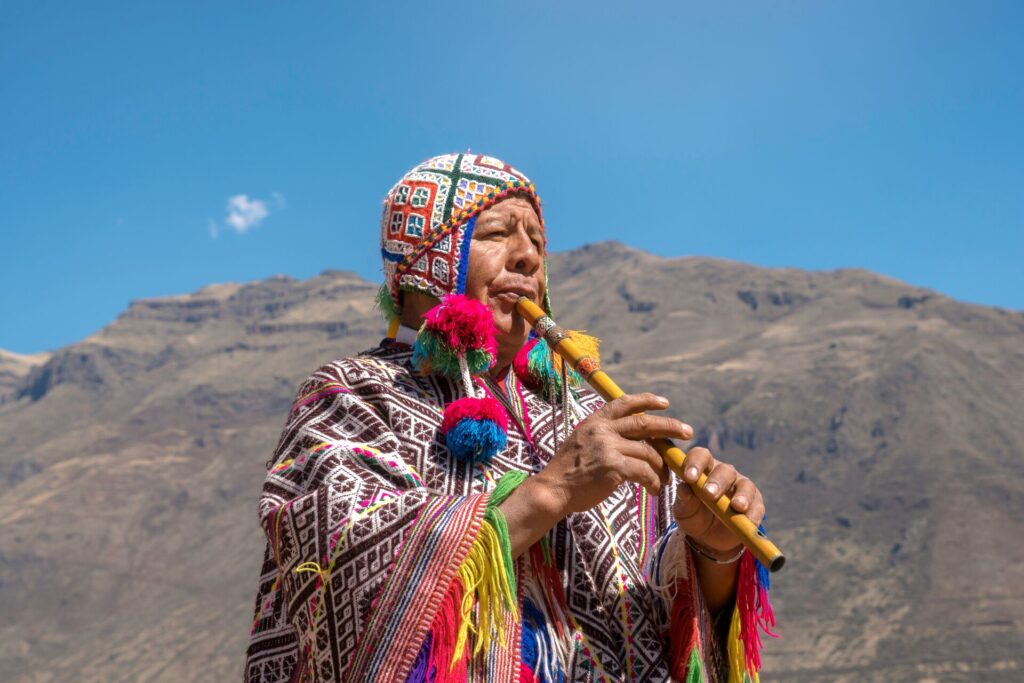
Ask people why Peru feels “high-vibe” and many will talk about energy, something they can’t quite put into words. For Andean communities, that feeling is linked to very real, everyday phenomena: rainbows, rain and the way sunlight moves over the mountains.
“In the Andean world, the sun connects with Mother Earth,” Jhonatan explains. “When we have rain, we have a lot of rainbows. That’s the connection between the Hanan Pacha – the high world – and the Kay Pacha, the world we’re living in.”
He describes raindrops falling on Andean soil, lit by the sun: “That means life for us. We need water, we need the sun, to have good crops and agriculture, everything we need in our lives.”
So when communities make offerings, more than being simply symbolic they’re a real way of keeping that cycle going. In thanking Pachamama and the Apus, the protective mountain spirits, for the water and warmth that sustain them, they see that it will come back to them in the Kay Pacha earth world in blessings of fertility, health and balance.
For travellers, this helps explain why spiritual experiences in Peru so often take place outdoors: on a hillside above the Sacred Valley, at a viewpoint in Machu Picchu, on a terrace in Cusco where the sky feels very close. The landscape here is an active participant in the ceremony.
Peru’s relationship with the sacred landscape didn’t begin with the Incas. Jhonatan mentions Caral, an ancient city in the Supe Valley north of Lima, as part of the deeper story.
“The connection we have with Mother Earth was passed through generations,” he says. “It comes from the Incas and also other civilisations before them, like Caral.”
Today, the Sacred City of Caral-Supe is recognised by UNESCO as the oldest known city in the Americas, dating back around 5,000 years. Its pyramids and ceremonial plazas show that complex societies were already organising themselves around ritual spaces and cosmic alignments long before the Inca Empire.
For modern visitors, a stop in Lima’s museums or, if time allows, a day trip towards Caral adds another layer to understanding Peru’s spirituality. It underlines just how long people here have been listening to the land, organising their lives around the mountains, rivers and stars.
If Peru has a spiritual capital, it’s Cusco. Walk its cobbled streets, its Inca stone foundations topped with Spanish colonial façades, and you’re literally stepping through layers of belief.
“Cusco comes from the Quechua word Qosqo, which means ‘centre of everything’,” says Jhonatan. “It was the centre of the Tawantinsuyu, the Inca Empire. Imagine a human body: Cusco is like the belly, the centre of the body.”
Today, Cusco is officially recognised as the historical capital of Peru, and many travellers use it as their base for exploring the Sacred Valley and Machu Picchu.
“We believe Cusco has a strong energy because it’s what our ancestors thought of as the centre of the world,” Jhonatan explains. “Every time we go to important places around here, we consider them sacred.”
He mentions how people flock to Machu Picchu and Cusco’s main square on the first day of the year to “receive energy” for the year ahead. The idea is to start the year aligned: grounded in a place that has been revered for centuries.
To plan visits to Machu Picchu itself, travellers should always check the official Machu Picchu website for the latest rules, circuits and ticketing, as visitor numbers and routes are tightly managed to protect the site.


The Incas designed Cusco to look like a puma, a sacred animal, with the Sacsayhuaman fortress forming the head.
One of the most interesting aspects of Peru’s spirituality is how Andean beliefs and Catholicism coexist. Locals don’t necessarily see a conflict between worshipping in church on Sunday and making offerings to the Apus in the mountains.
“We’re Catholic people – I was baptised too – but we also respect the gods of the Andes,” Jhonatan says. “We respect the sun, the moon, and we respect the trilogy that we have in the kintu.”
He uses the word syncretism: the blending of religions and belief systems. In practice, that might mean village festivals where a Catholic saint’s day is celebrated with processions that also honour Pachamama, or a family that keeps both a crucifix and coca leaves on their home altar.
“Whatever you do to Mother Earth is going to come back to you,” he says. “So we say thank you whenever we can – to Mother Earth, to the Apus – and at the same time we go to church. It’s all part of how we live.”
For travellers, this syncretism shows up in architecture (churches built on Inca foundations), festivals (like Inti Raymi in Cusco or Qoyllur Rit’i in the highlands), and the everyday language locals use: switching naturally between Spanish and Quechua, the languages of “pagan” tradition and Catholic colonialists.
Peru’s spirituality can feel vast and abstract when you first read about it, but experiencing it with a knowledgeable local brings it down to earth. Insight Vacations’ Peru with Machu Picchu tours are designed around that idea: combining the big icons with quieter, meaningful encounters.
On these itineraries you’ll:
Join a Pachamama offering ceremony in the Sacred Valley, guided by a shaman and interpreted by Local Experts like Jhonatan.
Explore Qorikancha, the former Inca temple of the sun (later converted into a Catholic church and convent), where stonework and spirituality from both traditions still sit side by side.
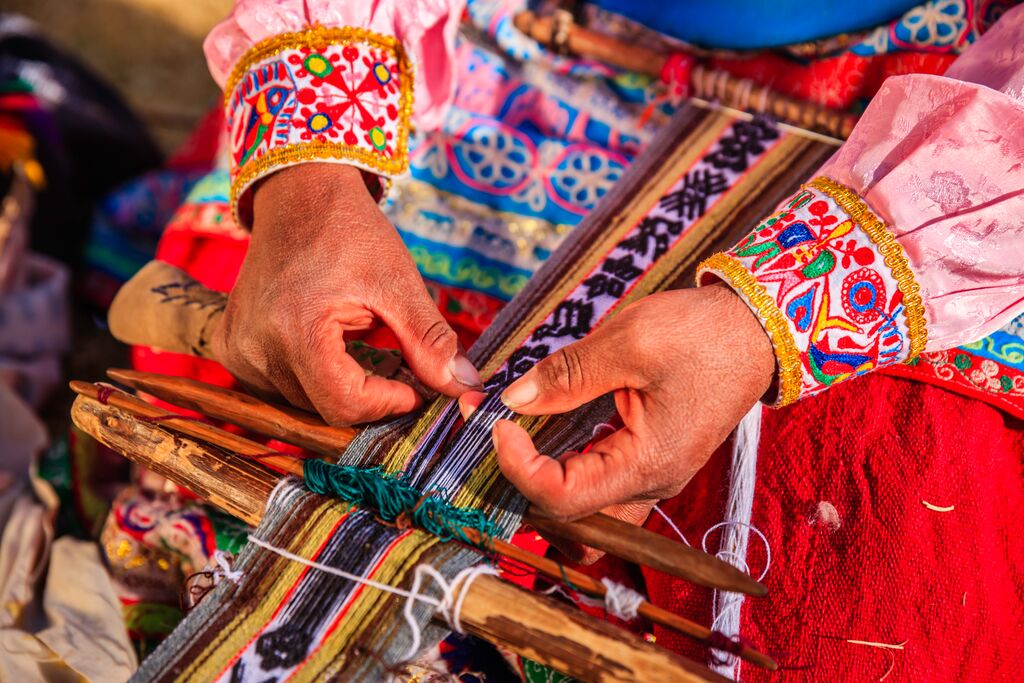
Visit local communities in the Sacred Valley, learning how agricultural cycles, weaving traditions and celebrations all revolve around gratitude to Pachamama.
Spend time at Machu Picchu, not just ticking it off your list, but pausing to understand why it was built where it was, and how astronomical alignments continue to fascinate researchers today.
Insight’s women-only departure, Peru with Machu Picchu, a Women-Only Tour, add even more emphasis on conversation and connection, from a private planetarium visit in Cusco that explores Andean astronomy to a MAKE TRAVEL MATTER® Experience meeting local textile weavers in the Sacred Valley.
If you’re drawn to Peru’s spirituality, it helps to approach it with curiosity and humility. A few simple principles go a long way:
Ask, don’t assume. Not every local wants to talk about their beliefs, but many are happy to share when asked respectfully – especially through a Local Expert who can translate both language and context.
Participate, don’t perform. Join ceremonies like coca-leaf offerings as a guest, not a star of the show. Follow your hosts’ lead, keep your phone use discreet and focus on the moment.
Support local communities. Choose experiences and tours that clearly benefit Andean communities, from homely guesthouses and community-run weaving cooperatives to small operators who work with local shamans and farmers.
Treat sites as living places. Machu Picchu, Cusco, the Sacred Valley and even remote mountain passes are sacred places for many Peruvians. Avoid seeing them simply as photo ops. Listening, walking lightly and following guidelines is part of honouring that.
Peru’s spirituality isn’t something you “do” in an afternoon. It’s in the way rainbows arc over a terraced hillside, in the quiet presence of Apus watching over a valley, in the coca leaves passed from hand to hand at the end of a ceremony.
As Jhonatan puts it, “Mother Earth has everything for us. So we say thank you – to Pachamama, to the Apus – and we keep that connection strong.”
For travellers willing to slow down and tune in, that connection is exactly what gives Peru its good vibrations; a feeling that stays with you long after you’ve flown home.

LIKED THIS POST? SHARE WITH YOUR COMMUNITY
Plus recieve latest offers, travel inspiration, and discover how your travels will make a positive impact. Together, WE MAKE TRAVEL MATTER®