
Meet the Women Who Reinvented Dog Sledding in Alaska
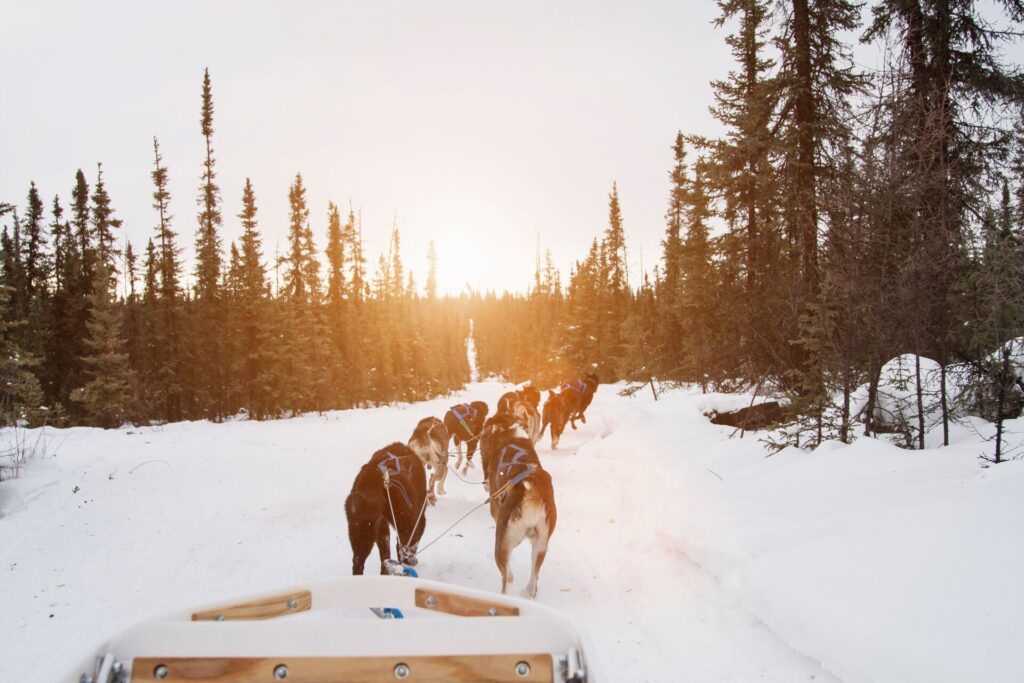
The Iditarod Trail Sled Dog Race, commonly known as the Iditarod is an amazing sporting sight held every March in Alaska, USA. This challenging race spans over 1,000 miles across some of Alaska’s harshest terrain. Participants and their dog teams navigate dense forests, rugged mountain ranges, frozen rivers and windy coastlines, all combining to make the most spectacular showcase of dog sledding in Alaska, known as “The Last Great Race on Earth.”
While maybe considered a male dominated profession and sport, we shine the spotlight on three influential females who have shaped the Iditarod as it is known today. A narrative filled with determination, resourcefulness and groundbreaking achievements, meet Dorothy G. Page, the “Mother of the Iditarod”; Libby Riddles, the first woman to win, and Susan Butcher, the first person to secure four consecutive victories.
The famous Iditarod Trail Sled Dog Race
Each year, the Iditarod begins with a ceremonial start in Anchorage on the first Saturday in March, followed by the official start in Willow, 70 miles north, the next day. This grueling journey takes mushers through nearly 1,000 miles of unforgiving and breathtaking terrain to Nome. The name “Iditarod” originates from the Deg Xinag and Holikachuk languages of the Athabascan people, meaning “distant place,” and it also refers to a former town and a river in the same region.
The pinnacle of dog sledding in Alaska, the race traverses the Alaska and Kuskokwim Mountain ranges and follows the Yukon River for 150 miles. Mushers face the challenges of crossing frozen waterways and pack ice in Norton Sound, often completing the race in as little as eight days, though it can stretch to 20 days in severe weather.
Dorothy G. Page: The Mother of the Iditarod
Affectionately known as “Mother of the Itarod,” it was Dorothy G. Page’s deep-seated passion for dog mushing and commitment to preserving Alaska’s heritage that set the stage for the Iditarod’s inception. A historian, journalist and public servant, it is said that Page saw her first sled dog race in 1960, shortly after moving to Alaska from New Mexico, and was instantly enthralled.
Six years later, when she became president of the Wasilla-Knik Centennial Committee, formed to look into historical events in Alaska, and was tasked with planning an event for the 100th anniversary of America’s purchase of Alaska from Russia, she envisioned a spectacular dog race to highlight the contributions of mushers and their dogs to the state.
Historically, even with the advent of airplanes the dog teams remained vital for local transportation, especially in Native villages. During World War II, mushers played a crucial role in assisting the Eskimo Scouts patrolling Alaska’s winter wilderness. However, the rise of snowmobiles in the 1960s led to the abandonment of dog teams, resulting in a substantial loss of mushing culture and lore.
The Iditarod trail was the ideal choice for the event, but its length presented a significant challenge, with no dog driver supporting the idea. This changed when Page met Joe Redington, a passionate dog musher and kennel owner, who enthusiastically endorsed the concept. Joe and his wife Vi had been invested in the history of the Iditarod Trail since the mid-1950s and believed this centennial race would help preserve the historic gold rush and mail route, gaining national recognition.
In February 1967, the inaugural 50-mile Iditarod race attracted 58 mushers and took place again in 1969. While public interest dwindled soon after, Redington and Page remained committed to the vision and a 1,000-mile race from Anchorage to Nome along the Iditarod Trail was held in 1973 and won in 20 days. Years later, what began as a 50-mile centennial race has evolved into Alaska’s premier sporting event, known worldwide as “The Last Great Race on Earth.”
Libby Riddles: Breaking barriers on the trail
In 1985, Libby Riddles made history by becoming the first woman to win the Iditarod, cementing her name on the history of dog sledding in Alaska. Her victory was not just a personal achievement; it represented a significant milestone for women in sports, showcasing that skill knows no gender. In her victory year 1985, terrible storms periodically interrupted the event, leaving the leading mushers halted at a checkpoint. Libby seized the moment and, by braving a storm no other musher challenged, went on to win, finishing in 18 days, 20 minutes and 17 seconds, hours ahead of all her male counterparts.
Far from straightforward, Libby Riddles recalls in her book, Race Across Alaska, that she thought she was off to a bad start. In the first hour of the race disaster struck when she was tossed from her sled. Her dogs took a wrong turn, crashing and sending her flying. Upon landing, she was dragged face-down through the snow by her team. As with a race of this length and challenges, many other obstacles were also encountered, and conquered, along the way.
Libby credits the harsh Alaskan environment with shaping her character, moving to Alaska just before her 17th birthday and first using dogs to help out with living off the grid, before it evolved into racing. A self-confessed shy youngster, she always found animals calming, especially dogs and described them as “a bridge between the wild animals and humans.”
Her first race was the Clines Mini Mart Sprint race in 1978, aged 22, in which she won first place. She then entered in the Iditarod twice before winning: placing 18th in 1980 and 20th in 1981. She then decided to breed her own sled dogs in order to advance, her breakthrough win in 1985 transforming societal perceptions of women in mushing and inspiring many others to pursue their dreams.
Save up to $3,000* per couple on your first Premium Tour
Plus receive latest offers, travel inspiration, and discover how your travels will make a positive impact. Together, WE MAKE TRAVEL MATTER®. Subscribe NowSusan Butcher: Three consecutive wins
Susan Butcher solidified her place in Iditarod history by becoming the first person to win three consecutive Iditarods, and the second woman to win the race. In an illustrious career she competed 17 times, won in 1986, 1987, 1988, and 1990, and placed in the top five 12 times overall.
Celebrated for her innovative training techniques and compassionate treatment of her dogs, Butcher’s story is one of relentless determination, exceptional skill, and a deep bond with her canine team. Initially though, this was looked on by some as a potential weakness, with people saying she would never win because she coddled her dogs.
However, once she started winning, the narrative changed to highlight her success as a result of her excellent care for her canine teammates, marking a tipping point in the recognition of these dogs as athletes, requiring year-round care.
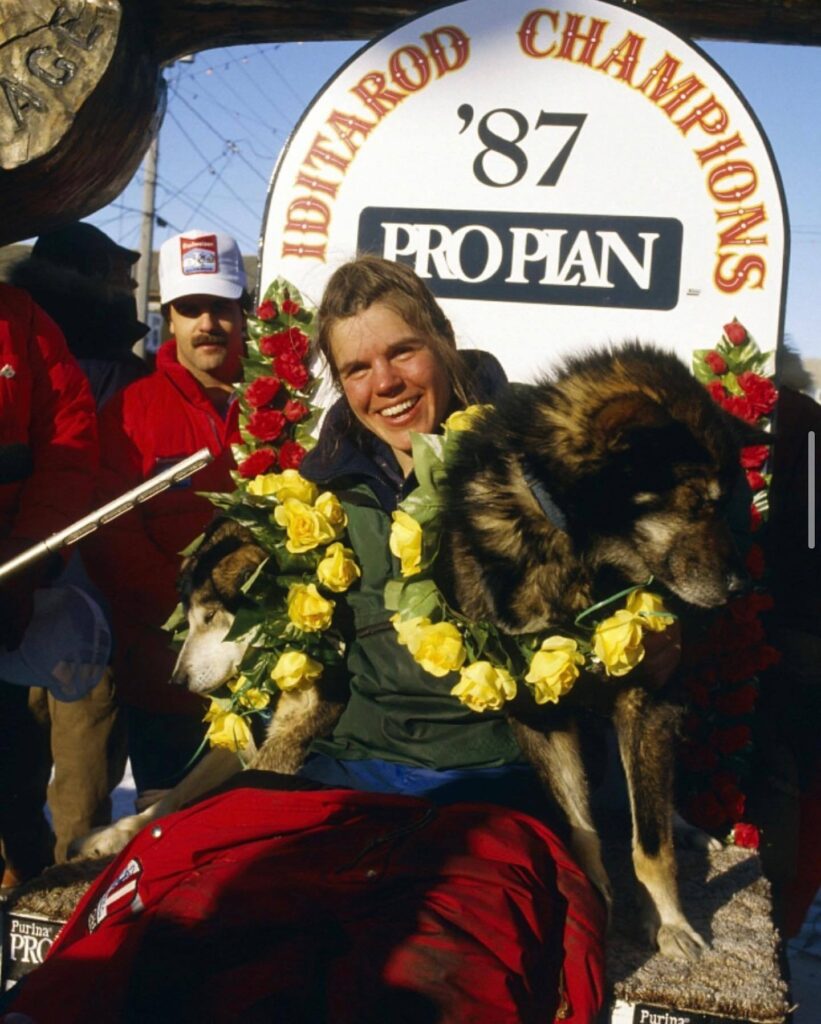
Susan Butcher after winning the 1987 Iditarod – credit @trailbreakerennel on Instagram
Susan first became interested in sled dog racing at 16, starting her mushing journey while attending Colorado State University, where she raced huskies at a local kennel. Pursuing her dream, she moved to the mountains of Alaska in 1975 and competed in her first Iditarod race in 1978. Guided by her mentor and close friend, race founder Joe Redington Sr., who predicted her rise as a champion, Butcher became known for her intense focus and strategic skills at checkpoints.
Despite encountering challenges, including a tragic moose attack in the 1985 race that resulted in the loss of some of her dogs, Butcher persevered and went on to achieve record-breaking performances. After retiring from competitive racing in 1995, she remained influential in the sport as a trainer and kennel owner. A great life cut tragically short, sadly Susan died from Leukaemia aged just 51.
It was Susan’s victory that drove the reputation of the Iditarod outside Alaska, with journalist and TV crews interested both in her achievement and her ethical stance. Beyond her victories, she used her platform to advocate for animal welfare and speak on behalf of the sport, becoming a prominent ambassador for the Iditarod, and inspiring a global audience.
These fearless women have shaped the future of sled dog racing in Alaska
Through their contributions, these women have not only carved their names into Iditarod history but have also created a path for future generations. Over the years, more and more women have emerged as significant competitors and contributors within the Iditarod. Figures such as Jessie Royer, Aliy Zirkle, and several others have continued the legacy set by Libby Riddles and Susan Butcher, proving that the trail is not just for a select few but open to all who are willing to put in the hard work and passion that is necessary to succeed.
To see how you can discover the best of Alaska in premium style, take a look at our Jewels of Alaska premium tour.
About Leanne Williams

I'm a writer, editor and interview specialist with a lifetime's love of travel. There’s nothing more inspiring to me than meeting, and writing about, the world's leading destination experts and travel industry insiders. The thing I love most about writing for Insightful is that I'm always learning something new.
LIKED THIS POST? SHARE WITH YOUR COMMUNITY
Keep exploring