What's so special about Sicilian cuisine? Everything, says Travel Director Mark



Few stories have survived the weight of 2,700 years without fraying at the edges. Homer’s epic poem, The Odyssey, has done something rarer still: it’s grown more vivid with age. The tale of Odysseus, king of Ithaca, and his decade-long, monster-strewn, god-haunted voyage home after the Trojan War is the original road trip, the first great story about what it means to journey home.
Christopher Nolan’s cinematic retelling has turned it back into a spectacle, filmed across five countries and shot on IMAX cameras in landscapes chosen precisely because they look like the edge of the known world. Because once, they were.
The remarkable thing about the locations in The Odyssey, both in Homer’s poem and Nolan’s film, is that you can actually visit most of them. Scholars have spent millennia arguing about the precise geography, but there’s meaningful consensus on the broad strokes: the Trojan plains of Turkey, the volcanic flanks of Sicily, the olive-draped islands of Greece. These are real places carrying the memory of a myth.
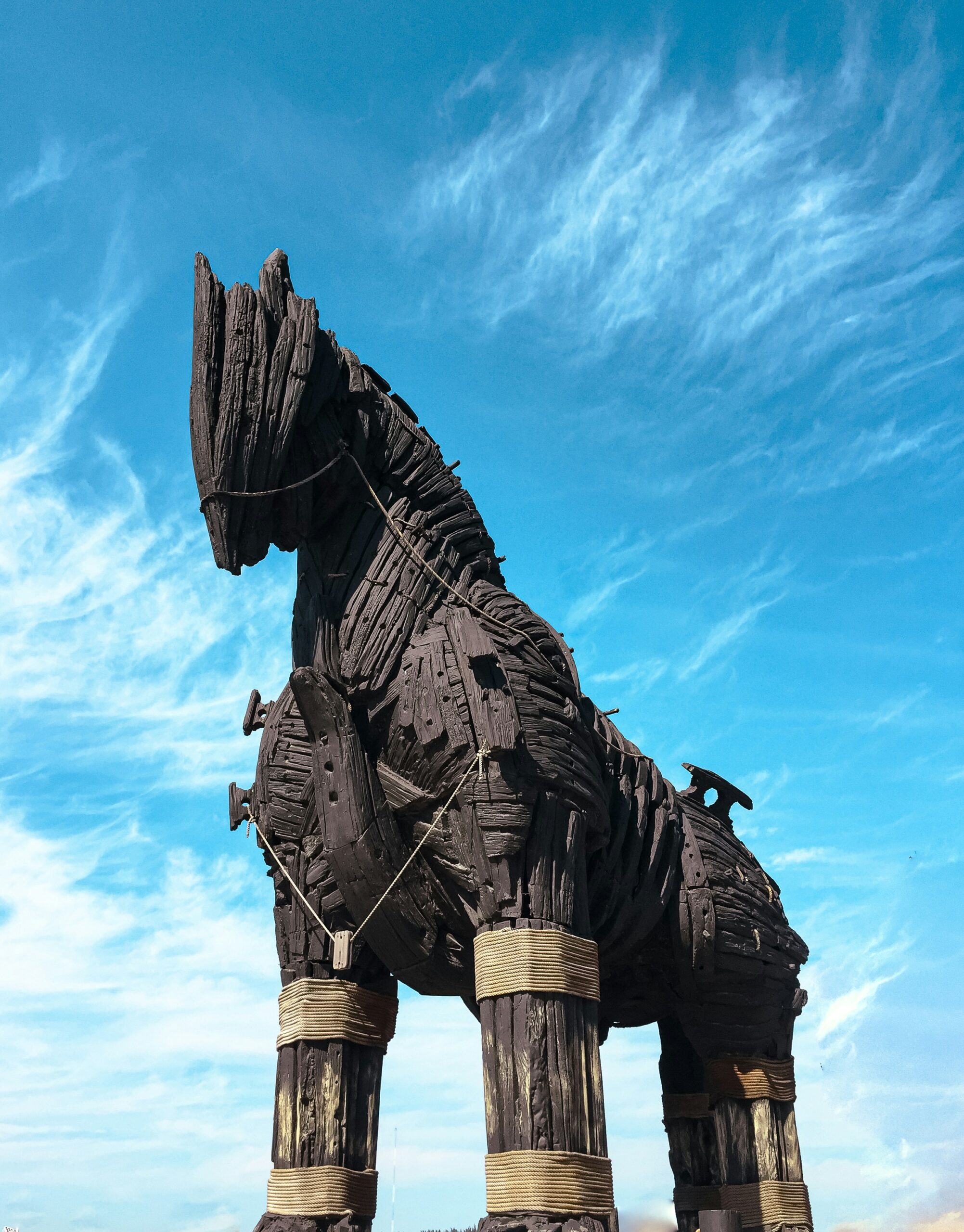
Every odyssey needs a departure point, and Odysseus’ begins at Troy. This is the site of the ten-year war that Homer chronicled in the Iliad. The ancient city of Ilium, in what is now Hisarlik in northwestern Turkey, has been identified as the site of Troy since at least the seventh century BCE. Heinrich Schliemann excavated it in the 1870s and while modern archaeologists approach the evidence more carefully, the connection between this windswept hill and the story that shaped Western literature remains deeply compelling.
Walking the ruins today with its limestone walls and layered excavations showing nine distinct cities built on top of each other is an astonishing experience. Homer’s Troy may have been embellished, but the city was real. The war may have been, too.
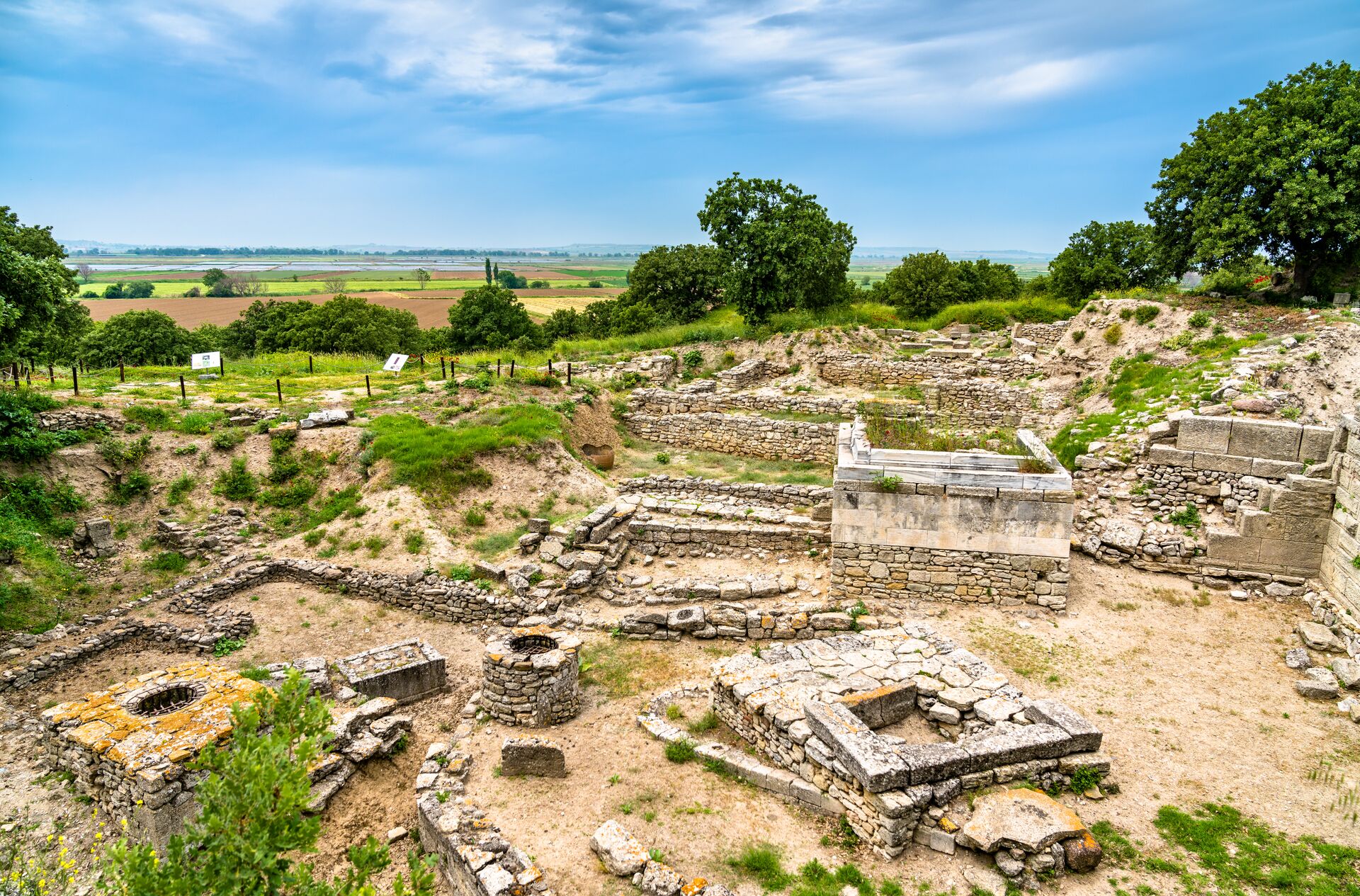
In the poem: Troy is where the Odyssey truly begins, or rather, where it ends its prequel. After ten years of war, Odysseus’ greatest act isn’t a battle but an idea: the Trojan Horse. He persuades the Greeks to build a giant wooden horse, fill it with soldiers, and leave it at Troy’s gates as a supposed offering. The Trojans drag it inside. By dawn, the city is burning. It is Odysseus’ genius that ends the war, and it’s the hubris of his homecoming that starts his troubles.
In the film: Nolan chose Morocco’s Aït Benhaddou, the ancient fortified village near Ouarzazate and a UNESCO World Heritage Site in its own right to stand in for Troy. Reports suggest some 5,000 extras were hired and set construction lasted two months. Nolan described his aim as capturing “how hard those journeys would have been for people. And the leap of faith that was being made in an unmapped, uncharted world.”
What to see: The archaeological site of Troy is a UNESCO World Heritage Site. The on-site museum, opened in 2018, is genuinely excellent.
The Peloponnese is where the story lives in the ground. This is the heartland of Mycenaean Greece, the civilisation that fought at Troy and where much of the Odyssey‘s action either begins or echoes.
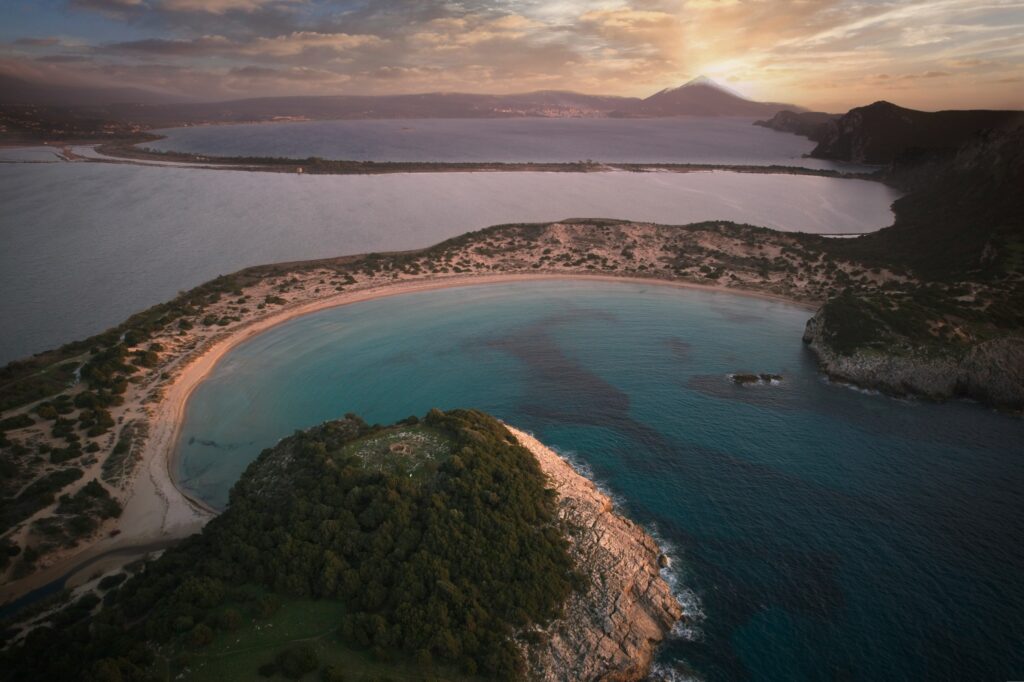
In the poem: While Odysseus wanders, his son Telemachus sets out on his own journey to find news of his father. His first stop is Pylos, seat of the wise old King Nestor, who fought alongside Odysseus at Troy. Nestor receives Telemachus warmly, sacrifices oxen to Poseidon on the beach at dawn, and tells him what he knows. It’s a scene of warmth and hospitality against the backdrop of prolonged absence. A son learning to become a man in his father’s shadow.
In the film: Nolan filmed extensively across Messenia in the Peloponnese, including at Pylos, Almyrolakkos Beach in Yialova, the dramatic Methoni Castle, and Nestor’s Cave at Voidokilia Beach, the last of these used for scenes featuring the Cyclops Polyphemus. The production brought a 37-metre trireme to Pylos harbour, with extras trained in rowing before filming began. Nearby Acrocorinth, the vast fortified acropolis towering above ancient Corinth, also features in the film.
The Palace of Nestor outside Pylos remains one of the best-preserved Bronze Age palatial complexes in the world. The Linear B tablets found here are administrative documents from 1200 BCE, giving us a direct connection to the civilisation Homer was writing about. And Voidokilia Beach itself, a perfect horseshoe of white sand and turquoise water, is without a doubt one of the most beautiful beaches in Greece.
What to see: The Palace of Nestor and its exceptional on-site museum. Methoni Castle, whose sea-facing walls and 360-degree views are worth the drive alone. Voidokilia Beach at sunrise, before anyone else arrives.
Insight note: Insight Vacations’ Treasures of Greece & The Islands itinerary takes you through the Peloponnese, where your expert Travel Director will bring the archaeology alive in ways that no guidebook quite manages.
If you had to pick one of the most picturesque locations in The Odyssey, Sicily would be it. The ancient world linked it to some of the most dramatic episodes in Odysseus’ journey, and the landscape makes it easy to see why.
In the poem: After escaping Troy, Odysseus and his crew are blown off course and eventually land on the island of the Cyclopes, a race of lawless, one-eyed giants. Odysseus leads a small party into the cave of the cyclops Polyphemus, son of Poseidon, who traps them and begins eating the crew two at a time. Odysseus gets him drunk on wine, blinds him with a sharpened stake, and escapes by clinging to the underbellies of the giant’s sheep as they leave the cave at dawn. It’s one of the most viscerally satisfying scenes in all of ancient literature, but it costs Odysseus dearly. Polyphemus prays to his father Poseidon, and the sea god spends the rest of the poem making Odysseus pay.
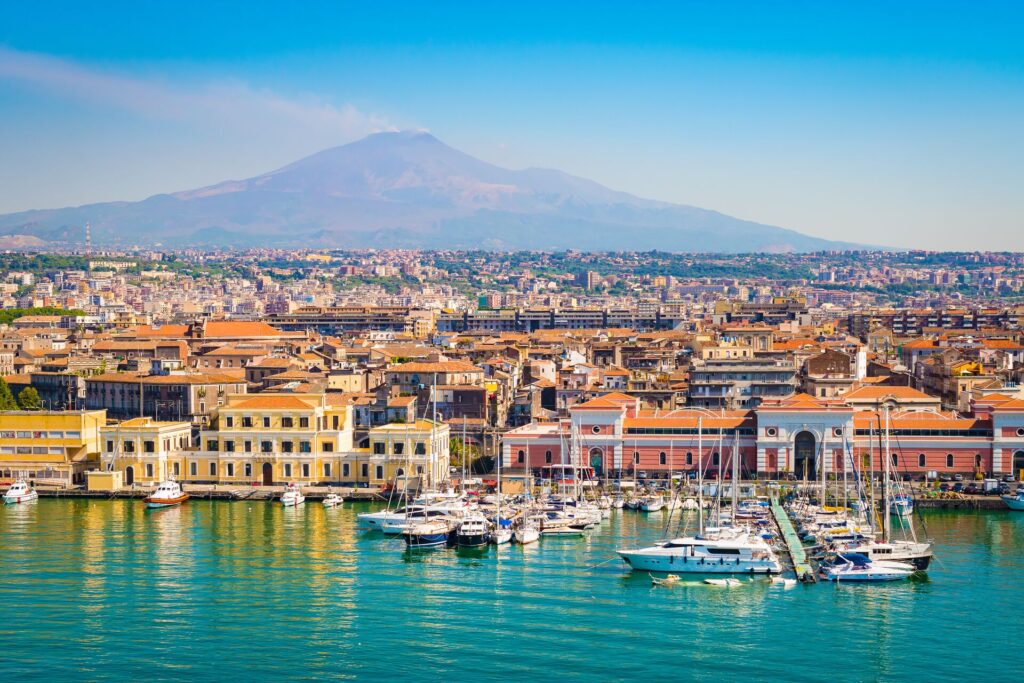
Image source: Insight Vacations
In the film: Nolan shot Sicily’s contribution on Favignana, the largest of the Egadi Islands off Sicily’s northwest coast. It is called the ancient “goat island,” where scholars believe Odysseus made landfall to resupply after the Cyclops episode. The island’s crystalline waters, sleepy fishing villages, and sense of being slightly removed from the modern world make it an obvious draw for a filmmaker seeking the edge of the known world.
What to see: Favignana and the Egadi Islands. Also the jagged sea stacks near Aci Trezza on Sicily’s eastern coast, the ‘Faraglioni dei Ciclopi‘, are said in local tradition to be the rocks that Polyphemus hurled at Odysseus’ escaping ships. They’re worth seeing for themselves, looming from the water in the shadow of Etna. If you can, check out the Archaeological Museum in Syracuse. And if time allows, the Aeolian Islands to the north—volcanic, otherworldly, and traditionally identified with Aeolus, the keeper of the winds.
Every sailor knows Scylla and Charybdis, even if they’ve never heard the names. A rock and a whirlpool. A monster and a maelstrom. They were two monsters in The Odyssey and represent the original impossible choice, from which we get “between a rock and a hard place,” “the lesser of two evils,” and the idea that some decisions aren’t really decisions at all, just a negotiation with how much you’re willing to lose. The narrow stretch of water between Sicily and the Calabrian toe of the Italian mainland is where ancient writers located both monsters, and the strait is still notoriously tricky water today.
In the poem: After leaving Aeaea, the island home of the sorceress Circe, Odysseus is warned he must pass through a narrow channel with a terrible choice on either side. On one rock face lives Scylla; six heads, twelve feet, a bark like a young dog, and an appetite for sailors. On the other side churns Charybdis, a monstrous whirlpool that swallows the sea three times a day. Circe tells Odysseus there is no third option: he must sail closer to Scylla and accept the loss of six men, or risk Charybdis and lose everything. He chooses. He watches six of his crew die. Thus, one of the first ever impossible choices is canonised in Ancient Literature.
In the film: While Nolan filmed the Cyclops sequence in the Peloponnese and Sicily rather than at the strait itself, the Strait of Messina remains the location most consistently identified with this passage since antiquity. Polybius noted in the second century BCE that Homer’s description of fishing practices near Scylla matched Sicilian practices in his own day, a detail too specific to be coincidence.
What to see: The town of Messina. its baroque Cathedral and the extraordinary Astronomical Clock tower. Take the short crossing to Calabria and look over at the strait below. Standing at the water’s edge here, watching the currents, it’s not difficult to see where the idea of the monsters came from.
Seven volcanic islands sit adrift in the Tyrrhenian Sea north of Sicily, identified by the ancient world as the realm of Aeolus, keeper of the winds. Nolan’s production spent time here, and it’s easy to see why the islands have been drawing people for millennia.
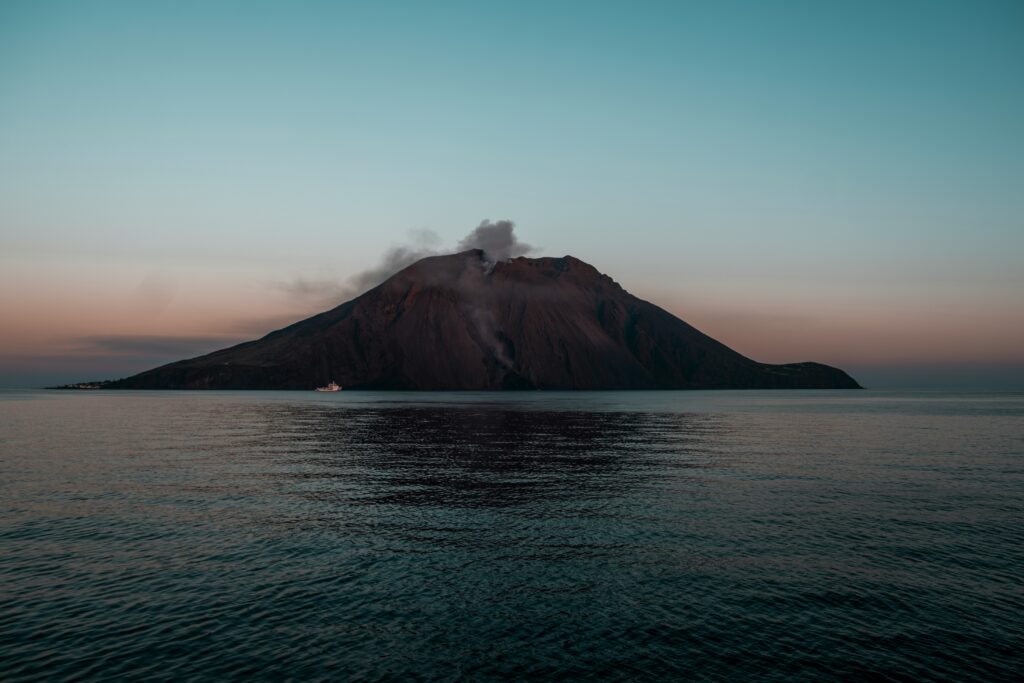
In the poem: After escaping the cyclops Polyphemus, Odysseus and his crew sail to the floating island realm of Aeolus, who welcomes them and hosts them for a month. When it’s time to leave, he gives Odysseus a great leather sack containing all the storm winds, leaving only a gentle breeze to speed them homeward. They sail for nine days and can almost see their home, Ithaca, close enough to make out fires on the shore, when Odysseus falls asleep. His crew, convinced the sack holds treasure, open it. Every wind escapes at once. The storm blows them back to the beginning.
In the film: Nolan’s crew filmed across the Aeolian Islands as part of the Sicily shoot. The island of Stromboli, which has been erupting almost continuously for two thousand years, gives some sense of why ancient sailors gave these islands divine authority. Watching fire pour from the darkness at sea would inspire a mythology in anyone. The island of Vulcano still emits gases from a fumarole in its crater—a vent that has been smoking since antiquity—giving reason enough for ancient sailors to believe these islands had divine authority over the winds.
What to see: Stromboli’s eruption, viewed from the sea at night. The Aeolian Archaeological Museum on Lipari, home to one of the finest collections of ancient Greek theatrical masks in existence.
Of all the locations in The Odyssey, the island of Ogygia, home of the nymph Calypso, is the most seductive. It is also, in a way, the saddest.
In the poem: After losing his entire crew to the rage of the sun god Helios, Odysseus alone survives. He is swept to Ogygia, island of the nymph Calypso. She loves him. She feeds him, shelters him, offers him immortality if he’ll stay. He refuses. For seven years she keeps him anyway, not through cruelty exactly, but because she wants him and the gods have not yet ordered otherwise. Homer presents Odysseus here not as a warrior at the peak of his power but as a man sitting on a beach, staring at the sea, weeping for home.
In the film: Malta featured as a filming location during Nolan’s production, and the Maltese archipelago has long been associated with Ogygia. Homer describes the island as sitting at the navel of the sea, which fits the geography of the central Mediterranean. On the island of Gozo, a cave known as Calypso’s Cave sits above Ramla Bay, a sweep of red-sand beach with views across open water. It is the kind of view you could stare at for seven years.
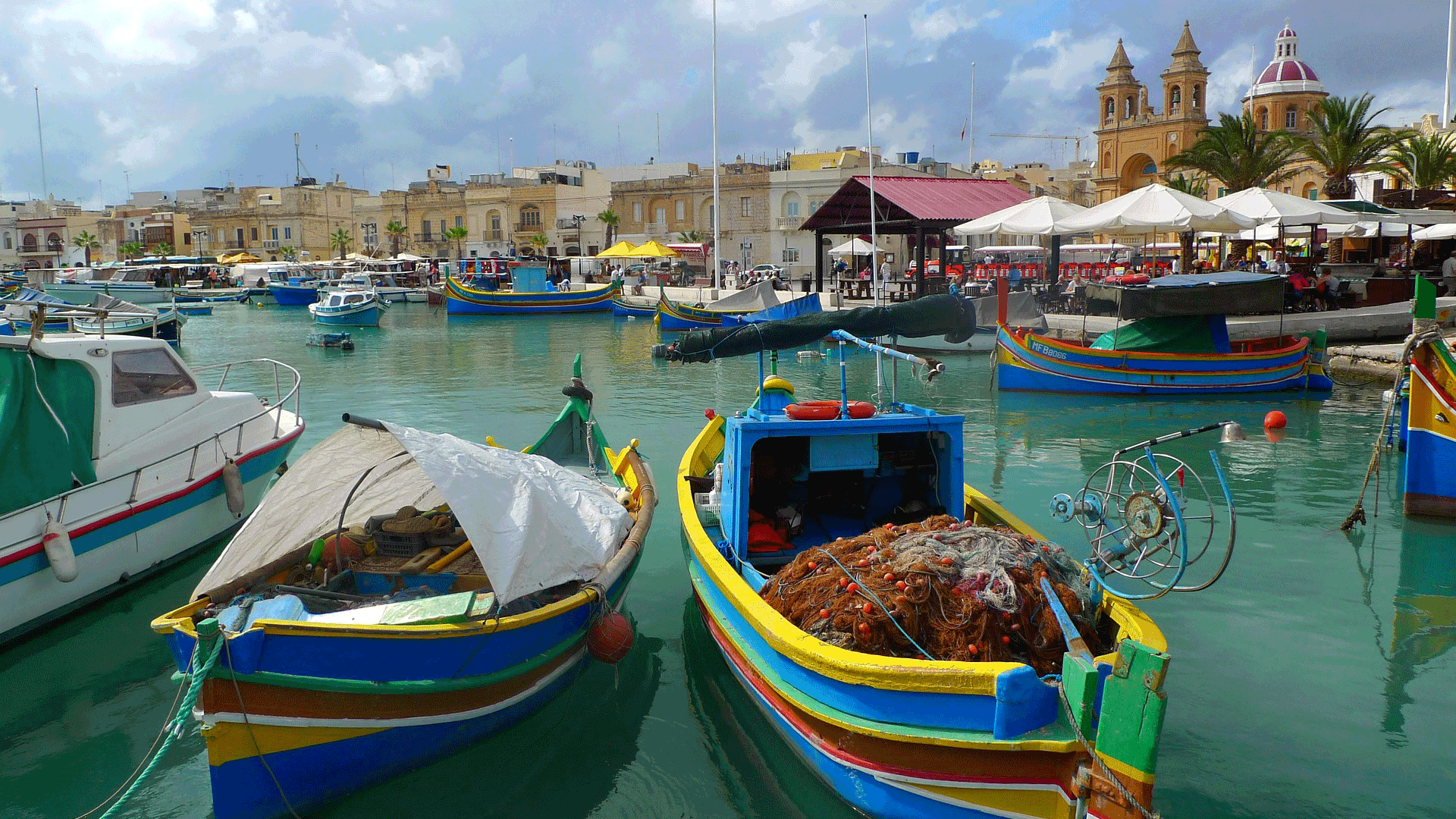
Malta itself carries extraordinary historical depth. Neolithic temples older than Stonehenge, Phoenician traders, Roman occupation, the Knights of St John…it is doubtless one of the most intellectually rewarding destinations in the Mediterranean.
What to see: Calypso’s Cave on Gozo and the view over Ramla Bay. The Ħaġar Qim and Mnajdra temples, among the oldest freestanding structures in the world.
Near the end of The Odyssey, the poem does something unexpected. The hero, stripped of everything (crew, ships, dignity) washes up on a foreign shore and has to start again from nothing. The island that receives him is beautiful, generous, and unlike anywhere he’s ever been before.
In the poem: Odysseus is shipwrecked and washes ashore on Scheria, land of the Phaeacians; a seafaring people beloved by the gods who live at the edge of the known world. He’s discovered by the princess Nausicaa, who takes him to the palace of her father, King Alcinous. There, over days of feasting, Odysseus tells his whole story. Every monster, every island, every loss. The Phaeacians listen. Then they give him a ship, load it with treasure, and sail him home to Ithaca while he sleeps. It is an act of profound kindness at the end of an extraordinarily unkind journey.
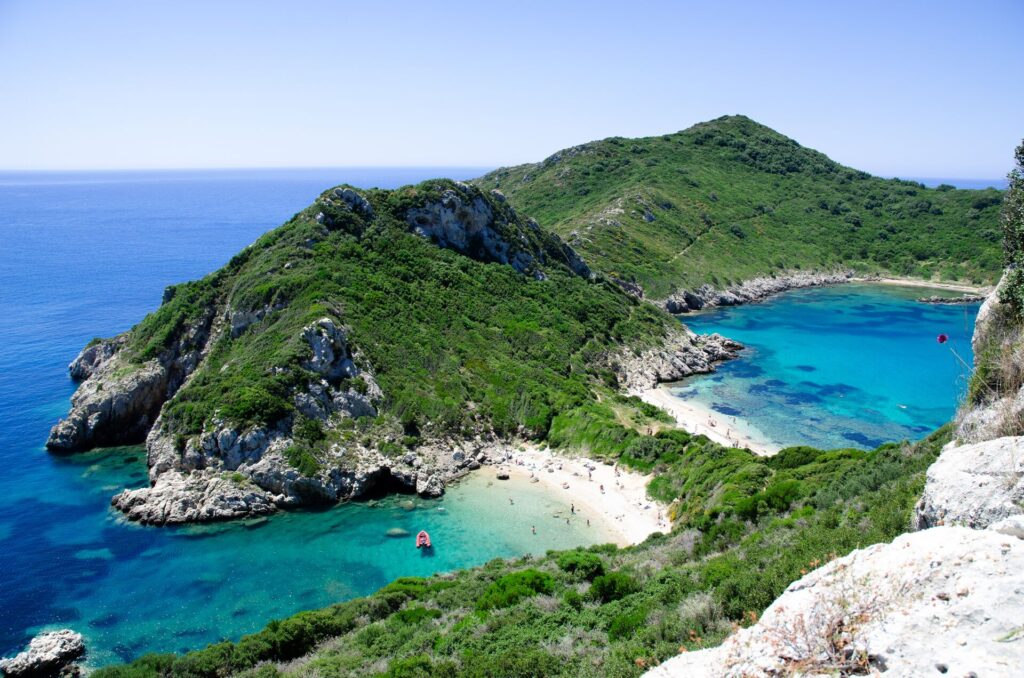
In the film: Corfu was among the locations originally expected for the production, consistent with its long identification as Scheria. The island has the beauty to match Homer’s descriptions: its lush green interior, the Venetian Old Town (a UNESCO World Heritage Site), the extraordinary quality of its light. The Achilleion Palace, built in the hills by Empress Elisabeth of Austria as a monument to the hero Achilles, tells you something about what this island does to a person’s imagination.
What to see: The Venetian Old Town. The beach at Paleokastritsa, traditionally linked to where Nausicaa found Odysseus. The view from the Achilleion at the end of the day.
The whole point. The reason for ten years of wandering, suffering, loss, and impossible temptation. Every decision Odysseus makes, like refusing Calypso’s immortality, lashing himself to the mast against the Sirens, choosing Scylla over Charybdis, is made in service of going home.
In the poem: Odysseus arrives home at last, but the poem doesn’t give him an easy ending. His palace is full of suitors competing for Penelope’s hand, eating his food, drinking his wine, and assuming he’s dead. He arrives disguised as a beggar. He watches the abuse. He waits. Then, in one of the greatest set pieces of ancient literature, he strings his own bow (the one no suitor has been able to draw) and begins his reckoning, killing all the suitors. But even then, Penelope won’t accept him on his word alone. She tests him: she tells a servant to move their marriage bed. Odysseus reacts with fury, because he knows it can’t be moved. He built it himself around a living olive tree rooted in the ground. That’s her proof. After twenty years, it’s a secret only he could know.
In the film: The island of Ithaca still exists, known today as Ithaki. Though it hasn’t knowingly been used as a filming location, it stands at the heart of the story even when the camera is elsewhere. Behind-the-scenes images have shown Anne Hathaway as Penelope and Tom Holland as Telemachus watching and waiting from Ithaca’s shores. The island’s Bronze Age coins, minted between the 4th and 2nd centuries BCE, bear the image of Odysseus. It’s a place that has known exactly the stories and myths it belongs to for a very long time.
What to see: Nestor’s Cave at Voidokilia connects the Peloponnese coast to the myth, but Ithaca itself is where the gravity of the story pulls. The bay of Dexia, on the island’s southern coast, is traditionally held as the spot where the Phaeacian ship left Odysseus sleeping on the shore. In Stavros, a small museum holds Bronze Age artefacts including a clay mask inscribed with “prayer to Odysseus.”

LIKED THIS POST? SHARE WITH YOUR COMMUNITY
Plus recieve latest offers, travel inspiration, and discover how your travels will make a positive impact. Together, WE MAKE TRAVEL MATTER®