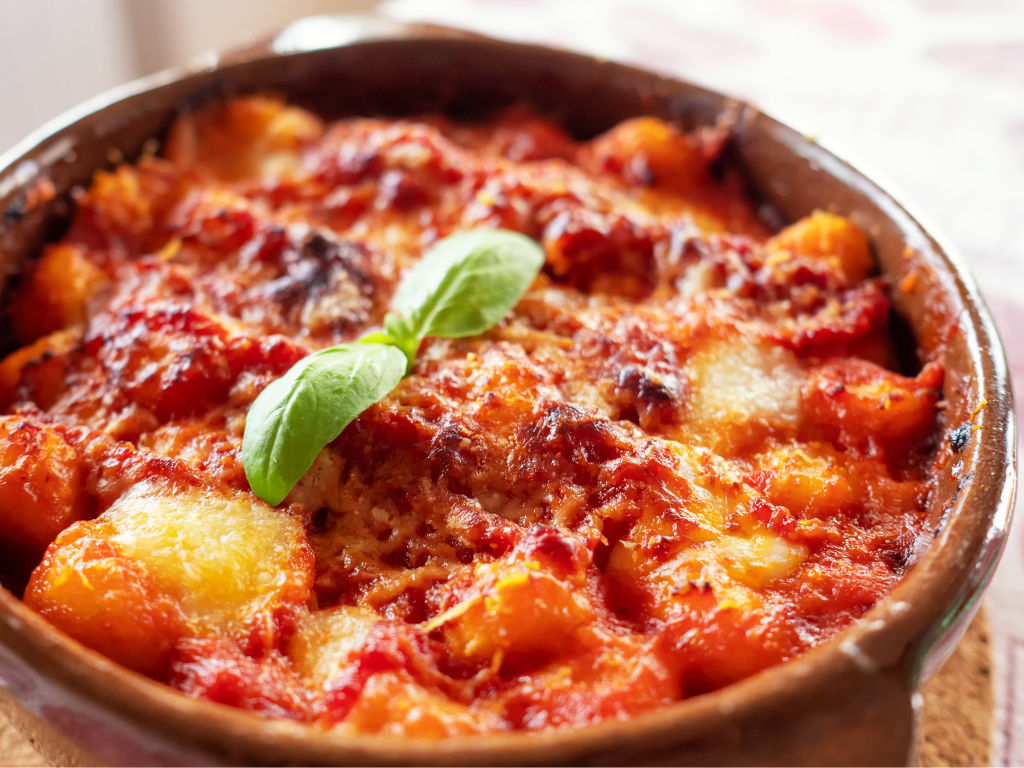
Lasagna, one of Italy’s oldest pasta dishes, hails from the region of Emilia-Romagna. The classic version layers thin egg pasta sheets with rich ragù, creamy béchamel, and generous Parmigiano Reggiano. When baked in the oven (“al forno”), it transforms into a bubbling, golden dish that feels like the essence of Italian comfort food.
The history of lasagna stretches back to ancient Rome, where early versions of layered pasta dishes were already being recorded in cookbooks. But it was in Bologna that the modern recipe took root, tied to the local ragù, made with slow-simmered meat, tomatoes, carrots, celery, and onions. Even the pasta matters — Bolognese lasagna uses fresh, green-hued sheets made with spinach.
Traditionally, lasagna was a dish for Sundays and holidays, when families would gather around the table for hours to enjoy it together. Each bite speaks of Emilia-Romagna’s culinary heritage, where simple, carefully layered ingredients create extraordinary depth. Today, lasagna is known and loved across the world, but its soul remains firmly Italian.
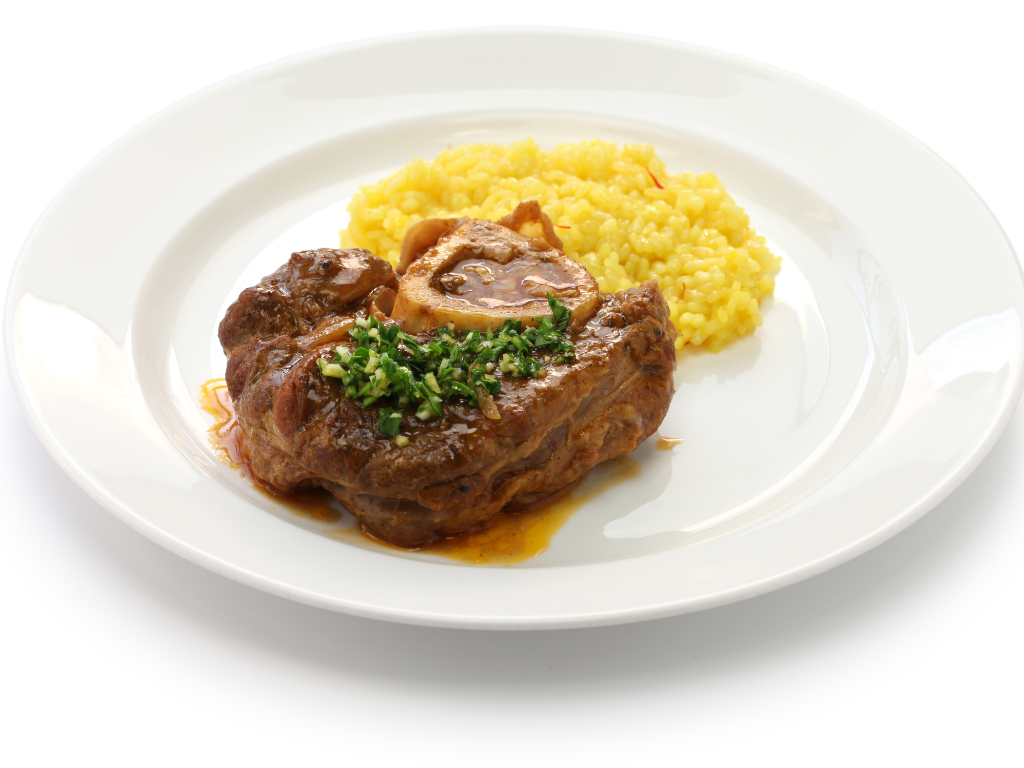
Ossobuco alla Milanese
Ossobuco, literally “bone with a hole,” is a slow-cooked dish from Milan featuring veal shanks braised with white wine, broth, carrots, celery, and onions. The marrow inside the bone is the highlight, spread on bread as a delicacy. Traditionally, ossobuco is paired with Risotto alla Milanese, making the duo one of Lombardy’s most iconic meals.
The dish dates back to at least the 18th century, when veal was a staple of Milanese cuisine. Its popularity grew because the cut was inexpensive, yet when braised patiently, it became meltingly tender and full of flavor. The saffron risotto served alongside provides a golden, fragrant counterpoint, and the gremolata garnish of parsley, garlic, and lemon zest adds freshness to each bite.
Families in Milan still prepare it for Sunday dinners, while Italian restaurants across the north serve it as a symbol of the city’s rich culinary tradition. It perfectly encapsulates how Italian cuisine elevates humble cuts into masterpieces.